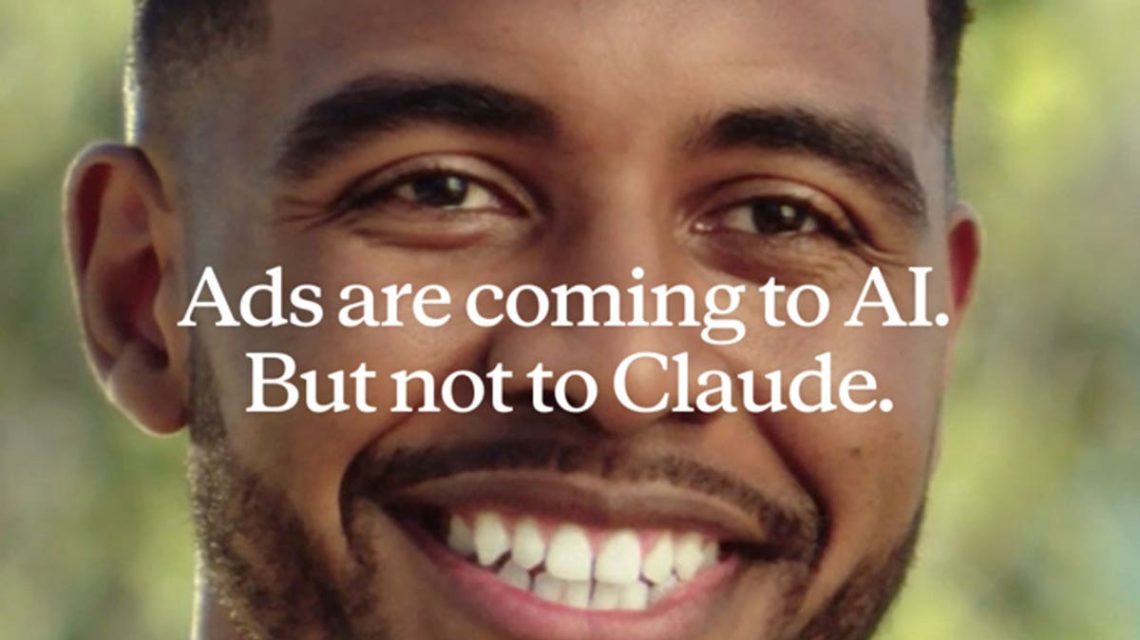
The competition in the world of artificial intelligence has taken a dramatic turn, moving from the boardrooms of Silicon Valley to the center stage of one of the most-watched television events – the Super Bowl. Over the years, we’ve witnessed competitive battles like the Pepsi-Cola showdown and the fierce rivalry between PC and Apple. Now, AI technology companies are entering the gladiatorial arena.
This year, the Super Bowl LX saw AI startup Anthropic make a daring debut with an ambitious ad campaign targeting its main rival, OpenAI. The spotlight moment came during the match-up between the Seattle Seahawks and the New England Patriots when Anthropic aired commercials costing a substantial sum of money.
The 30-second commercial featured a young man seeking workout advice from a muscular individual, only to be met with a robotic response that suddenly shifted to a sales pitch for shoe insoles designed for “short kings.” This ad concluded with the striking statement: “Ads are coming to AI. But not to Claude.”
Anthropic, a San Francisco-based company founded by former OpenAI executives, is striving to establish itself as a principled alternative to the Microsoft-backed AI giant. In a blog post released to coincide with the ad campaign, Anthropic emphasized that its AI model, Claude, would remain free from advertisements. “There are many good places for advertising,” the company stated. “A conversation with Claude is not one of them. Our users won’t see ‘sponsored’ links in their interactions with Claude, nor will Claude’s responses be swayed by advertisers or include unwanted third-party product placements.” Anthropic declined to comment further on the matter.
On the other hand, OpenAI’s CEO Sam Altman did not hold back in his response to the campaign. Taking to social media platform X, Altman labeled the ads as “clearly dishonest” and accused Anthropic of engaging in “double speak.” He expressed his surprise that Anthropic would opt for such a misleading approach, using a theatrical ad to criticize hypothetical deceptive ads that do not exist.
OpenAI has been experimenting with ads in the “Free” and “Go” tiers of their ChatGPT model, which Altman defends as necessary for broader accessibility. He pointed out the sheer difference in scale, noting that ChatGPT serves a significantly larger audience than Claude. “Anthropic caters to an expensive product tailored for affluent customers,” Altman stated. “We believe strongly in making AI accessible to billions of people who cannot afford subscriptions.”
Altman further addressed these issues on “The Technology Brothers Podcast,” where he emphasized that OpenAI is committed to respecting its user base and ensuring that ads do not affect the quality or nature of responses. He reassured users that advertisements would be discretely placed and clearly labeled, preventing any frustration or disruption.
The dramatic escalation in this AI rivalry has caught the attention of influential voices like the hosts of the “TBPN.” While one host described the campaigns as “incredibly clever” and suggested that “the gloves are off,” the other noted the ads’ “fake newsy” feel, emphasizing the evolution of the companies’ perception of each other.
During the Super Bowl, OpenAI also claimed some spotlight, promoting its software coding tool, Codex, as it navigates the intensely competitive landscape. The AI battles are no longer just about superior models—they are increasingly focused on capturing the loyalty and attention of vast audiences in major events like the Super Bowl.
 Debate Continues Over Virginia’s Data Center Energy Plans
  Trump Suggests Renaming AI to ‘Super Intelligence’
  The Rise of Data Centers and AI Development
  How China Uses AI to Challenge U.S. Dominance
  Controversy Surrounding Automated License Plate Readers (ALPRs)
  U.K. Test-Fires U.S. Torpedo from XV Excalibur