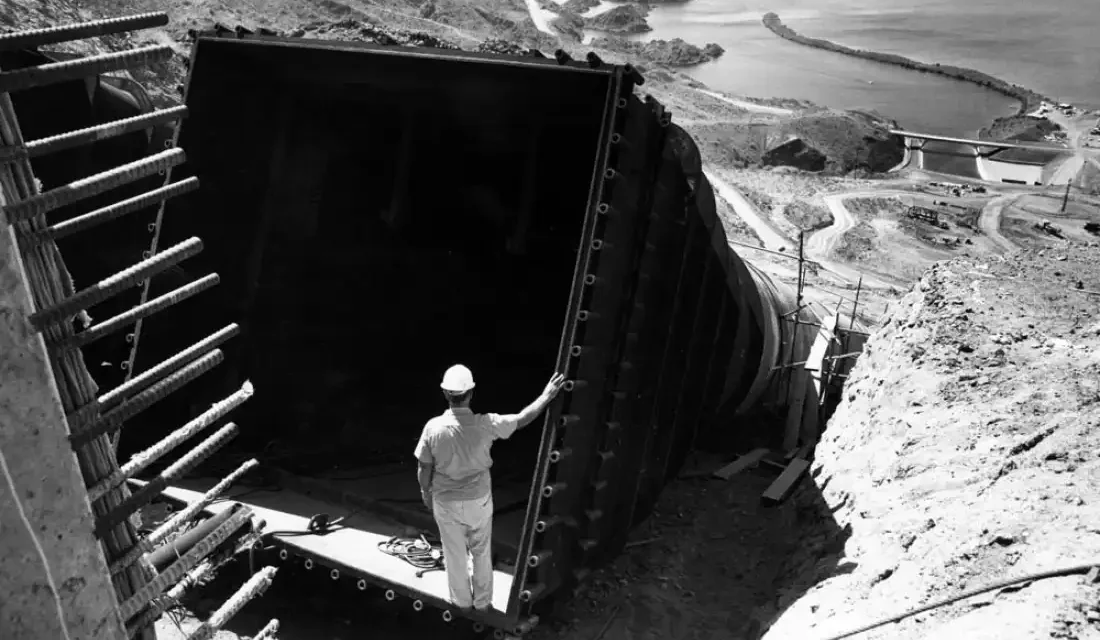
A worker examines the construction of the Mark Wilmer pumping plant near Parker, Arizona, in June 1982. This facility pulls water from the Colorado River near Lake Havasu, diverting it to the Phoenix area through the Central Arizona Project (CAP). In the 1960s, experts warned of potential depletion in the 21st century. Their suggestions for solutions remained unheeded for decades.
The Colorado River Crisis
Today, the Colorado River faces significant challenges. Water withdrawal surpasses the river’s capacity, creating tension among policymakers. Nearly 40 million people depend on this river, and the lack of consensus on water management puts them at risk. Seven Western states, including major cities and tribal lands, are caught in a complex scenario defined by depleted reservoirs and legal disputes.
A recent federal strategy to reduce water consumption has sparked legal action from Nevada and Arizona, along with the canal system serving Phoenix. This situation is not entirely unexpected. Planners of the canal system foresaw reduced flows in the future, recommending augmentation with external water sources—suggestions largely ignored over time.
The Central Arizona Project’s Impact
Phoenix and Tucson owe their development to a sophisticated network of canals, pipelines, and pumping stations, known as the CAP. However, water shortages now threaten this critical infrastructure. Historically, the CAP’s architects cautioned about future limitations. “It’s an engineering wonder,” said Rich Weissinger, who spent close to 30 years working with CAP. Standing in a pumping plant, Weissinger remarked on the system’s reliability and the crucial role it plays in supplying a stable water source.
Nonetheless, unprecedented drought conditions exacerbated by climate change challenge this reliability. The Colorado River basin’s water supply strains under the pressure of demand from seven states, leading to difficult choices and potential cutbacks.
Exceeding River Supplies
The United States’ two largest reservoirs have reached record lows, prompting potential reductions in Arizona’s water allocation from the river. Projections show a possible 47% decrease for the CAP itself. The warnings from the 1960s planners were clear: the CAP would require additional water supplies to remain viable long-term.
Planners at that time envisioned linking the Colorado River system with the Columbia River system or building desalination plants on the Pacific Coast. Decades later, these plans have not materialized, highlighting the enormity of challenges that remain unaddressed as Arizona continues to face possible severe reductions in water supply.
Warnings and Political Dynamics
During its inception, the CAP was heralded as a pioneer project. Yet, from the start, some supporters acknowledged its limitations. Floyd Dominy, a former commissioner of the Bureau of Reclamation, predicted reduced diversions due to increased upstream use—not the drought and climate change that ultimately caused water scarcity. Arizona Rep. Mo Udall advocated for augmentation, yet foreseen initiatives like linking river systems and building coastal desalination plants never emerged.
Political dynamics and financial constraints proved substantial barriers. As former CAP deputy general manager Tom McCann observed, cost and political opposition curtailed action. Planners deferred these issues, hoping to tackle them subsequently, yet postponement hindered possible preventative measures.
Assessing Future Proposals
Current perspectives on dealing with water shortages vary. Policing water transfers from agriculture to urban areas represents a politically charged alternative. Water experts suggest cities could potentially procure water from farms more cost-effectively than developing massive infrastructure projects. Meanwhile, new proposals explore desalinating ocean water and innovative recycling methods.
The Central Arizona Project has initiated talks with the San Diego County Water Authority, attempting to leverage existing desalination efforts: San Diego increases ocean water extraction, potentially allowing Arizona more river access. Closer to home, cities invest in high-tech wastewater treatment facilities, converting sewage back to potable water.
Root Problems and Necessary Adjustments
The CAP’s initial architects correctly identified significant discrepancies between water supply and demand. A so-called “structural deficit” resulted from Arizona and other states consuming more than Lake Mead could replenish. Experts call for collective reductions in water demand to remediate existing management flaws.
Adjusting water usage across states relying on the Colorado River emerges as essential amidst structural imbalances. The journey to sustainable management calls for responsive strategies, ensuring the viability of vital ecosystems and the well-being of the millions dependent on them.
 Farewell to State Line Bridge: A Historic Transition
 New World Screwworm Resurfaces in the U.S.
 Time Change Increases Deer Activity on Roads, Raising Risks for Drivers
 Key Senate Race Developments and Impacts of El Niño on Weather
 El Niño’s Impact on Winter Weather Patterns
 Trump’s New Hearing on East Potomac Park Redevelopment Plan