
HAVANA – Cuban President Miguel Díaz-Canel announced that the government is gearing up to tackle severe fuel shortages, attributing the crisis to the Trump administration’s policies that have constrained oil deliveries to Cuba. In a nationally televised news conference, Díaz-Canel expressed his disapproval of the U.S.’s actions, describing them as a ‘criminal policy’ affecting several critical sectors, including food, transportation, and healthcare.
The Cuban leader stated, “It is reprehensible that a nation with the power of the U.S. would adopt such a harmful policy against another country, impacting our food supply, transportation networks, hospitals, schools, economic production, and the operation of crucial systems.” He mentioned that the government was in the final stages of crafting a contingency plan to counteract the impending fuel crisis, which would demand temporary measures, thereby requiring a significant effort from the population. “What else can we do?” he asked rhetorically during his address.
Diaz-Canel emphasized his willingness to engage in open dialogue with the U.S. on various issues, but with the condition that such discussions be held without external pressure or preconditions, and with full respect for Cuba’s sovereignty. Acknowledging the mutual respect between Cubans and Americans, he asserted that Cubans “do not harbor hatred” and appreciate the values shared with their northern neighbor.
Despite these diplomatic overtures, Díaz-Canel mentioned that the country is preparing a defense strategy, underscoring Cuba’s identity as a peaceful nation that poses no threat to the United States. “We are not in a state of war,” he clarified, “but we are preparing ourselves in case such a situation arises.”
In Washington, White House press secretary Karoline Leavitt reiterated President Donald Trump’s belief that the Cuban government was heading towards collapse. She indicated the U.S. president’s openness to diplomatic discussions with Cuban officials, saying, “The president is always open to dialogue, and that appears to be happening with the Cuban government.”
In support of this, Trump had earlier stated that the U.S. was in talks with “the highest people” in Cuba. These communications were confirmed by Cuba’s deputy foreign minister, Carlos de Cossio, who noted that there have been “some exchanges of messages” between both governments at high levels. However, De Cossio asserted in multiple interviews that while there are no formal bilateral negotiations underway, Cuba is open to talks if specific conditions are met.
President Díaz-Canel further disclosed that Venezuela, once Cuba’s primary oil supplier, has stopped shipments since December. This cessation followed the U.S. military operation that resulted in the detention of the former Venezuelan President Nicolás Maduro in early January. The impact of these developments was starkly evident in Havana, where citizens were anxious about the proposed strategies to handle the fuel scarcity.
Publicist Frank Palomares shared his apprehension, stating, “The future of Cuba looks very bleak. It’s challenging for any progressive changes to materialize, and they tend to be delayed.”
Melani Alarcon, a college student, echoed similar concerns: “We’re going to struggle significantly with these shortages. For someone like me, it means potentially not being able to continue studying. There’s no apparent future in Cuba right now.”
Reflecting on these concerns, Trump has reportedly pressed Mexican President Claudia Sheinbaum to halt oil deliveries to Cuba. Historically, Mexico has been the second-largest fuel supplier to the island. Over the weekend, President Sheinbaum assured humanitarian assistance, pledging to supply food and other essential aid while encouraging diplomatic dialogue.
Amidst Maduro’s apprehension, the Trump administration has intensified its focus on Cuba, portraying it as a “failing nation,” subsequently increasing pressure on its government. Such uncommon press engagements by the Cuban president show the heightened financial distress and the escalating tension between Cuba and the U.S.
Cuba has been battling an intense economic downturn over the past few years. The pandemic diminished tourism, a vital revenue source, exacerbating an already harsh economic landscape. Coupled with stringent U.S. sanctions, the nation grapples with pervasive shortages in food and medicine, worsened by frequent power cuts linked to the oil deficit.
Carmen Sesin reported from Miami and Orlando Matos from Havana. Carmen Sesin is an NBC News reporter based in Miami, Florida, and Orlando Matos an NBC News producer based in Havana, Cuba.
 Don McCullin’s Final Book: A Pioneering War Photographer’s Legacy
  Rep. Alexandria Ocasio-Cortez Defends Macklemore Amid Tour Controversy
  Influence Concerns Surround California Political Donors
  Michigan Senate Race Sees Influences from Soros-Linked Funding
  Trump Seeks Diplomatic Success at the U.N. Amid Challenges
 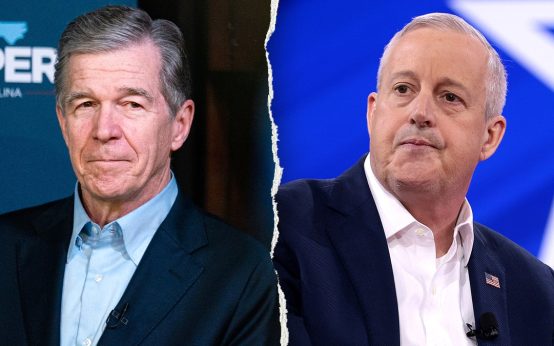 North Carolina Senate Race Influenced by Abortion Policy Messaging