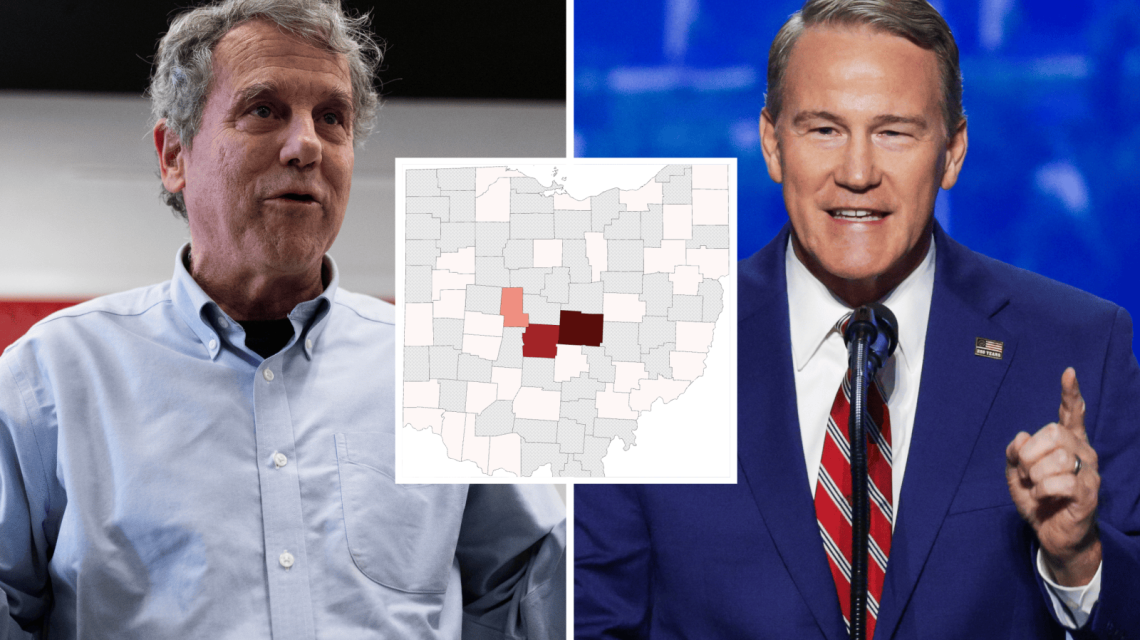
Data centers are at the forefront of the Ohio Senate race, dividing Republican Senator Jon Husted and Democratic former Senator Sherrod Brown. The debate centers on the rise of data center developments in Ohio and the mixed reactions from locals. While some see these centers as job creators, particularly for unions, critics worry about their impact on the environment and local resources. Activist Erin Brockovich’s map has highlighted the proliferation of these centers across the state.
Ohio’s Data Center Controversy
The presence of data centers, especially large AI-focused ones, has become a contentious issue. Many Ohioans oppose their local development. A poll from Bowling Green State University in September indicates that 75% of residents would reject a data center in their community, while 63% oppose the construction across Ohio entirely. A significant number advocate for a temporary halt until more information on their effects is available.
Development Areas and Economic Impact
Many AI data centers are springing up around Columbus, specifically in suburban Licking and Union counties. These areas provide economic attractions like flat land and beneficial utility rates. Still, backlash is evident, exemplified by a petition in Licking County to ban large data centers. Ohio has incentivized these developments with $2.3 billion in tax breaks.
Political Stances on Data Centers
Senator Husted advanced the Ratepayer Protection Act, aiming to regulate data centers’ grid connection to prevent electricity price hikes. This legislation failed in the Senate. Husted argues for local decisions on data centers and raises the point that public demand for digital products contributes to the need for these facilities. Brown positions himself as a critic, emphasizing protection against utilities’ cost burdens on Ohioans.
Labor Union Support
Labor unions in Ohio, crucial to Democratic support, generally favor data centers due to the potential for union jobs in construction, despite some Democrats challenging them. The tension lies in balancing job creation with the environmental and regulatory aspects of the industry.
Polling and Political Dynamics
Current polling shows a close race. Brown slightly leads Husted by 2.1 points, according to RealClearPolling. Two separate polls also indicate Brown’s favorability, reflecting his viability in the race despite Ohio’s recent conservative tilt. Brown represents a hope for Democrats to gain influence in Ohio amidst national political shifts.
Potential Outcomes and Observations
The Ohio Senate race remains a close watch as the 2026 midterms approach. Political analysts classify the race as a toss-up. The outcome could significantly influence the power balance in the upcoming Congress. Early voting has already begun, amplifying the need to closely monitor these developments.
 Obama’s Influence Tested in Michigan and Ohio Ahead of Midterms
 Midterm Elections: Key Senate Races to Watch
 Trump Administration Targets Testosterone Deficiency for Military Readiness
 Controversy Over Arabic Language Programs in U.S. Schools
 Scott Lincicome Discusses Trade Dispute Challenges
 Collins Meets Tight Race with Trump-Backed Economic Moves