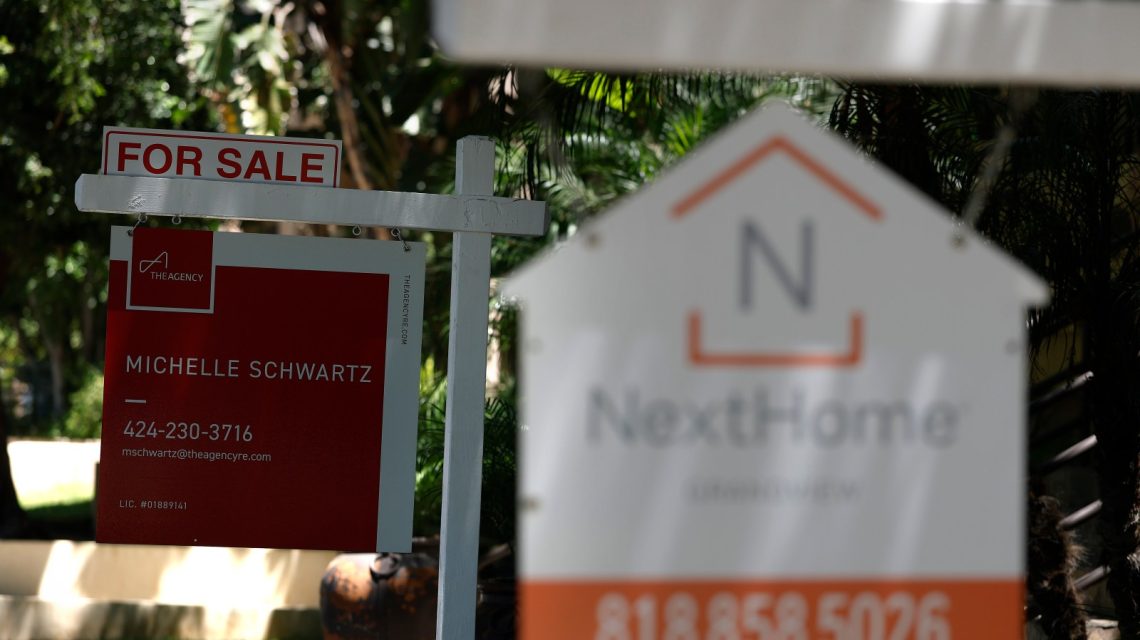
The U.S. housing market encountered a significant downturn in September due to quickly increasing mortgage rates. This situation is likely to affect affordability for potential buyers, posing challenges for President Donald Trump and the Republicans in the weeks leading up to the midterm elections.
According to data from the National Association of Realtors, pending home sales, which track signed contracts to buy existing homes, dropped by 7.3% from August and by 11.3% compared to a year earlier in September. This decrease happened alongside a sharp rise in mortgage rates, which started September around 6.8% and climbed to 7.6% by the month’s end, reported Mortgage News Daily.
“Higher rates will definitely slow the housing market and force those with much lower rates to stay put. The housing market will be at a standstill for some time to come,” said Kevin Thompson, CEO of 9i Capital Group.
Why Affordability Matters
Affordability has become a crucial issue for the upcoming midterm elections on November 3. Housing costs are particularly significant to younger voters, and the overall economy is considered vital by registered voters. Higher mortgage rates can quickly change household affordability, even if home prices remain stable.
In September, existing home prices reached a median of $417,500, marking a rise of 1.3% from a year earlier and achieving the highest recorded September price, based on National Association of Realtors data.
Key Information
President Trump’s 2024 campaign included promises to lower household expenses like borrowing costs, aiming for mortgage rates as low as 2%. However, these rates have increased. As of October 8, Freddie Mac reported the average 30-year mortgage at 7.40%, the highest since November 2023.
“This is not good for the party in power as borrowing costs are much higher today,” stated Thompson. “Affordability is the name of the game, and worsening conditions could lead to declining approval ratings for the president and associated leaders.”
The National Association of Home Builders’ (NAHB) October sentiment showed a negative outlook, with current sales, expected sales, and buyer traffic all seeing declines. Economists attribute these trends to supply-side constraints, heightened construction costs, and weakened consumer confidence.
Home Sales and Inventory Trends
Completed existing-home sales rose by 1.5% in September, reaching a seasonally adjusted annual rate of 3.99 million. This rate was still 2.2% lower than a year earlier, and both August and September recorded the slowest monthly sales of 2026. Housing inventory increased by 1.9% to 1.60 million homes, marking the highest inventory since November 2019.
Economists do not primarily blame the weak housing market on a lack of listings.
“All of these factors are negatively impacting rates,” said Alex Beene, a financial literacy instructor at the University of Tennessee at Martin. “Little seems poised to change this soon, with inflation pressures impacting nearly every economic sector.”
Price Reductions and Market Dynamics
Despite the affordability issues, some buyers gain negotiating power. Realtor.com reported that 20.8% of listings experienced a price reduction in September, the highest share since October 2022. Active listings also rose by 5.5% from September 2025 to over 1.16 million homes.
Affordability’s Impact on Midterm Elections
As Americans vote in the midterms on November 3, affordability remains a focal point for many voters. A Pew Research Center survey conducted between September 28 and October 4 found that 84% of registered voters considered the economy to be very important to their vote. This sentiment was shared by 82% of Republicans and 88% of Democrats.
Housing emerged as a particularly important issue among younger voters, with a CNBC survey revealing it was the top political issue for those aged 18 to 34.
Understanding Rising Mortgage Rates
Mortgage rates are not directly tied to the Federal Reserve’s interest rate, primarily being influenced by the bond market’s longer-term borrowing costs.
“Many Americans wrongly believe mortgage rate changes are solely due to the Federal Reserve’s moves,” said Beene. “Yet, the bond market, geopolitical issues, and monetary policy all play roles in rate fluctuations.”
Reuters reported that early October saw the average 30-year mortgage rate reach 7.40% amid climbing inflation, with the Consumer Price Index increasing by 3.7% from the previous year.
Future Market Outlook
Experts foresee further weakening of the housing market, as current sales figures do not reflect October’s elevated mortgage rates fully. Without significant reductions in either mortgage rates or home prices, many potential homeowners find payments out of reach.
For Trump and Republicans, the timing of these developments could be crucial as they may influence the political landscape.
 President Trump Campaigns in North Carolina Amid GOP Concerns
 Instacart Settles $5M Over Discriminatory Job Ads Linked to H-1B Visa Green Card Pathway
 Tourist Dies in Accident at Frank Lloyd Wright’s Taliesin West
 Suburban School Districts Tackle Diesel Price Surge
 Canadian Tourist Convicted for Flamingo Incident in Las Vegas
 Dashcam Video Captures Plane Crash on San Jose Highway