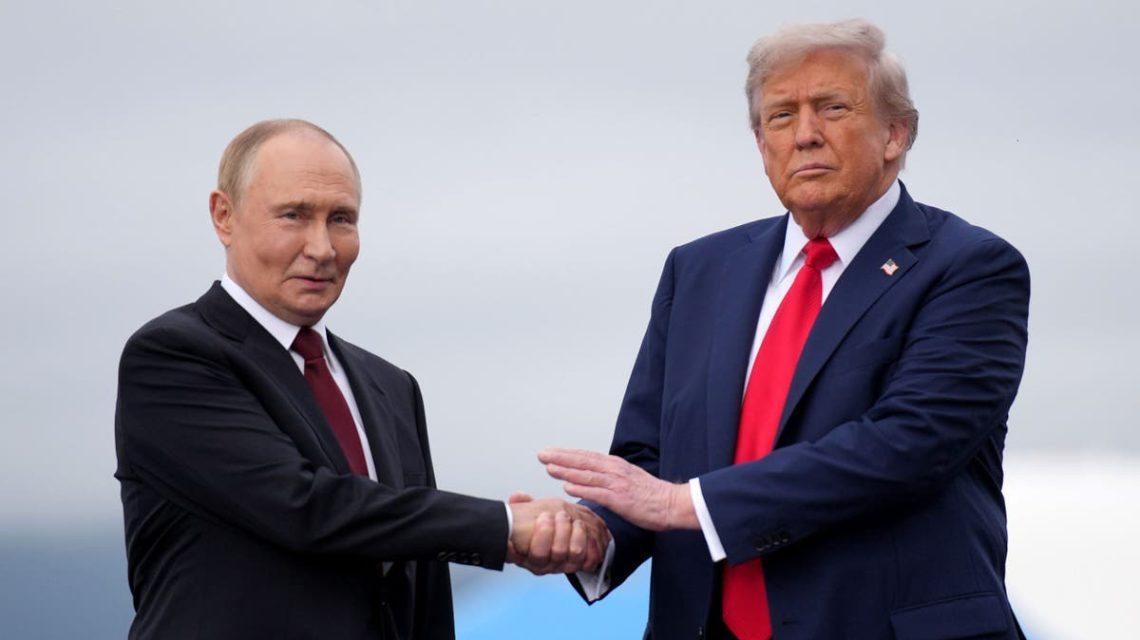
President Donald Trump is attempting to alleviate economic pressure on Russia in a bid to lure Vladimir Putin toward a peace agreement. His strategy includes temporarily easing restrictions on Russian diesel, a decision that has raised concerns among Republican lawmakers and questions about its efficacy in lowering U.S. fuel prices.
Some Republicans and Democrats have voiced opposition to this move. Six Republican senators have joined Democrats urging Trump to retract his decision. Meanwhile, the House saw five Republicans sign a bipartisan letter seeking to overturn the Treasury Department’s authorization.
The easing of restrictions comes as a new sanctions law is set to be implemented by October 18, 2026. This law aims to increase pressure on Russia by Congress.
Bipartisan senators have labeled the diesel agreement a ‘betrayal’ of U.S. allies.
According to the administration, reinstating Russian diesel in global markets could potentially decrease prices for American consumers. Trump emphasized that the fuel doesn’t need to reach the U.S. directly to benefit its citizens.
Nevertheless, energy analysts are skeptical about the agreement’s potential impact. Despite Trump’s offer to halt energy targets in Ukraine, Russia maintained its offensive. John Hardie from the Foundation for Defense of Democracies suggested that a reciprocal agreement between Russia and Ukraine might have been more effective.
After a telephone discussion on October 9 with Putin, Trump announced an agreement for Russia to supply varying amounts of diesel to the international markets, starting immediately and continuing over subsequent months. Treasury followed up with General License 135, allowing transactions involving Russian diesel until April 7, 2027.
The diesel contention has further strained the relationship between Trump and Ukrainian President Volodymyr Zelenskyy. Zelenskyy has criticized the diesel deal, citing Russia’s disregard for Trump’s energy ceasefire.
Russia has continued to target Ukraine’s energy infrastructure, exacerbating conditions as winter nears. An attack this week affected numerous energy facilities, leaving many Ukrainians without power.
The White House has defended the agreement for its perceived dual benefits: augmenting the global fuel market and displaying potential economic advantages of improved U.S.-Russia relations. Trump’s envoys sought to include the agreement in broader peace negotiations.
Masha Kotkin from the Center for Strategic and International Studies noted the limited impact Russian diesel could have on global demand. Meanwhile, Sergey Vakulenko from the Carnegie Russia Eurasia Center cautioned against overestimating the new revenue potential for Russia from these exports.
Despite the economic rationale, critics warn that the move might embolden Putin to ramp up military pressure. Hardie suggested that presenting economic benefits without conditions could lead Putin to resist compromising.
As discussions continue, Congress progresses in a contrary direction, authorizing expanded measures against Russia’s actions. On September 18, Trump signed a law expanding sanctions against Russia and Iran, aiming to deter their intransigence.
Six Republican senators, including Thom Tillis and Susan Collins, alongside six Democrats, have urged Trump to implement new sanctions rather than pursue diesel deals with Russia, citing negligible domestic price impacts.
A collective of House lawmakers has also pressed for revoking the diesel authorization, reinforcing the call for stringent sanctions. The administration, however, is steadfast in prioritizing cost reduction for Americans while seeking an end to hostilities.
Hardie questions the effectiveness of economic incentives in swaying Putin, given his focus on Ukraine and broader geopolitical ambitions.
The diesel agreement tests Trump’s strategy: whether providing Putin a preview of potential cooperation benefits will lead to a settlement, or if it will prompt Moscow to demand more before agreeing to peace.
 Lessons from the Briefing Room
 Rashida Tlaib’s Surveillance Bill Targets Federal Funding for License Plate Readers
 Religious Groups Oppose Hate Speech Training Law in California
 Addressing the High Recidivism Rates in the U.S.
 Public Execution and Its Implications
 Joe Manchin Cautions Democrats on Trump Investigations