Fall and winter in the United States bring cold and flu season, lasting from October to May. During this time, respiratory viruses like the common cold, flu, RSV, and COVID-19 become more common. Dr. Mona Amin notes that dropping temperatures and dry climates increase susceptibility to these illnesses.
Creating a Cold and Flu Prep Kit
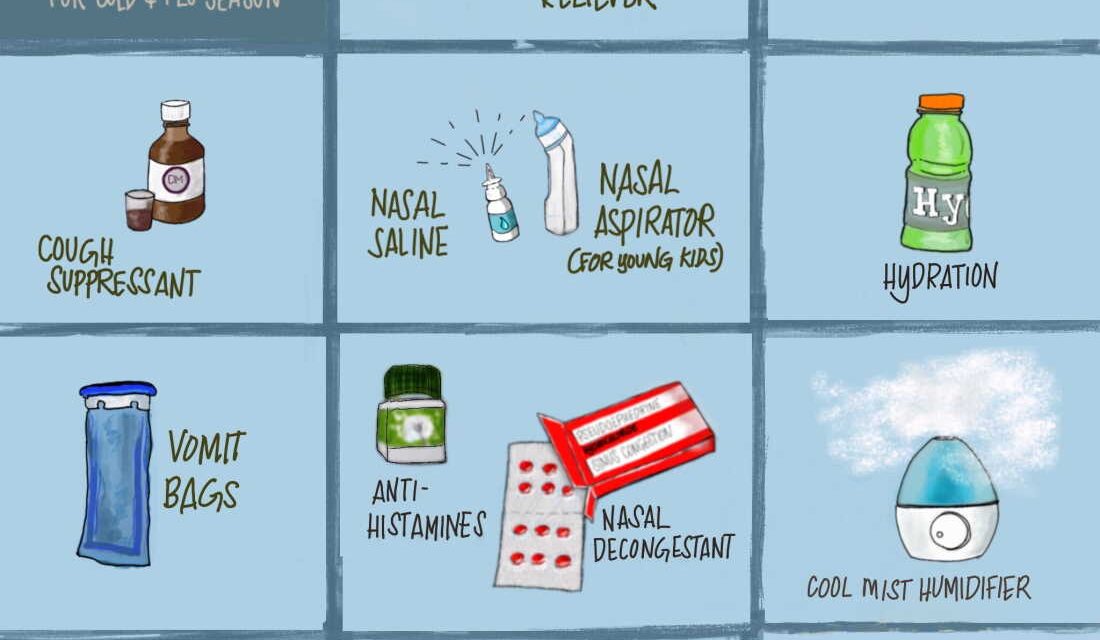
To avoid last-minute trips to the drugstore when sickness hits, prepare a cold and flu kit. Pharmacist Alisha Reed suggests gathering essential items like fever and pain relievers, hydration supplements, and tools for monitoring symptoms. Many viruses can be managed at home as antibiotics don’t treat viral infections. Dr. Amin and Reed recommend these steps:
- Place medications in a specific area, such as a cabinet shelf or a dedicated box.
- Disinfect frequently touched surfaces, get vaccinated, and wash hands regularly.
Essential Items for Your Prep Kit
Over-the-Counter Medications
Instead of multi-symptom medications, choose those targeting individual symptoms to avoid overmedication risks.
- Pain Relievers: NSAIDs like ibuprofen or naproxen help ease headaches and sore throats. Avoid ibuprofen for children under 6 months; naproxen is for children 12 and older.
- Fever Reducer: Acetaminophen or ibuprofen is suitable for fever reduction. Use children’s versions for those under 12 and note that acetaminophen is preferred during pregnancy.
- Antihistamine: Useful for symptoms like sneezing and runny nose, similar to allergies. Consult a care provider for young children.
- Decongestant: Pseudoephedrine pills or nasal spray relieve nasal congestion. Use with caution in children.
- Cough Suppressant: For dry coughs, dextromethorphan can help. Not for children under 4.
- Cough Expectorant: Guaifenesin helps clear mucus but staying hydrated might suffice. Avoid for children under 4.
Read labels carefully to ensure proper usage.
Additional Useful Items
- Honey: Offers relief for children not old enough for cough medicine. Avoid for children under 12 months.
- Thermometer: Essential for checking fevers. Use rectal thermometers for children under 3.
- Nasal Saline Treatment: Keeps nasal passages moist and helps loosen mucus.
- Comfort Items: Chest rubs, disposable vomit bags, humidifiers, and hydration sources like Pedialyte or Gatorade.
When to Consult a Doctor
If symptoms aren’t improving or include severe conditions such as high fever, shortness of breath, extreme thirst, or confusion, contact a healthcare provider. Dr. Reed advises not hesitating to consult your doctor or pharmacist for guidance.
This article was edited by Malaka Gharib, and visual elements were provided by CJ Riculan. For inquiries, contact us at [email protected] or listen to Life Kit on Apple Podcasts and Spotify.
 Phase 3 Trial Reveals Promising Weight-Loss Results for Retatrutide
  Medicare Insurer Sues Government Over Star Ratings
  GOP Lawmakers Question FDA Over Abortion Pill Safety Review
  New Blood Test May Predict Alzheimer’s Disease Risk
  Ebola Outbreak Reaches Kenya Amid Efforts to Contain Epidemic
  Dr. Rachel Brem on Advancements in Breast Cancer Detection