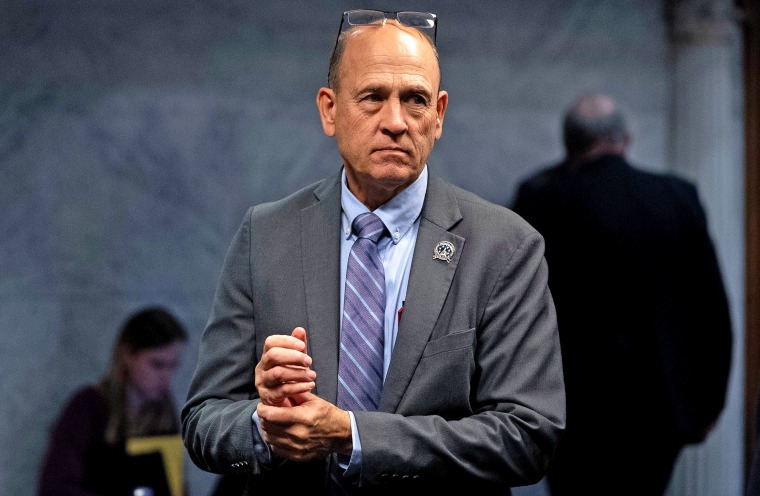
Recently, the introduction of a compelling proposal in Indiana has sparked significant debate. The proposal suggests that public schools should teach the concept of getting married before having children as a means of promoting success in life. Indiana State Senator Spencer Deery, a Republican, advocates for this approach, claiming that if students adhere to this sequence alongside completing education and securing a job, their likelihood of experiencing poverty diminishes greatly.
This proposition, known as the ‘success sequence,’ is a step-by-step guide endorsed by conservatives to enhance financial stability among young individuals. It involves three main steps: attaining at least a high school diploma, securing full-time employment, and entering into marriage before having children. According to research conducted by the conservative American Enterprise Institute and the Institute for Family Studies, a remarkable 97% of millennials who follow this sequence reportedly avoid poverty by the time they reach their early 30s.
Senator Deery expressed his confidence in this approach, noting that many current attempts to tackle poverty are well-meaning but inadequate. “It’s an initiative that costs little, if anything, and holds promise,” he asserted during an interview.
“Some of the things that we throw at trying to fix poverty are well-intended, but not always effective. I think this is worth a try. It really costs us very little, if anything at all.” – Sen. Spencer Deery
However, the proposal has met with criticism. Detractors argue that it overlooks racial disparities and judges students from single-parent families. Matt Bruenig of the left-wing think tank, People’s Policy Project, criticized the ‘success sequence’ for placing the responsibility of poverty on individuals rather than addressing broader government roles, like extending public benefits.
The concept, initially introduced two decades ago in relation to preventing teen pregnancy, gained momentum after being promoted by the Brookings Institution in 2009. More recently, the success sequence is part of legislative efforts backed by conservative think tanks like the Heritage Foundation.
States such as Utah, Alabama, and Tennessee have already integrated or plan to integrate the success sequence into school curricula. Indiana’s recent proposal, Senate Bill 88, has passed the Indiana Senate with a majority, though it faced opposition largely from Democratic legislators.
Sen. Gary Byrne, a Republican, describes the success sequence as common sense, suggesting that teaching children to secure employment and marriage before parenthood builds a family unit, which he believes is more likely to succeed than single-parent situations.
Conversely, Democratic opposition includes concerns from Sen. Shelli Yoder, who feels that incorporating the sequence into ‘good citizenship’ education might unfairly stigmatize students born out of wedlock or raised by single parents.
Jonathan Butcher from the Heritage Foundation argues that educators are equipped to handle these delicate subjects appropriately and that young individuals should not be deprived of these educational insights. While some research supports the notion that completing these steps promotes economic success, it also highlights disparities based on race, with Black people encountering additional hurdles despite following the sequence.
Despite the differing perspectives, Sen. Byrne views this initiative as a straightforward tool to guide young individuals away from poverty. As discussions continue, the idea remains a vibrant point of contention, balancing between potential benefits and the need for sensitivity regarding various life circumstances.
 Poll Reveals MAGA’s Increasing Popularity Over DSA as Democrats’ Future Debated
  North Korea’s Hypersonic Weapon Test Amid Global Tensions
  Debate Over ICE Action in Austin Escalates
  President Trump Warns of Escalating War with Iran at UN Assembly
  Tariffs and Their Impact on Everyday Products
  Senator Criticizes Drug Policy After Ohio Tragedy