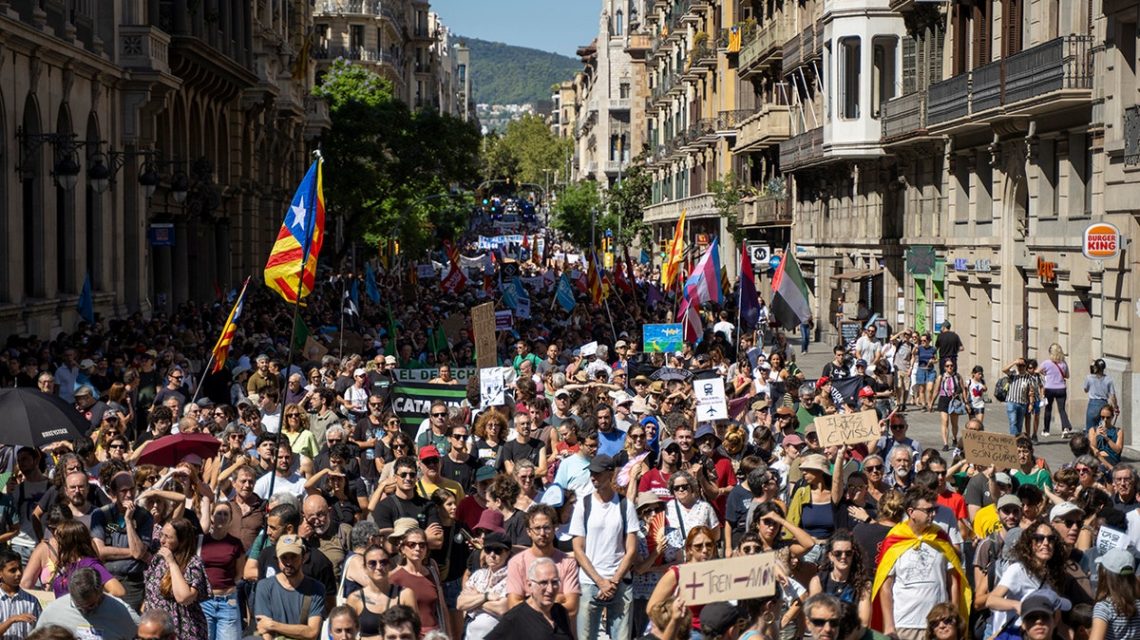
Recent protests in Spain highlighted growing tensions between tourists and local residents. Hundreds of thousands of people took to the streets in cities like Barcelona and Madrid. They protested against rising housing costs, a crisis partly driven by short-term vacation rentals. Barcelona’s Mayor, Jaume Collboni, has addressed this issue publicly.
Local residents argued that mass tourism is making housing unaffordable. Real estate companies convert apartments into vacation stays, driving up prices. Spanish Prime Minister Pedro Sánchez recently spoke about this issue at an event in Barcelona.
An understanding of Barcelona’s competitive housing market came as I searched for an apartment, said travel writer Jordi Lippe-McGraw, who moved from New York City. So many people want to live in Barcelona, adding pressure on housing availability.
Protests in September targeted the expansion of Barcelona-El Prat Airport. Concerns included environmental impact and over-tourism. This aligns with data from the Barcelona Tourism Observatory, which showed the region welcomed 26.1 million visitors in 2025, generating an estimated $15.4 billion in spending.
Among these protests, there is a strong voice against unfettered tourism. José Antonio Donaire, the commissioner for sustainable tourism, mentioned in a New York Times interview that Barcelona began rethinking tourism in 2017. Now, the city’s message is clear: Not one tourist more.
The eviction of María del Carmen Abascal, an 87-year-old pensioner, became emblematic of the crisis. Her death in October led to thousands protesting in multiple Spanish cities.
Short-term vacation rentals lie at the heart of the dispute. Barcelona combined a new city surcharge with the regional Catalan tourist tax on April 1. This is now one of Europe’s highest visitor taxes, according to the Barcelona City Council. The total tax for hotel guests now ranges between $7.84 and $13.44 per night, according to the Catalan Tax Agency.
In 2026, Barcelona plans to limit short-stay cruise tourism. The local council initially approved a municipal tourist tax surcharge for cruise visitors, setting it at the legal maximum of $27 per day.
Lippe-McGraw noted that the tourist areas are bustling, though her residential area is mostly unaffected by protests. Popular spots, like the Gothic Quarter or Las Ramblas, are busy even on weekdays, causing frustration for residents.
Despite the overcrowding, Lippe-McGraw described locals as welcoming. Everyday interactions in stores or even with tradesmen have been positive as she makes an effort to learn Spanish and adapt to cultural norms.
 Woman Rescued After 20 Hours Overboard from Cruise Ship
  Mexican Cartels Exploit Drone Technology at U.S. Border
  Climate Change and Child Marriages in Developing Countries
  Ukraine’s Urgent Request to SpaceX: Reconsider Restrictions on Starshield Satellite Service
  Pope Leo XIV Recuperates Post-Lung Surgery
  U.S. Allegedly Withheld Warnings of Russian Missile Strikes on Ukraine