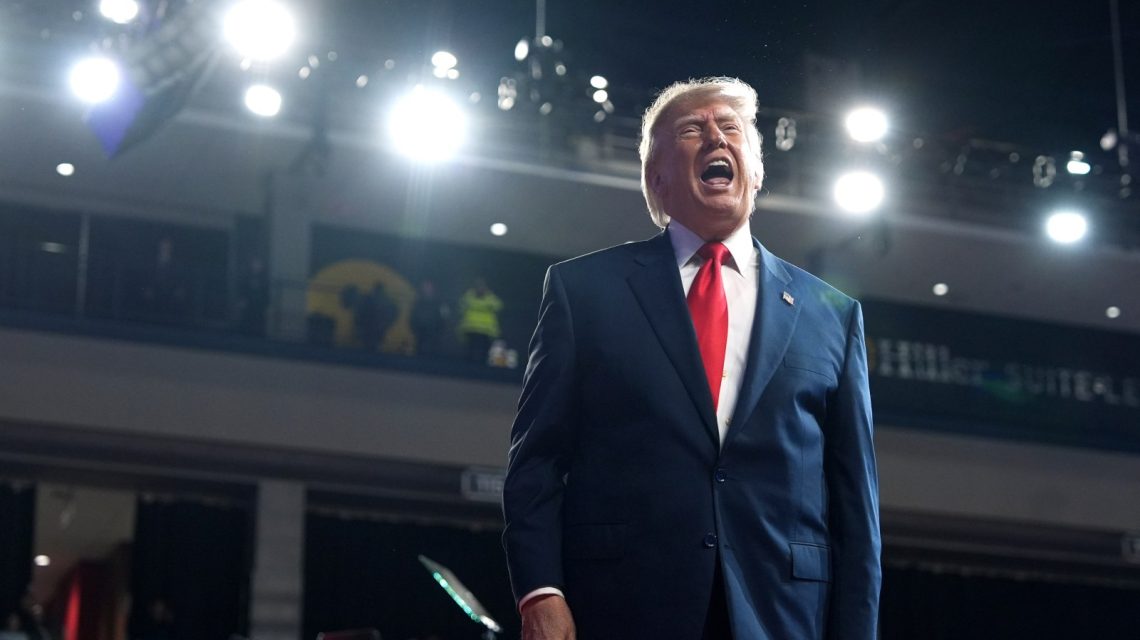
President Donald Trump has reiterated his pledge to provide $5,000 checks to adult U.S. citizens. He criticizes Democratic policies and argues that Republican leadership in Congress will bring financial benefits to Americans. In a video shared on Trump’s social media account, he declared, “I’m going to give all adult citizens in the United States of America $5,000.” He asserted that Democratic policies would increase taxes and potentially lead to an economic downturn. Trump framed these payments as contingent on a Republican congressional victory in the upcoming elections.
Trump’s Proposal Details
The proposal, termed the “Trump Dividend,” was introduced at a Republican convention in Dallas. According to Trump, each adult citizen would receive $5,000 if Republicans maintained control of the House and Senate. Vice President JD Vance mentioned that higher-income individuals might not qualify, but official eligibility criteria have not been released. CNBC noted that such payments would require congressional approval, although Trump claims his administration might not need a congressional vote.
Timeline of Events
- September 9: Trump announced the proposal at a Republican midterm convention.
- September 10: Representative Thomas Massie criticized the proposal, raising concerns about inflation and the notion of votes being bought.
- October 3: Trump reiterated the proposal in a video, linking the payments to Republican control.
- October 12: Trump promoted the $5,000 payments again, attacking Democratic tax policies.
Reaction from Lawmakers
The proposal has faced opposition from both Republican and Democratic lawmakers. Massie expressed discomfort with the implications for voter influence and inflation. David Schweikert, another Republican, also opposed the plan due to concerns about its economic effects. Democrats like Robert Garcia and Jamie Raskin criticized the proposal as impractical and politically motivated. Despite the opposition, Senator Bernie Moreno voiced support for the proposal, intending to draft corresponding legislation.
Economic Implications
Economists have analyzed the potential financial effects. Kent Smetters estimated the program’s total cost at around $1.35 trillion without income thresholds. If excluding high-income earners, the cost might decrease to $1.15 trillion. CNBC’s estimate of the total cost stands at $1.2 trillion. These payments could increase inflation, adding up to 0.5 percentage points to headline and core inflation over a year. Directors from various economic institutions cautioned against the plan’s fiscal impact.
Legal Considerations
The legality of tying the proposed payments to election outcomes has sparked debate. Some legal experts, like former prosecutor Glenn Kirschner, suggest the proposal might violate federal vote-buying laws. Others, such as law professor Mohamed Arafa, argue that it could qualify as protected political speech. This hinges on the payment promise not being conditional on individual voting behavior, distinguishing it from explicit vote buying.
Future Prospects
Currently, the $5,000 checks are a political proposition and not an active federal program. Without congressional authorization, the payments remain speculative. The proposal could influence Republican campaign strategies leading up to the elections, emphasizing the perceived economic impact of party-controlled policies.
 Elon Musk Supports GOP Ahead of Midterms
  Ohio Socialist Candidate Criticizes Super PAC Mailers
  Living Wage for All Act: A Detailed Overview of the Proposed Federal Minimum Wage Increase
  Federal Agents Conduct Search at Rep. Ilhan Omar’s D.C. Home
  Ohio Manufacturing and the Trump Effect
  New York Police Department to Review Use-of-Force Policies