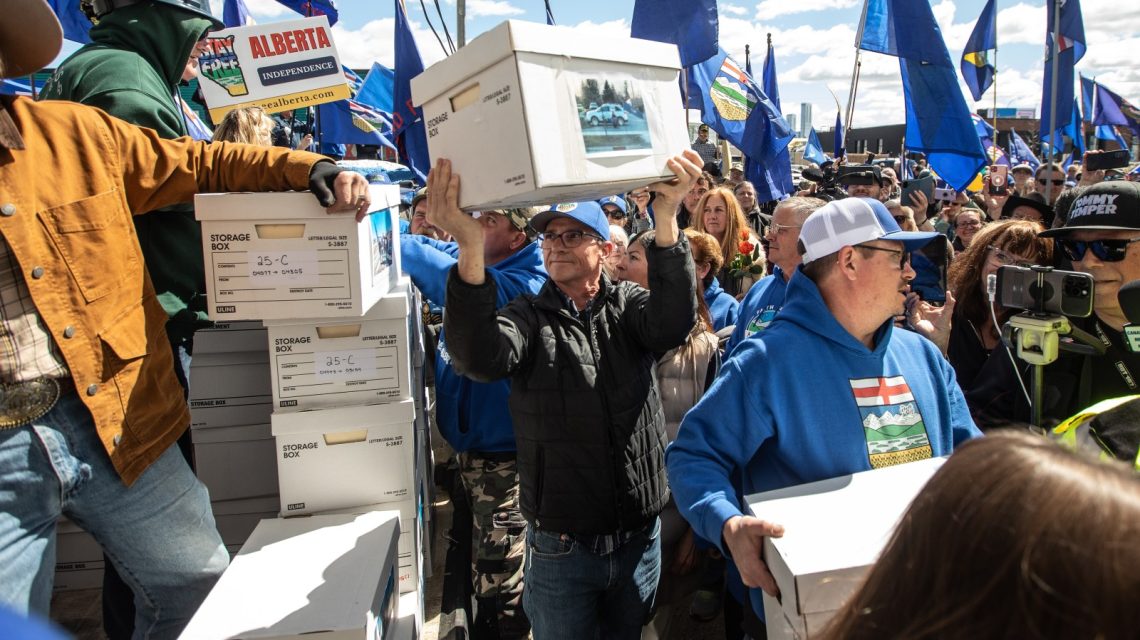
Alberta separatists face increased scrutiny due to claims they offered the United States access to the province’s natural resources in exchange for support for independence. The Globe and Mail published an investigation, alleging that members of the Alberta Prosperity Project (APP) used meetings with U.S. State Department officials to request backing. The proposal reportedly included oil royalty payments, fresh water supplies, and land access for a railway to Alaska.
Dennis Modry, APP co-founder, stated the group presented a document detailing the ‘potential benefits of Alberta sovereignty to the United States of America and to Alberta’ to U.S. officials. However, the group’s lawyer, Jeff Rath, refuted Modry’s statements, calling him ‘delusional.’
Some Canadian Members of Parliament (MPs) criticized these actions, claiming they jeopardized the country’s sovereignty. One MP called for an emergency debate following the report.
The scrutiny arises shortly before Alberta’s referendum on independence. Although not resulting in automatic secession, the referendum asks whether to begin the process by holding a binding vote on separation.
Public Interest Alberta, an advocacy group, has requested a formal inquiry into potential foreign interference, suggesting APP campaigners may have collaborated with American operatives. While earlier reports by Newsweek mentioned meetings with Washington, D.C., no agreements were reached. The White House stated they ‘meet with civil society groups [but] no support or commitments were conveyed.’
Resource Access in Exchange for U.S. Support: Report
According to The Globe and Mail, APP campaigners met with U.S. State Department officials three times last year, on April 22, September 29, and December 16, organized by Rath. Modry claimed they suggested the U.S. help fund Alberta’s transition to independence, with repayment including railway access to Alaska and ‘oil royalties or land access.’ Modry also mentioned offering access to agricultural, forestry, mining, and precious metal resources.
Despite these claims, Modry did not advocate for Alberta to become the 51st U.S. state. Rath denied Modry’s account, stating discussions were general and focused solely on aspirations for Alberta’s independence.
The U.S. State Department remarked that such meetings were routine and no commitments were made.
How Canada Has Reacted
Canadian MPs voiced concerns following the report. Conservative Alberta MP Dane Lloyd, tasked with leading his party’s response to the referendum, stated, ‘Nobody has the right to promise away Alberta’s birthright.’
New Democratic Party MP Heather McPherson sought an emergency debate in the House of Commons, stressing Canadian sovereignty was at stake, yet the request was denied by the speaker. Prime Minister Mark Carney reiterated expectations from the U.S. to respect Canadian sovereignty concerning the referendum.
In May, Alberta Premier Danielle Smith announced a referendum set for October 19. The ballot will include a question on whether Alberta should begin legal processes to hold a binding vote on separation.
The announcement sparked criticism, with some suggesting Smith aimed to prolong the process for political gain. Rath argued it forces pro-independence factions to support Smith’s candidacy in future elections.
Despite her stance favoring remaining in Canada, Smith insists she will not silence the voices advocating for independence.
Why Some Albertans Want to Leave Canada
Many Albertans, along with residents from other western provinces, feel marginalized by Ottawa. Despite being an economic powerhouse due to its oil and gas resources, Alberta feels underrepresented, particularly regarding environmental policies affecting its resource industry.
Cameron Davies, leader of the independence-supporting Republican Party of Alberta, expressed frustrations previously, highlighting the economic imbalance and potential that remains unfulfilled under current systems.
To address tensions, Smith has collaborated with Carney’s Liberal government to develop an oil pipeline to the Pacific coast to appease the discontented populace. On October 1, Carney simplified the federal review by categorizing the pipeline as a national interest, aiming to finalize regulations by September 2027. Carney framed this joint effort as a testament to cooperative federalism in Canada.
 Backlash Against NYT Columnist Over Trump Remarks
  Pete Davidson Criticizes NYC Mayor Over Staten Island and Highway Issues
  Alleged Cartel Leader Arrested in Mexico
  Political Developments: Debates, Trump Announcement, and Campaign Strategies
  Trump Orders Nidal Hasan’s Execution by Firing Squad
  The Canadian Army’s Readiness for Modern Warfare