
Former U.S. Representative David Rivera received a 10-year federal prison sentence for his involvement in a concealed $50 million lobbying operation on behalf of the Venezuelan government during the initial Trump administration. Rivera, who once represented Florida and is a long-time acquaintance of U.S. Secretary of State Marco Rubio, was given the sentence in a Miami federal court after being convicted in May on all charges following a seven-week trial.
Rivera remained in federal custody without bail since the jury announced the guilty verdict on May 1. His sentencing was first scheduled for July 20, then postponed to October 2. He faced a potential maximum statutory sentence of 60 years in federal prison and a possible $20 million asset forfeiture judgment.
Federal Officials’ Reaction to Rivera’s Actions
Federal authorities harshly criticized Rivera, viewing the case as a betrayal of South Florida residents whom he once served. Jason A. Reding Quiñones, U.S. Attorney for the Southern District of Florida, stated that Rivera’s actions were not merely a technical violation but a significant breach of trust: “He sold his reputation to fill his greed.” For South Florida’s community, communism signifies more than an economic idea or historical reference; it represents oppression, political prisoners, divided families, and forced exile.
Brett Skiles from the FBI’s Miami Field Office commented on the case, highlighting that operating secretly for a foreign government leads to consequences. Charles Miller from the IRS Criminal Investigation’s Florida Field Office added that titles or political connections do not excuse accountability.
Details of Rivera’s Conviction
Jurors found Rivera guilty on all federal charges, including failing to register as a foreign agent with the Justice Department and conspiracy to commit money laundering. Political consultant Esther Nuhfer, tried alongside Rivera, was also declared guilty on all charges. Prosecutors stated Rivera and Nuhfer cooperated on behalf of Nicolás Maduro’s government from 2017 to 2018 through a substantial contract with Rivera’s company. Following Rivera’s conviction, a jury ordered the forfeiture of his properties in Doral and the Florida Keys to the government.
Secret Efforts to Shape U.S. Policy
In an indictment unsealed in 2022, prosecutors claimed that then-Venezuelan Foreign Minister Delcy Rodríguez enlisted Rivera to leverage his Republican contacts to influence the Trump administration to soften its stance on Venezuela and relax sanctions. Rivera and Nuhfer allegedly reached out to key political figures, including Rubio and Texas Congressman Pete Sessions, without disclosing the contract Rivera had with a U.S.-based affiliate of Venezuela’s state oil company, PDVSA.
During closing statements, prosecutor Roger Cruz highlighted the defendants’ motives by emphasizing the continued financial gains without regard for the source. Evidence during the trial included messages from an encrypted chat group termed “MIA,” which prosecutors alleged Rivera used with Venezuelan media mogul Raúl Gorrín to communicate with the Maduro government. The trial showed the use of code names, including “bus driver” for Maduro, “Sombrero” for Sessions, and “The Lady in Red” for Rodríguez.
Prosecutors accused Rivera and his associates of attempting to hide their activities, citing backdating documents and fabricating sham agreements. One agreement sought to justify a $3.75 million wire transfer to a South Florida company servicing Gorrín’s luxury yacht. The lobbying campaign secured several meetings between Rodríguez and prominent figures in New York, Caracas, Washington, and Dallas. Sessions later helped facilitate a meeting between Rodríguez and the CEO of ExxonMobil and delivered a letter from Maduro to President Trump after a covert meeting in Caracas.
Defense’s Argument for Rivera
Rivera’s defense claimed he was acting with good intentions, arguing that his activities didn’t require disclosure under the Foreign Agents Registration Act. They contended that the $50 million consultancy contract involved commercial endeavors aimed at reintegrating ExxonMobil into Venezuela and thus exempt from registration requirements. The defense additionally argued that Rivera’s later meetings with Rubio and Sessions pursued goals favorable to U.S. interests, such as displacing Maduro.
“He was working every possible angle to get Nicolás Maduro out,” stated defense attorney Ed Shohat in closing arguments, saying their goals focused on beneficial outcomes and not normalizing relations with Maduro’s government.
In the trial, testimonies came from Rubio, Sessions, and a noted Washington lobbyist, all indicating they were initially unaware of Rivera’s consulting engagement with the PDVSA affiliate. Rivera served one term in Congress after election in 2010 and previously held a top position in Florida’s Legislature. He and Rubio shared housing in Tallahassee when serving in state government, with Rubio eventually becoming the Florida House speaker.
 Controversy Over Judges Assigned to Trump Cases
  America First Global Health Strategy and Its Implications
  Challenges in Germany’s Political Landscape
  Tight Senate Race in South Carolina Draws National Attention
 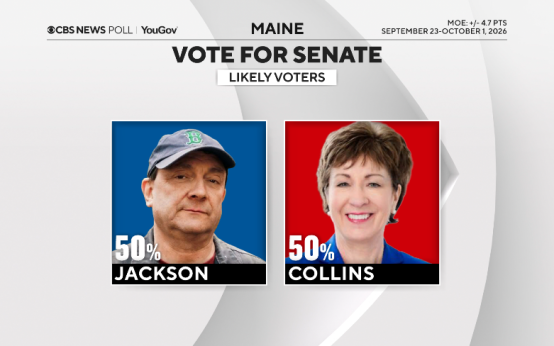 Maine Senate Race Presents Unique Challenges Amid National Trends
  Texas Becomes Key Battleground in Midterm Elections