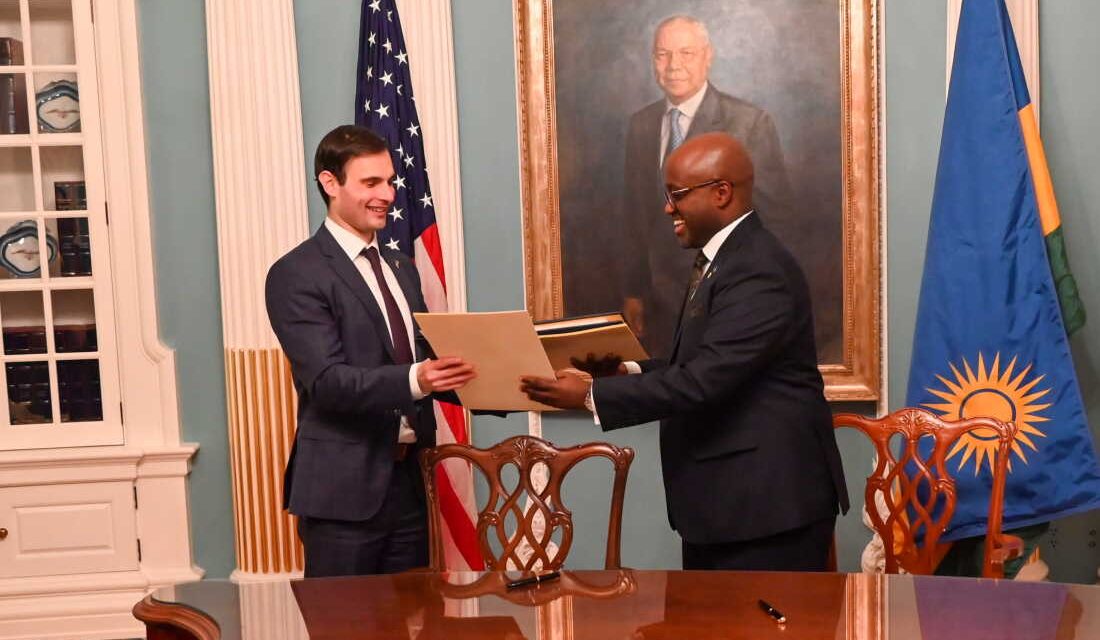
In December, State Department senior official Jeremy Lewin welcomed Rwanda’s Foreign Minister, Olivier J.P. Nduhungirehe, for the signing of a multi-year Memorandum of Understanding (MOU) on global health cooperation. This agreement marks part of the Trump administration’s new approach to international health aid, called the “America First Global Health Strategy.” This strategy aims to change how the U.S. funds healthcare in low- and middle-income countries.
The administration emphasizes that U.S. funding should offer tangible benefits, such as access to local minerals, and require recipient governments to contribute financially. Each country must sign an MOU detailing both U.S. investment and the country’s financial pledge. According to the administration, this requirement encourages self-reliance and decreased dependency on U.S. aid.
U.S. Rationale for the Strategy
The U.S. remains the largest donor to global health programs despite cuts to funding in recent years and the dismantling of USAID. Previous administrations viewed global health spending as a means to build strong relationships and influence through soft power.
The State Department describes the new strategy as one that will protect the homeland by preventing infectious diseases from reaching U.S. shores, strengthen bilateral relationships with co-investment from recipient governments, and promote American health innovation.
This approach represents a more transactional view of health aid, seeking clear benefits for U.S. taxpayers. Such benefits include preferential access to critical minerals and patient data, with the latter being the most controversial aspect.
Participation and Challenges
The U.S. has signed MOUs with 35 countries, committing to approximately $14 billion in health investments over five years. These countries include Nigeria, Rwanda, the Philippines, Tajikistan, Bolivia, and El Salvador.
Rwanda, for example, will receive $157 million from the U.S. while contributing $70 million of its own funds. In return, Rwanda will share patient data and accept the U.S. Food and Drug Administration’s approval of medicines without further Rwandan regulation.
However, Ghana, Namibia, and Zimbabwe have refused to sign MOUs, citing sovereignty concerns. Negotiations between the U.S. and Zambia have also stalled over mineral access provisions. Ghana’s president, John Dramani Mahama, described the proposal as “humiliating” and inadequate.
Expert Opinions
Global health experts see the “America First” strategy as pragmatic but unprecedented in its scope and speed. Jocilyn Estes from the Center for Global Development argues that while coordination with governments makes sense, the quick rollout risks dire consequences and lacks careful planning.
Despite delays in implementation, the uncertainty around funding remains. Stephen Morrison from the Center for Strategic and International Studies notes that U.S. aid is significantly reduced. Countries may feel pressured to sign, as the U.S. is a major player in global health.
Bollyky from the Council on Foreign Relations questions if countries can offset reduced U.S. aid amid economic challenges and inflation. The lack of adjustment time complicates building stable health systems.
NPR requested the State Department’s response to these criticisms. The department highlighted a shift towards self-reliant health systems through MOUs, avoiding “forever aid.”
 Controversy Over Judges Assigned to Trump Cases
  Former Congressman David Rivera Sentenced to 10 Years in Federal Prison
  Challenges in Germany’s Political Landscape
  Tight Senate Race in South Carolina Draws National Attention
  Maine Senate Race Presents Unique Challenges Amid National Trends
  Texas Becomes Key Battleground in Midterm Elections