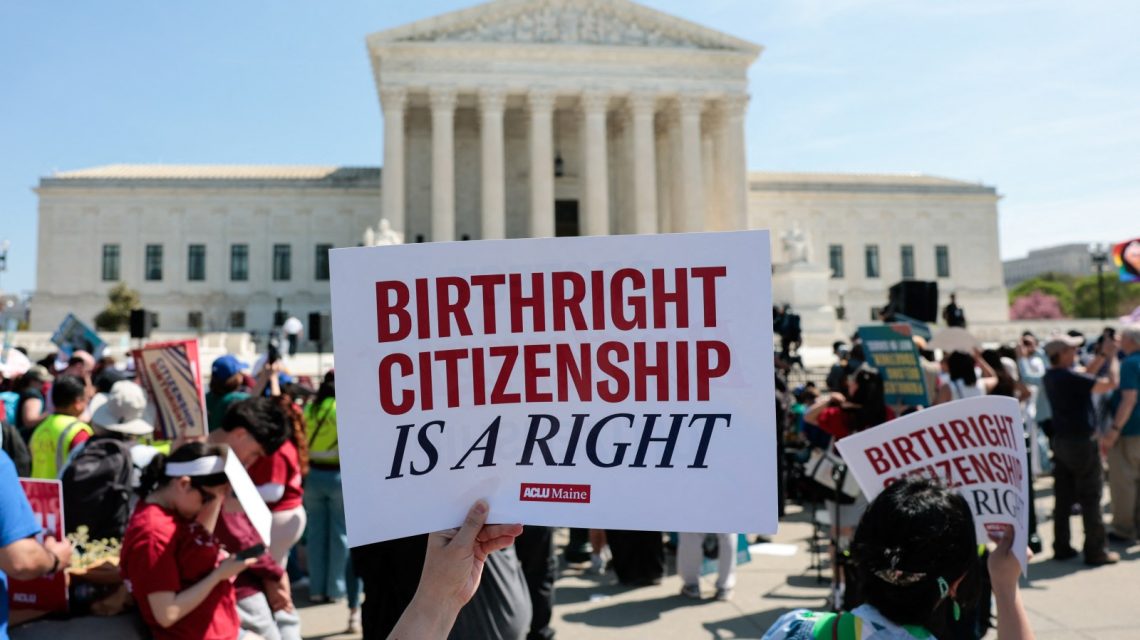
A Senate bill aims to address “birth tourism” by creating a presumption that some pregnant applicants for U.S. visitor visas are traveling to give birth and secure American citizenship for their children. The Birth Tourism Elimination Act, proposed by Republican Senator Tim Scott of South Carolina, seeks to amend federal immigration law to make foreign nationals seeking admission on B visitor visas inadmissible if their main goal is to give birth in the U.S. so their child obtains U.S. citizenship.
Understanding Birth Tourism
Birth tourism involves foreign nationals traveling to the U.S. mainly to give birth and obtain U.S. citizenship for their child. This practice has gained attention within the GOP, which aims to limit birth tourism and adjust birthright citizenship rules. The Supreme Court recently struck down a previous attempt to restrict birthright citizenship.
House Republicans have proposed ending automatic citizenship for future births in U.S. territories, while the Department of Homeland Security has moved to limit citizenship rights for U.S.-born children of certain foreign government employees. Secretary of State Marco Rubio announced visa restrictions targeting commercial birth-tourism networks.
Provisions of the Bill
One key provision involves assessing visa applications from pregnant women. Consular officers would presume an applicant’s primary purpose is to obtain U.S. citizenship for the child if there’s reason to believe she will give birth during her stay. Applicants could rebut this presumption by proving a legitimate reason for giving birth in the U.S. beyond obtaining citizenship.
The bill outlines requirements for B visa applicants seeking medical treatment. Applicants must demonstrate a legitimate reason for treatment, agreement from a U.S. medical provider, estimated duration and costs, and financial means to cover expenses. Senator Scott emphasized that citizenship is not for sale and temporary travel programs should not be exploited for citizenship purposes.
Further Implications
Scott’s proposal does not end birthright citizenship or alter the status of children born in the U.S. Instead, it targets immigration processes before foreign travelers enter the U.S., alongside businesses and individuals facilitating birth tourism. If implemented, consular officers or Customs and Border Protection officers could deny admission based on reasonable belief that a traveler’s main purpose is obtaining citizenship for a child.
Additionally, immigration officers would need to refer such travelers for secondary inspection. The bill proposes adding a birth-tourism ground of inadmissibility to expedited-removal provisions in the Immigration and Nationality Act. It also restricts the Visa Waiver Program and Guam and Northern Mariana Islands waiver program for travelers with the primary purpose of giving birth for citizenship.
Exemptions and Penalties
The bill includes exemptions. Inadmissibility provisions do not apply for legitimate medical childbirth treatment when citizenship is not the primary trip purpose. Exceptions are also provided if the child is biologically linked to a U.S. citizen, lawful permanent resident, or refugee/asylee.
Penalties include amending federal criminal law to encompass individuals knowingly facilitating, sponsoring, organizing, advertising, or profiting from birth tourism. Federal investigations into businesses aiding Chinese nationals have been cited as justifications for the legislation.
The bill mandates the Department of Homeland Security and the State Department to report to Congress on visa denials, parole denials, investigations, prosecutions, removals, and enforcement actions resulting from the proposed restrictions.
Related Executive Orders
The proposal follows an Executive Order from President Donald Trump, aiming to prevent exploitation of nonimmigrant visa classifications via birth tourism. The order directs state and homeland security secretaries to implement policy measures that may include visa denials, entry denials, removals, and actions against facilitators.
Migration Policy Institute data reveals that 9,576 babies born in the U.S. and territories in 2024 had mothers with foreign addresses, suggesting birth tourism makes up about 0.26% of the year’s 3.7 million births. The most comprehensive estimates suggest between 22,000 and 26,000 births annually result from birth tourism.
The bill aims to incorporate executive-branch policy elements into federal statute, including codifying a 2020 State Department rule restricting B visitor visas when the primary purpose is childbirth for citizenship acquisition.
Referred to the Senate Judiciary Committee, the bill had no cosponsors as of late September. House legislation was introduced in July by Republican Representative Richard McCormick, with other Republicans as original cosponsors. Approval by Congress and presidential signature could make the bill one of the most substantial legislative efforts against birth tourism in the U.S.
 Trump’s Ambitious Construction Plans in Washington D.C.
  President Trump to Make Major Announcement
  Reflecting on Legislative Achievements and Future Challenges in Congress
  Detroit Free Press Endorses Abdul El-Sayed for Michigan Senate
  Texas Senate Race Heating Up: Talarico vs. Paxton
  GOP Lawmakers Urge Action on Living Costs Ahead of Elections