
In 2011, Wisconsin dealt with a significant budget shortfall. Despite previous tax hikes, the state found itself in financial trouble. Scott Walker, the newly elected Republican governor, proposed a solution: reduce funding for local governments and school districts to balance the budget.
Walker focused on cutting state aid to other jurisdictions. His rationale was that these governments have their own tax systems and elected officials who understand local needs better. Allowing them to be self-sufficient could help the state manage its expenses effectively.
Wisconsin’s budget was successfully balanced. State taxes remained unchanged. State employees avoided layoffs. Surprisingly, reduced funds for districts did not negatively impact students. In comparison, Wisconsin students performed well relative to peers in other states.
This approach placed Wisconsin on stable fiscal ground, even as new leaders entered the governor’s office. Walker’s idea—balancing the budget by cutting intergovernmental transfers—could offer valuable lessons for the federal government.
However, direct replication isn’t straightforward. Walker’s plan stirred protests by altering collective bargaining and benefits for government workers. Implementing this for federal-level transfer reductions wouldn’t require such changes, as the federal government doesn’t manage state or local employment conditions.
Federal transfers often support programs states already administer. Shifting more financial responsibility to states could lead to better cost control and service delivery by local officials.
In 2025, federal transfers to states amounted to $1.2 trillion, or 17% of total federal spending, a growth from 5% in the 1950s. Great Society Programs have heavily contributed to this increase. Cuts under President Reagan’s “New Federalism” initiative didn’t stop aid to states from rising again in the 1990s; it continued to form about 15% or more of outlays nearly every year since 1995.
In fiscal 2024, Medicaid accounted for 68.8% of federal grants to states, although administered by states. Key functions like education, infrastructure, and law enforcement, significant under the 10th Amendment, also receive federal funds.
Over decades, Washington’s control over state and local activities has grown without strict limitations. Politicians generally accept federal funds as ‘free money,’ often becoming reliant on the national government. Federal contributions to state revenues rose from 22% in 1989 to 34% in 2024.
States can levy taxes and issue debt, but both blue and red states view federal funds as essential. New York uses “Medicaid” in budget talks. States often exploit safety-net programs via provider taxes to boost federal reimbursement, “Medicaiding” their way out of shortfalls.
Congress prefers deferring issues rather than solving them. One way to reduce the federal deficit is letting states cover more expenses.
This shift would initially pressure state governments, but could be seen as a chance for governors and legislators to enhance residents’ lives. Without federal conditions, states might develop initiatives that better address local needs. A decentralized setup could quell national tensions, empowering citizens in line with the founders’ vision.
Currently, many states maintain strong budgets. Following the COVID pandemic, federal aid surged under the assumption their tax revenues would decline. Instead, many states saw increases. Rainy-day fund balances are high, and states have reduced income tax rates.
Increasing state responsibility might ensure long-term fiscal sustainability. Unlike the federal government, states cannot print money and generally operate under balanced-budget provisions, which enforce accountability. State budget processes often require politicians to consider trade-offs, unlike federal patterns of ignoring them.
The present federal system, where it taxes state residents and returns part of it for programs administered at the state level, remains inefficient and confusing. Empowering states could enforce stricter budget limits within total government spending without needing constitutional amendments.
 Talarico Gains Momentum in Texas Senate Race
  Trump’s AI Strategy Sparks Debate Amid Regulatory Concerns
 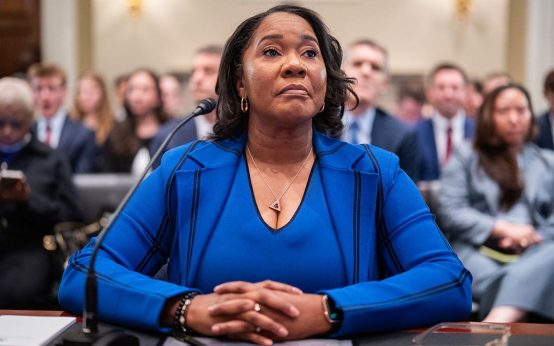 Intensified Scrutiny on ActBlue by House Republicans
 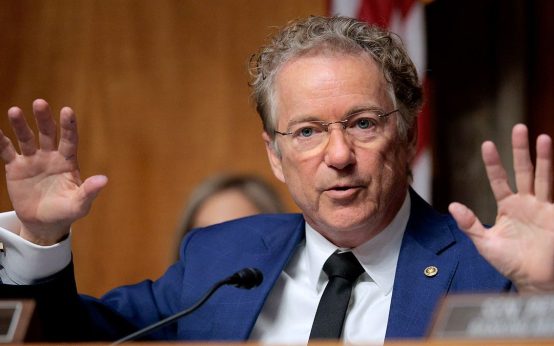 Sen. Rand Paul Criticizes Trump’s Proposed Financial Plan Amid Rising National Debt
  U.S. and China to Discuss AI Transparency
  Fraud Investigation of Autism Center Raises Questions for Minnesota Senate Candidate