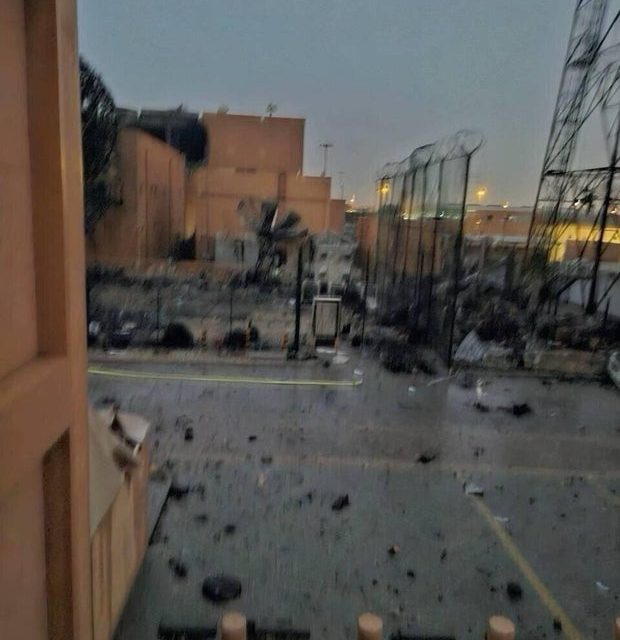
On the first day of the conflict, Iranian forces targeted the Navy’s Middle East base in Bahrain. This occurred before all military families were evacuated, leaving some in a precarious situation for a week or more. A military spouse recounted the distress of waking up and going to sleep with the noise of ballistic missiles.
Iran’s use of missiles and drones on Bahrain persisted for several days. The intensity and length of these attacks caught the U.S. government off guard. Families were not required to evacuate until hostilities had commenced. Although the military had foreseen some retaliation and evacuated facilities on the base, the scale of the attacks exceeded expectations. Many military families resided off-base and faced direct exposure to the conflict.
One spouse described witnessing missile trails, while another reported hearing explosions. CBS News granted anonymity to spouses, concerned about potential repercussions for speaking out.
No military personnel were injured; however, social media images showed severe damage to the base. One particular image depicted an explosion targeting a crucial radar system on the war’s first day. Despite significant damage, the Pentagon has not publicly estimated repair costs. Acting Navy Secretary Hung Cao told The Epoch Times about the devastation in Bahrain.
Bahrain, the Navy’s Fifth Fleet headquarters since the 1990s, serves as a logistical hub for Middle East naval operations. It supports approximately 8,300 military personnel, civilian employees, and families. The base’s damage affected even those at sea. The USS Abraham Lincoln aircraft carrier encountered food shortages due to disrupted resupply routes. Supplies were rerouted through Diego Garcia, impacting delivery times significantly.
With Bahrain’s logistics compromised, the Navy had to rethink supply strategies in the Middle East. Naval Operations Chief Admiral Daryl Caudle discussed adaptive logistics processes at a recent town hall. He acknowledged the transition challenges but assured progress in supply arrangements. During the town hall, Caudle also communicated efforts to retrieve belongings left behind in Bahrain.
According to a Navy spokesperson, service members in Bahrain can arrange the shipment of household goods and vehicles. Those outside Bahrain can appoint representatives for this purpose or coordinate travel to reclaim belongings.
The Navy has facilitated evacuations for approximately 1,450 personnel and families from Bahrain. Many now face financial difficulties due to dual housing costs, in Bahrain and the U.S. One spouse reported depleting savings and resorting to tapping into college funds for their children. While the Pentagon offers reimbursement benefits, processing claims can take considerable time.
The Navy is actively communicating with affected members, providing individual case management and support for relocation. Affected families have until the end of November to transition to a designated residence to maintain entitlements.
Evacuated families have experienced major disruptions. Many relocated to Norfolk, Virginia, or Tampa, Florida. In Tampa, Blue Star Families provided evacuees with essential supplies, helping them adjust to new circumstances.
Despite challenges, some, like Suzy Malloy, credit the family readiness program’s efforts in maintaining stability. While families do not fault the military, they express frustration over the ordeal and prolongation of disruptions. One spouse noted the unanticipated length of the conflict.
 Princess Diana’s Brother Responds to Buckingham Palace’s Denial of Conversation with King Charles III
  United Russia’s Election Victory and Its Implications
  Canada’s Tariff on Chinese Electric Vehicles: Business Influence and Security Concerns
  The Cost of Challenging Beijing
 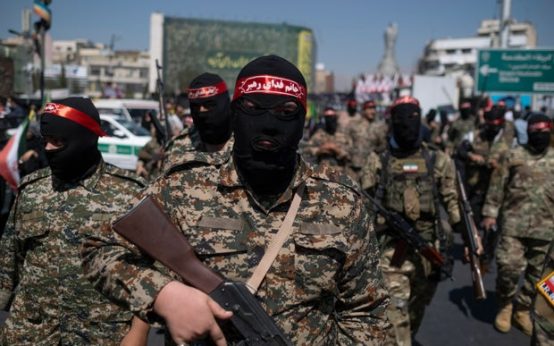 Tensions Escalate in Iran Conflict as Global Leaders Weigh Options
  White House Approves F-35 Sales to Saudi Arabia Amidst Regional Tensions