President Trump’s Unconventional Strategy with China
President Donald Trump has approached the U.S.-China trade relationship with a fresh perspective. In a move distinct from his predecessors, he has imposed tariffs and other measures aimed at recalibrating trade flows and securing U.S. supply chains. This shift was welcomed by American industrial workers affected by factory closures and trade practices. However, Chinese leader Xi Jinping has countered these measures effectively. By restricting access to crucial minerals, manipulating currency values, and rerouting goods, China has mitigated the U.S.-imposed tariffs.
China’s Strategic Moves
While the U.S.-China trade deficit has decreased, China retained a massive trade surplus last year, reaching a record $1.2 trillion. Xi Jinping’s upcoming visit to Washington for a high-stakes summit on September 24 marks another critical juncture. Though Trump has altered the trade dynamics between the two nations, he faces the risk of losing leverage if certain key issues remain unaddressed. These issues include China’s influence in the auto industry, currency manipulation, and semiconductor production.
The Auto Industry Challenge
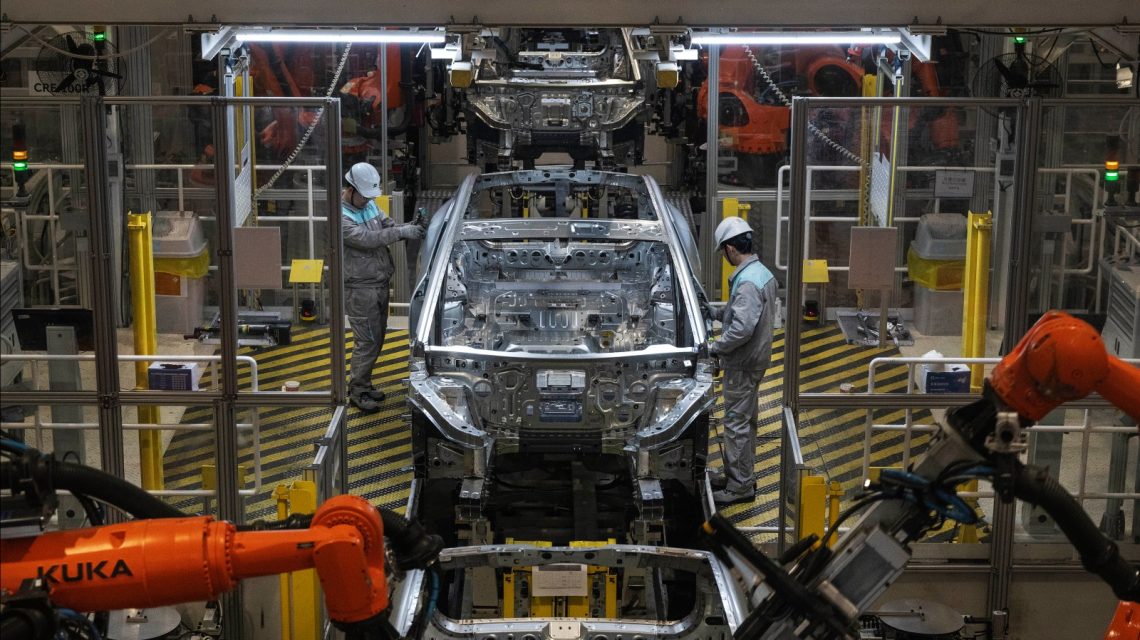
China’s auto industry is expanding globally, driven by subsidies for energy, metals, batteries, and technology transfers. In 2024, it was defined as an existential threat to U.S. auto jobs. Lawmakers and CEOs are concerned that Trump’s indication of accepting Chinese auto factories in the U.S. could undermine American manufacturing. The auto sector significantly influences the broader manufacturing ecosystem. Allowing foreign-owned factories could hinder mobilization during a national crisis.
Currency Manipulation Tactics
Unlike the U.S. dollar, China’s renminbi is heavily controlled by Beijing. This currency management devalues the renminbi, making Chinese exports cheaper worldwide. Despite the strengthening observed in recent months, currency manipulation weakens U.S. trade enforcement actions. Despite tariffs, China’s exports to the U.S. increased by 34.4% in August. This manipulation remains unaddressed, although the Treasury and Commerce Departments have tools at their disposal to confront it.
Semiconductors and Supply Chain Concerns
President Trump has acted to boost domestic semiconductor production, securing commitments from companies such as Micron and investing in Intel. Despite these efforts, concessions are being made to multinational CEOs like Nvidia’s Jensen Huang, who advocate selling high-end chips to China. These actions cast doubt on the goal to reshore microelectronics and reinforce U.S. supply chains. Issuing these caveats may jeopardize the larger goal of rebuilding U.S. chipmaking.
Moving Forward
It’s unclear if Trump will allow Chinese manufacturing plants in the U.S., ignore currency manipulation, or compromise on microelectronics manufacturing. His history of backing away from confrontations with China raises concerns. Previous administrations, including Clinton, Bush, and Obama, often engaged in endless discussions that led to little change. The Trump administration has taken a clearer stance, proposing limited negotiations on nonsensitive goods and maintaining tariffs on many Chinese imports.
However, issues surrounding cars, currency, and chips remain inconsistent with Trump’s broader trade policies towards China. Aligning these policies could strengthen his administration’s strategy.
The opinions expressed in this article are those of Scott Paul, president of the Alliance for American Manufacturing, and do not necessarily reflect the views of others.
 The War on Poverty: A Lesson on Intentions and Outcomes
  Reporters Blocked from White House by Trump Administration
  Universities Should Reject Political Influence on Research Funding
  Media Outlets Sue After White House Ban
  American Public Opinion on Press Freedom
  Media Lawsuit Against Trump Administration for White House Ban