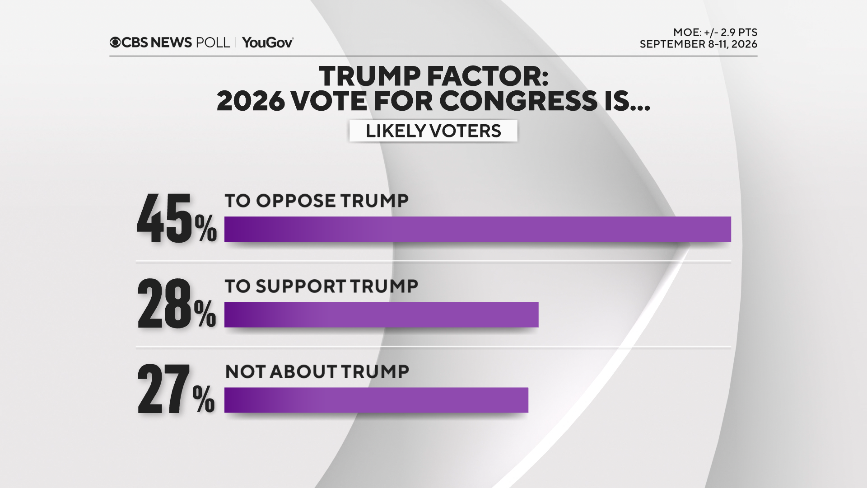
Republicans and Democrats largely agree that the upcoming midterm elections are heavily centered on former President Donald Trump, though their reasons for this focus differ. Voters are contemplating how current President Trump’s influence might surpass that of the 2018 midterms.
This election is happening amid multiple uncertainties: economic issues, inflation, international conflicts, and the impact of artificial intelligence. Inflation and pricing concerns greatly influence voter sentiment, similar to two years ago. Although voters do not believe either party will improve their personal finances, many are expressing opposition to the party in power.
A significant number of voters prefer candidates who reject new tariffs and oppose the conflict with Iran, which they associate with increased prices. CBS News’ House model transforms general voter preference into potential seat distribution in Congress. Currently, Democrats are estimated to hold 228 seats in the House, which is a majority, though not overwhelmingly large. The range could extend into the high 230s if more voters shift towards Democrats, but Republicans still have a chance to maintain their current narrow majority if lower estimates hold at 215 seats.
This Republican strength derives from continued support among MAGA and 2024 Trump voters, who primarily see opposing Democrats as their priority. Democrats gain support mainly from those frustrated with high prices and who oppose Trump’s policies. Many voters feel the “One Big Beautiful Bill” has not improved their finances.
Voter Turnout and Party Dynamics
Democratic voters express greater enthusiasm about participating in the election compared to Republicans. Among Republicans, Trump’s influence remains strong, with MAGA Republicans motivated by his calls for high voter turnout. Despite Trump’s absence from the ballot, interest remains high among his base. However, non-MAGA Republicans show less commitment to voting.
Trump’s endorsement carries significant weight among Republican voters, especially on issues like immigration, aligning with his stance on ICE, tariffs, and the Iran conflict.
The overall distribution of congressional seats will hinge on critical voting groups and their motivations. Democrats enjoy a slight edge, but the endorsement from democratic socialists does not resonate beyond their core supporters and is mixed even there. They see a rise in support among Hispanic voters, who largely oppose ICE policies.
Economic Concerns and Partisan Views
In 2024, Trump’s victory was partly attributed to beliefs that he could improve the economy and manage prices. Many of these voters still align with the GOP, despite economic challenges, due to unfavorable perceptions of Democrats. Those hostile to Democrat control view it as a cultural threat.
Within the Republican Party, opinions differ on gas prices, especially regarding the Iran conflict. Most MAGA supporters are willing to endure higher prices, unlike other Republicans. Both parties anticipate a reduction in employment due to AI, with Democrats more inclined to hold this view.
Broadly, voters prefer candidates against the construction of new data centers locally. This CBS News/YouGov survey was conducted nationally with 2,460 adults from September 8-11, 2026. The sample was adjusted to mirror national demographics and past voting behavior. It has a ±2.3-point margin of error. CBS News and YouGov developed a statistical model accounting for historical patterns and survey results to project party seats. These estimates are susceptible to error and will evolve as new data emerges before the elections.
This survey highlights the current political landscape and provides insights into voter priorities leading up to the midterms.
 The Impact of Arts and Closure on Democracy
 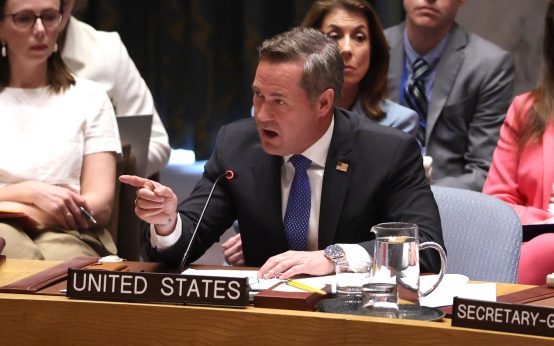 U.S. Ambassador Comments on Iran War Duration Amid Political Concerns
 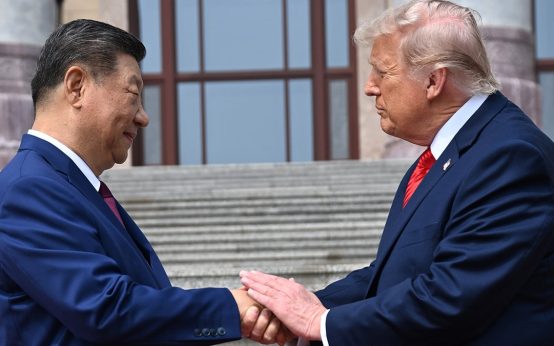 US-China Relations Under Scrutiny: Expert Warns of Escalating Tensions
  No Timeline for End of Iran Conflict
  German Chancellor Merz Vows to Pursue Reforms Despite Election Setbacks
 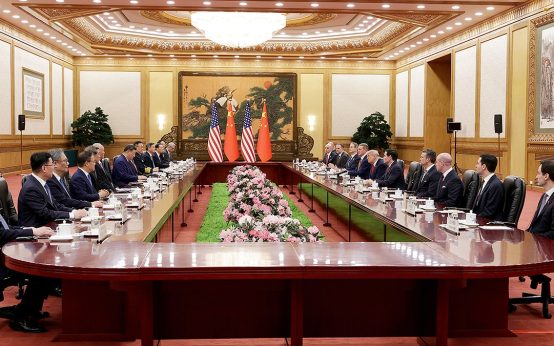 The Technology Rivalry: Trump’s Meeting with Xi and the AI Ecosystem Clash