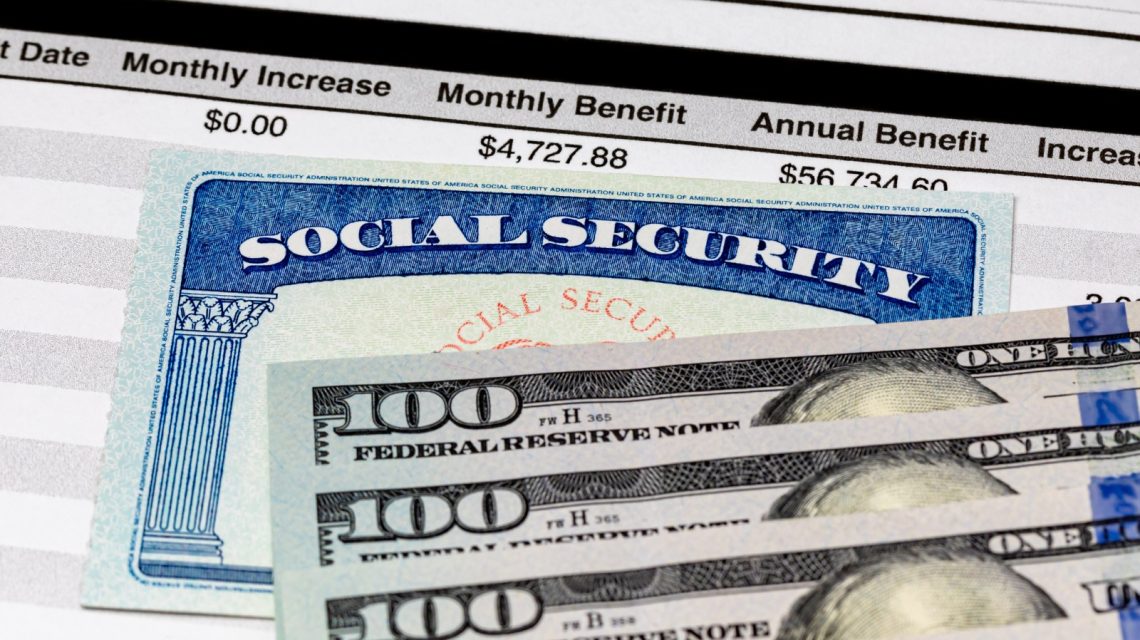
Millions of Social Security recipients now have more clarity on the potential size of their 2027 cost-of-living adjustment (COLA) following the release of the federal government’s second of three inflation readings. This data is crucial for determining next year’s benefit increase.
Important Inflation Data
The Consumer Price Index for Urban Wage Earners and Clerical Workers (CPI-W) rose by 3.5% over the 12-month period ending in August, as reported by the Bureau of Labor Statistics. The August index level reached 328.481, a key figure for CALI calculations, rather than the often-cited Consumer Price Index for All Urban Consumers (CPI-U).
The broader CPI-U increased by 0.4% in August from the previous month on a seasonally adjusted basis and experienced a 3.4% increase annually. These figures bring the 2027 COLA calculation near completion, with only the September CPI-W figure pending. September completes the three-month measurement period used for the adjustment.
Impact on Beneficiaries
As of July, more than 75.7 million individuals were receiving Social Security benefits, Supplemental Security Income, or both. The annual COLA directly affects the growth of their payments each year by accounting for consumer price increases.
Inflation this year drew attention to the 2027 COLA. In July, the CPI-W was 327.104, demonstrating a 3.4% increase from July 2025. Recipients received a 2.8% COLA for 2026, with earlier adjustments being 2.5% in 2025 and 3.2% in 2024. An 8.7% adjustment occurred in 2023 due to significant inflation earlier in the decade.
The Senior Citizens League had projected a 3.6% COLA for 2027. This estimate is down from their June and July predictions of 3.8%. The revised forecast considered July’s 3.4% annual CPI-W increase.
CPI-W’s Role in COLA Calculation
The inflation rate reported from the CPI-W should not be confused with the final Social Security COLA. By law, the Social Security Administration averages the CPI-W index from July to September and compares it against the same months from the last year a COLA took effect. The percentage increase is then rounded to the nearest 0.1%.
For 2027, the comparison is made with the third quarter of 2025, when the CPI-W averaged 317.265. This comparison led to the 2.8% COLA of 2026. The first 2026 figure in this equation was July’s CPI-W reading of 327.104, followed by August’s level. September’s data will arrive next, finalizing the 2027 COLA.
Possible Increase in Benefits
The exact rise in benefits for 2027 remains uncertain. The Committee for a Responsible Federal Budget anticipated a 3.4% COLA next year, slightly higher than 2026’s 2.8% COLA.
If the COLA were to reflect the 3.45% average of July and August’s annual CPI-W data, retired workers could see a $71.97 monthly increase, resulting in an annual uptick of $863.60. With a current average monthly benefit of $2,085.98, this would elevate the monthly amount to about $2,157.95, or $25,895.36 yearly.
The final inflation reading from BLS, scheduled for publication on October 14, will solidify the COLA, with the Social Security Administration announcing it officially that day. This adjustment will impact benefits paid in December and received by beneficiaries in January 2027. Supplemental Security Income will also adjust according to this annual COLA.
 Carnival Panorama Passenger Jumped Overboard During Final Leg of Cruise
  Nikole Hannah-Jones Reflects on Educational Choices for Her Daughter
  Life and Challenges at Chennai’s Kasimedu Fishing Harbour
  Chicago Bears Eye Potential Move to Indiana: A Look at the Developments
  Amazon Offers Discounts to Employees at Whole Foods
  Inside the American Airman Rescue Mission in Iran