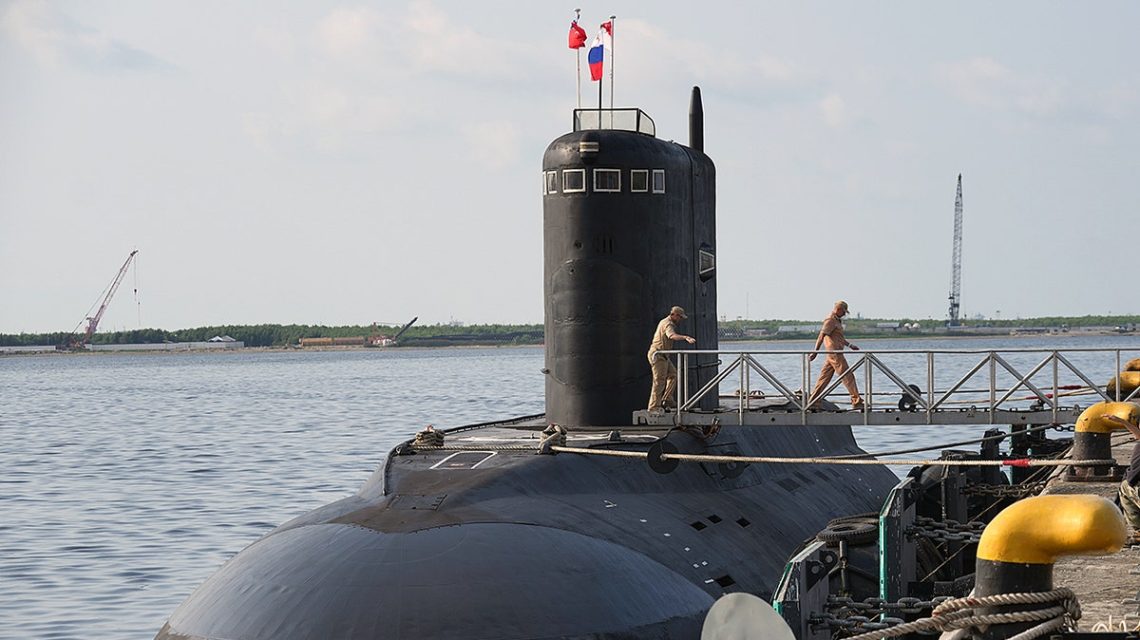
Russia’s new-generation nuclear-powered submarines are quietly exerting pressure on NATO’s northern defenses. A former NATO commander emphasized the strategic challenge posed by Russia’s growing military infrastructure in the region, alongside President Vladimir Putin’s development of new weapons capabilities.
Increasing Tensions in the Arctic and North Atlantic
Russia is enhancing its military presence in the Arctic, particularly around the Kola Peninsula, bolstering military infrastructure such as airfields and ports. This strategic move seeks to strengthen Russia’s control over the Northern Sea Route and the GIUK Gap, a crucial maritime corridor.
NATO’s Allied Joint Force Command Brunssum warned of the serious threat posed by the expanding Russian submarine presence. Highlighting the rising challenge, a post declared that activity was occurring below the ocean surface, necessitating closer monitoring.
Modernization and Capability Concerns
Russia’s advancement includes deploying quieter nuclear-powered SSGNs capable of long-range strikes. NATO is confronted with significant undersea surveillance challenges due to these submarines, explained retired Gen. Philip Breedlove. He noted the difficulty in detecting and tracking submarines, which can stealthily approach any nation’s coastline to launch missiles.
Breedlove stated that submarines can launch ballistic and cruise missiles from positions close to U.S. and NATO shores. The stealth enhancements of Russian submarines pose an increasing problem for NATO.
Russia’s Yasen-M-class submarines integrate advanced technologies, enhancing their stealth and operational capacities. They can carry missiles with significant range and evasion abilities, remaining concealed while achieving strategic goals in global waters.
Strategic Implications and NATO’s Response
As tensions rise, Russia’s advancements in submarine technology require NATO to bolster its northern defenses. Recent Russian military activity highlights the growing importance of the Arctic, spurring NATO’s strategic adaptations.
Breedlove suggested that Putin’s strategy includes deploying from defensible bastion waters in the north. NATO must refine its capabilities to detect and track Russian naval movements.
The GIUK Gap remains pivotal for Russian naval access to the Atlantic. Russian vessels must traverse this area to reach open ocean, making it a strategic focus for NATO and its allies.
NATO’s Northern Strategic Posture
NATO has initiated measures to enhance its northern defenses. In 2026, it launched Arctic Sentry, a comprehensive military initiative aimed at coordinating allied forces in the Arctic and High North. The alliance also introduced Forward Land Forces Finland to bolster defenses along the northeastern flank.
The Arctic region’s significance grows as ice recedes, enabling quicker European-Asian trade routes. This development presents economic opportunities and strategic challenges. Russia’s efforts to control these waters add to the complexity.
In response to NATO’s movements, Russian officials expressed concerns about increased military activities in the Arctic. Russian Foreign Minister Sergei Lavrov warned of potential armed confrontations stemming from these developments.
 Hurricane Polo Threatens Catastrophic Impact on Mexico’s Coast
  Trump’s Diplomatic Agenda: UN Speech and Global Issues
  The Shofar: A Symbol of Healing and Redemption
  Princess Diana’s Brother’s Book Sparks Royal Controversy
  Cancellation of the Red Sea International Film Festival Amid Regional Conflict
  Family Seeks Answers Following Elderly Woman’s Death Under Canada’s Assisted Dying Program