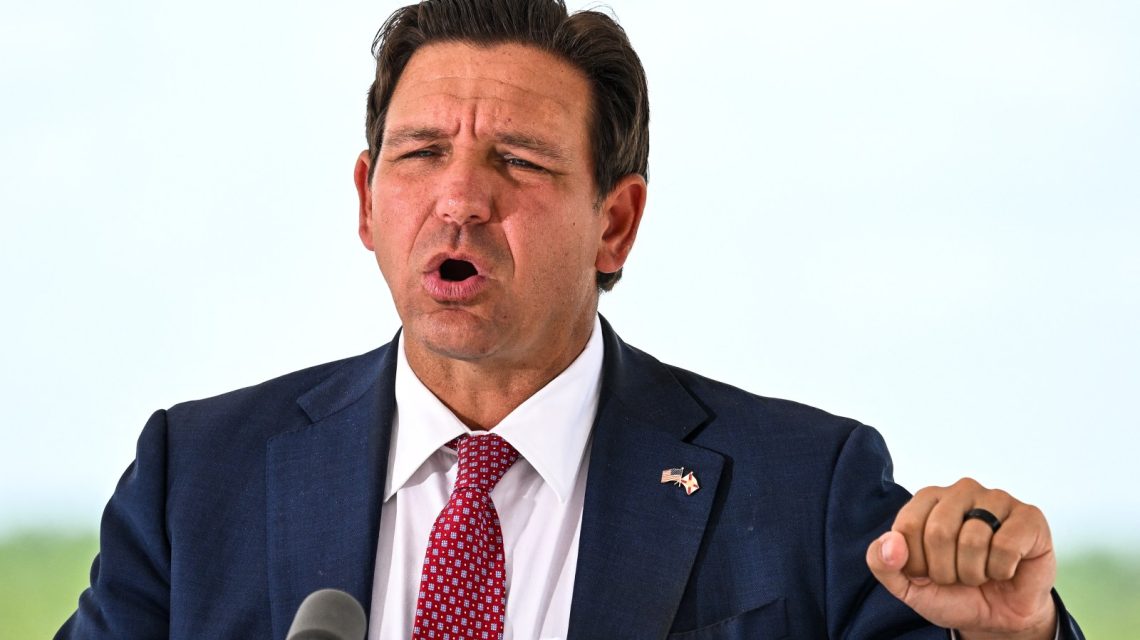
Governor Ron DeSantis of Florida has joined other Republicans in expressing concerns about Flock Safety’s automated cameras. He warned that the technology may have exceeded privacy boundaries and called for enhanced privacy protections. On Wednesday, DeSantis stated that public concerns about data collection and sharing by these cameras are valid, suggesting the need for a systemic change.
DeSantis described the cameras as “out of control.” Although he supports law enforcement using tools to hold criminals accountable, he emphasized that he does not want the state to become a surveillance society. “We need protections for individuals while targeting criminals—that’s essential. However, tracking everyday movements of Floridians and how it’s done is another matter,” DeSantis remarked.
Political professor Craig Agranoff from Florida Atlantic University highlighted DeSantis’ remarks as aligning with a bipartisan skepticism towards the rapid growth of automated license plate readers. Despite DeSantis’ advocacy for law enforcement tools, his caution against forming a surveillance state was notable. Agranoff added that concerns about data retention, access to information, and the extensive number of cameras have persisted within conservative circles and among privacy proponents. Legislative limits align with DeSantis’ recent focus on AI regulations, hinting at boundaries even among law-and-order Republicans regarding constant tracking.
Newsweek contacted DeSantis’ office for more details.
As more than 120,000 camera locations have emerged nationwide, FlockHopper, a privacy-centric mapping site, tracks Flock and other automated systems, revealing the Republican backlash.
Garrett Langley, CEO of Flock Safety, appealed for a compromise balancing public safety and privacy amid mounting criticism. He acknowledged concerns over misuse while defending the technology’s crime-solving role, advocating for robust safeguards and oversight. The company recently introduced privacy and accountability measures such as reducing default data retention to seven days and enhancing transparency.
Supporters argue that the cameras assist police in investigating crimes and emergencies. Conversely, critics have questioned the data’s breadth, access rights, and potential misuse for surveillance on uninvolved individuals.
Senator Josh Hawley of Missouri announced a formal investigation into Flock Safety, probing database access details. His action adds federal scrutiny to the primarily state and local level debate.
Local governments have also responded. Tempe, Arizona shut down its Flock camera system and intends to terminate its contract, citing misuse concerns outweighing benefits. Earlier, Tempe restricted external law enforcement access to camera data.
Additionally, Senator Bernie Sanders from Vermont criticized Flock, arguing its AI-powered cameras may enable mass surveillance and threaten privacy and civil liberties. His intention to propose legislation against AI-driven mass surveillance reflects growing cross-party concerns.
Republican criticism extends beyond DeSantis, showcasing bipartisan opposition to government surveillance and privacy issues. While Flock and law enforcement agencies advocate the cameras’ public safety utility, data privacy concerns generate rising political resistance.
List of recent Republican critics includes:
- Ron DeSantis
- Senator Josh Hawley
- Congressman Greg Steube of Florida
- State Representative Brian Harrison from Texas
- State Representative Thomas Beach from South Carolina
Additional lawmakers who previously pushed against the cameras consist of:
- Representative Scott Perry of Pennsylvania
- Representative Keith Self of Texas
- Representative Eli Crane of Arizona
- Representative Andrew Clyde of Georgia
- Representative Thomas Massie of Kentucky
- Representative Tim Burchett of Tennessee
 Ken Paxton’s Campaign Funding and Polls
  Inside the Secret Deals Powering the President’s Push to Deport Migrants to Countries Not Their Own
  Independence of Research from Political Agendas
  Sen. Roger Marshall Denies Allegations of Political Attack
  Concerns About Food Safety Reach Critical Levels
  Court Blocks Trump’s Mail-Ballot Rules Ahead of Elections