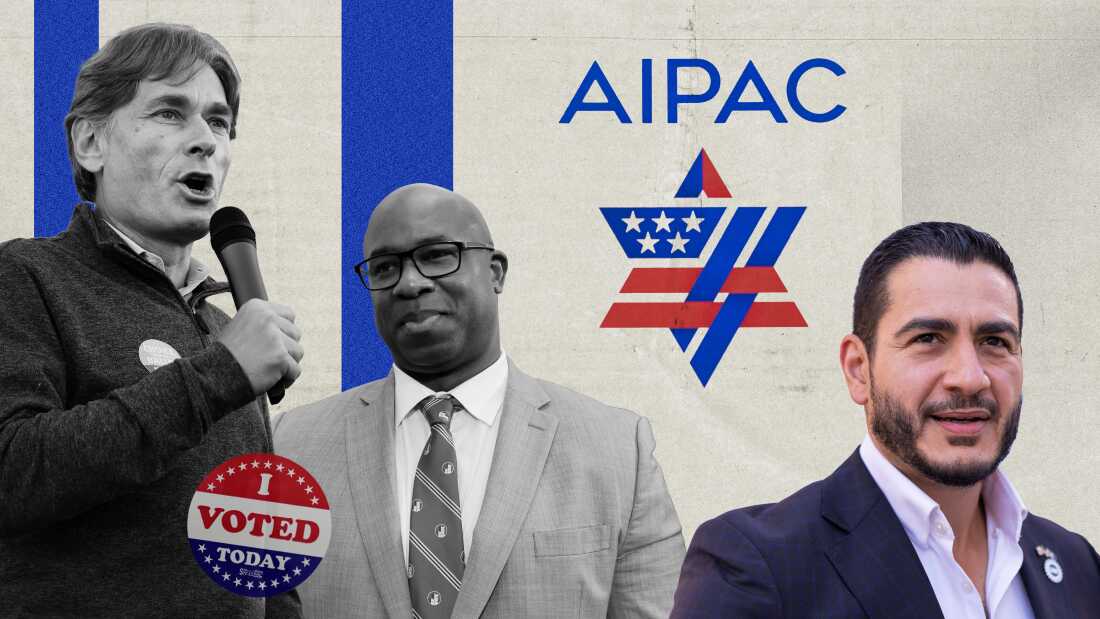
The American Israel Public Affairs Committee (AIPAC) has taken center stage in the political arena during recent election cycles. Many Democratic candidates now openly choose not to receive financial support from the organization. This change is part of a growing trend among Democrats to distance themselves from pro-Israel lobbying.
Spotlight on Democratic Primaries
During Michigan’s Democratic primary for the U.S. Senate, Abdul El-Sayed criticized his rival, Rep. Haley Stevens, for her ties to AIPAC. El-Sayed’s victory highlighted the Democratic left’s influence and a broader opposition to big political donations.
AIPAC’s Historical Influence and Recent Changes
AIPAC, established in the early 1950s, historically focused on bipartisan support in Congress to bolster U.S.-Israel relations. Previously, AIPAC refrained from endorsing candidates, according to Ken Toltz, a political activist with experience at AIPAC. However, with the 2022 election cycle, AIPAC launched a political action committee (PAC) and a super PAC, signaling a strategic shift. This was a response to an increasingly partisan political climate, anti-Israel sentiments, and high campaign costs.
Howard Kohr, former AIPAC executive, explained to The Washington Post that the move aimed to protect allies and counter critics. Public awareness of AIPAC has increased, though understanding of the group’s nuances remains mixed, Toltz noted.
Declining U.S. Support for Israel
Support for Israel in America, especially among Democrats, is waning due to conflicts like the Gaza war. Ron Kampeas, former Washington bureau chief for the Jewish Telegraphic Agency, said public opinion turned against Israel amid extensive destruction in Gaza. A Pew Research Center survey showed 60% of U.S. adults view Israel unfavorably, an increase from 53% the previous year.
For the first time in over two decades, a Gallup poll indicated more Americans sympathize with Palestinians over Israelis. House Democrats’ recent attempt to cut aid to Israel, although unsuccessful, highlighted shifting perspectives even among Democratic leaders.
As AIPAC’s influence in campaign financing grows, some Democrats find its backing more of a burden than a blessing. Political analyst Van Jones remarked that AIPAC’s reputation has suffered, complicating its role in elections. Nevertheless, AIPAC remains focused on maintaining strong bipartisan support for Israel in Congress, said Patrick Dorton, spokesperson for AIPAC’s super PAC, United Democracy Project.
Spending Trends and Political Strategies
AIPAC’s heightened spending aligns partly with its opposition to the Iran nuclear deal and its backing of Republicans opposing 2020 election results. These actions raised tensions with certain Democrats. A notable instance of AIPAC’s influence was its role in defeating Rep. Jamaal Bowman, a vocal critic of Israel.
In a controversial New Jersey House primary, AIPAC’s efforts against Rep. Tom Malinowski, who supported limited military aid, seemed counterproductive. Although Malinowski lost, the victorious Analilia Mejia was even more critical of Israel. AIPAC’s reach extended beyond far-left critics to include figures like Rep. Thomas Massie, an isolationist Republican.
United Democracy Project’s financial outlay increased significantly from $26 million in 2022 to $62 million, including substantial investment in Michigan’s Senate primary. Brendan Glavin of OpenSecrets highlighted the use of regional super PACs funded by UDP as a strategy not unique to AIPAC.
Groups affiliated with party leadership remain dominant in campaign financing, with millions at stake. Despite AIPAC’s capability to mobilize funds, economist Dany Bahar believes its effectiveness mirrors that of other single-issue groups such as the NRA and Planned Parenthood.
Public Misperceptions
Some portray AIPAC fundraising as tied to foreign agents, which is misleading. Jones emphasized that criticizing AIPAC or Israel is valid, but labeling American Jews as dual-loyalists or foreign agents is dangerous. Despite being singled out, AIPAC maintains it thrives on American democratic principles.
Dorton reiterated that AIPAC consists of American pro-Israel voters who uphold democratic values. The increasing scrutiny AIPAC faces represents one of its most significant challenges since its creation.
 Political Strategists Karl Rove and David Axelrod Discuss Voting and Predictions
  The Trump Team Targets Military Leadership
  Trump’s Crypto Ventures Stir Controversy
  Maryland Bans Dynamic Pricing in Grocery Stores
  Democrats Eager to Flip Senate Amid Polling Challenges
  Challenges Faced by Republicans in the Upcoming Midterms