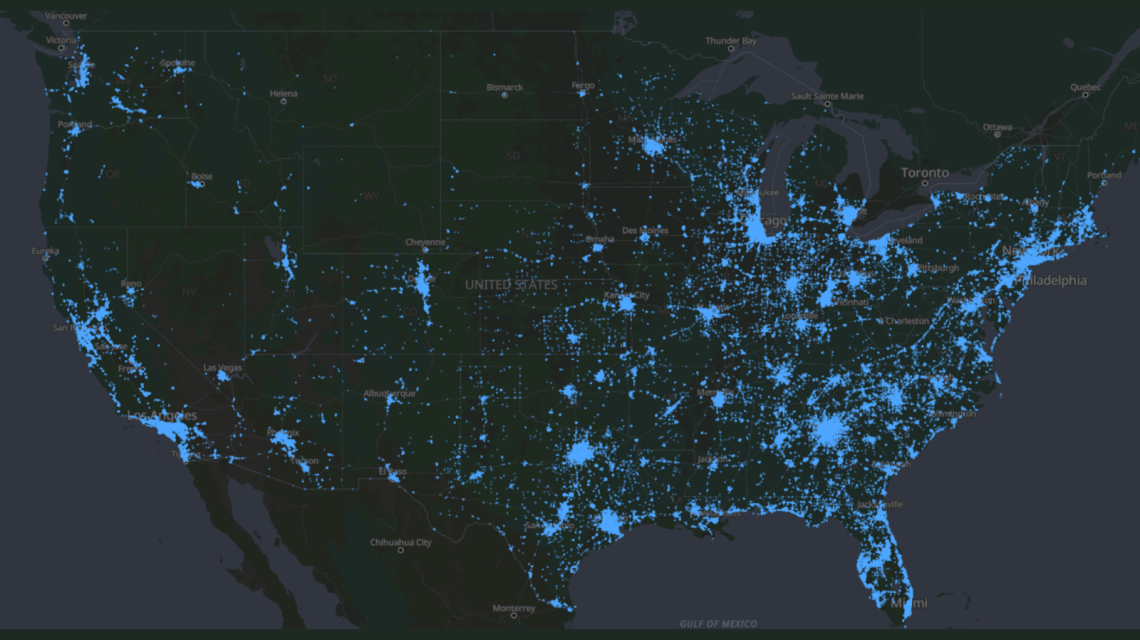
Flock Safety operates a widespread network of automated license plate reader (ALPR) cameras. These cameras are installed at strategic locations like roads, intersections, and neighborhood entrances. They capture license plate information, along with details such as a vehicle’s color, make, and model. Participating law enforcement agencies can then search this information.
Supporters argue that the system is a valuable investigative tool. Police departments across the country credit Flock cameras with identifying suspects, recovering stolen vehicles, and generating investigative leads. The effectiveness of these cameras has contributed to Flock’s rapid growth, with thousands of communities now using these systems. According to anti-surveillance group DeFlock, over 122,000 license plate reader cameras have been mapped nationwide.
Why Are Flock Cameras Controversial?
The controversy arises from the ability to track vehicle movements. Critics claim that, while one camera captures a brief moment, a network of cameras can document detailed movement records over time. Privacy advocates warn that such systems could disclose where people live, work, worship, or receive medical treatment.
Opposition to Flock cameras has expanded beyond privacy groups. Several communities have rejected new installations or removed existing networks over surveillance and civil liberties concerns. Some Republican lawmakers have proposed legislations to limit license plate reader technology, arguing it might threaten privacy and constitutional rights, especially those under the Fourth Amendment.
Concerns about system misuse have also surfaced. Allegations of officers improperly accessing databases have led critics to highlight potential loopholes in safeguards. However, supporters emphasize that isolated misuse shouldn’t overshadow the technology’s crime-solving benefits. They advocate for stronger oversight to prevent abuse while maintaining effectiveness.
Fourth Amendment Considerations
The Fourth Amendment protects against “unreasonable searches and seizures.” Historically, courts rule that individuals have no privacy expectation in public-exposed information. License plates are public, and courts have generally ruled that recording them doesn’t constitute a Fourth Amendment search. Supporters of Flock cameras use this reasoning.
Critics argue that modern technology changes this view. They believe it is not about observing a car in public, but about the government’s ability to compile a searchable database reconstructing personal movements. They cite the 2018 Supreme Court decision in Carpenter v. United States, where the Court ruled cellphone location records could reveal personal daily life extensively, keeping privacy expectations valid. Privacy advocates claim ALPR systems pose similar concerns.
Are Flock Cameras Unconstitutional?
No court has definitively found Flock cameras unconstitutional yet. The significant legal challenge is Schmidt v. City of Norfolk, concerning Norfolk, Virginia’s Flock camera system. Plaintiffs stated collecting and storing driver location data represented a warrantless search, violating the Fourth Amendment.
In January 2026, a federal judge ruled in favor of Norfolk, stating the system did not violate the Constitution, as it didn’t track entire movement patterns and was based on information observable in public. The case is being appealed and might test constitutional privacy limits regarding surveillance technology.
FlockHopper and the Wider Surveillance Debate
The Flock camera debate has inspired activist initiatives like FlockHopper, which exposes ALPR network scales. Privacy advocates claim these projects demonstrate how vehicle data might be accessed cross-jurisdictionally. Supporters believe data sharing is critical for investigations spanning cities or states.
A Constitutional Test for the Digital Age
The controversy over Flock cameras extends beyond license plates. Supporters see a tool aiding law enforcement in solving crimes. Critics view it as a growing surveillance system tracking millions of innocent Americans. Courts historically deny privacy interests on public roadways but the scale, storage, and searchability of these observations present unresolved questions.
This issue is now under examination by courts, legislatures, and city councils nationwide. The outcome may determine how the Fourth Amendment adapts to future surveillance technologies. Newsweek has contacted Flock Safety and Fourth Amendment scholar Orin Kerr at Stanford Law School for their insights.
 Pete Davidson Criticizes NYC Mayor Over Staten Island and Highway Issues
  Scrutiny Over Alberta Separatists’ Alleged Offer to the U.S.
  Political Developments: Debates, Trump Announcement, and Campaign Strategies
  The Canadian Army’s Readiness for Modern Warfare
  Declassified Records Reveal FBI Surveillance of Trump Family Travel
  China’s Naval Expansion and Economic Pressures