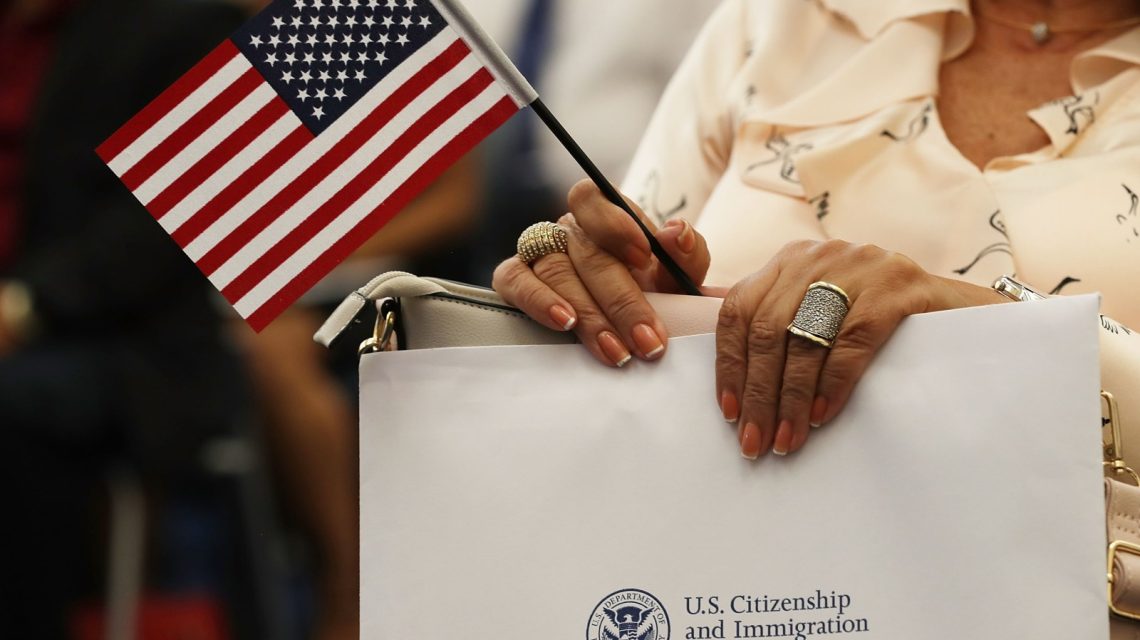
The U.S. Citizenship and Immigration Services (USCIS) has introduced a new guideline granting its officials the authority to refuse specific applications, such as green card requests, without permitting applicants the chance to submit missing documentation. This policy, effective from August 5, re-establishes officers’ discretion to deny requests when applicants fail to provide required initial evidence or demonstrate eligibility at submission.
This change aligns USCIS procedures with federal regulations and applies to both pending and new benefit requests. USCIS spokesman Zach Kahler stated to Newsweek that the agency has reinstated officers’ authority to deny applications that do not adhere to instructions or fail to show eligibility at the time of filing.
The guidance has implications for a broad variety of immigration benefits, including green cards, work permits, and citizenship applications. Although officials can still issue Requests for Evidence (RFEs) or Notices of Intent to Deny, they are not generally required to do this before denying applications that lack necessary documentation or fail to establish eligibility. An RFE is a formal notification asking applicants for additional documents or clarification before a decision is rendered. Traditionally, this would allow applicants to correct omissions rather than having to resubmit an application.
Stephanie Lewin, a partner at Waypoint Immigration USA, mentioned the change could significantly affect green card applicants as it impacts both new filings and pending cases. She told Newsweek, “If the correct evidence was not submitted two years ago, and the application is adjudicated after August 5, the application could be denied outright.”
This policy change is the latest shift in USCIS adjudication strategy. During President Trump’s term in 2018, the agency extended officers’ power to deny applications without initially issuing an RFE. The Biden administration reversed this in 2021, typically guiding officers to issue an RFE or Notice of Intent to Deny, allowing applicants to rectify deficiencies before application rejection. The agency indicated in a press statement that the adjustment is designed to eliminate “frivolous,” incomplete, and “placeholder” filings that may delay other applicants’ processing.
USCIS also mentioned certain applicants used incomplete filings to obtain related immigration benefits, like work authorization, while waiting for underlying case decisions. Several other changes accompany the policy. Officers are no longer obliged to allow the full 12-week response period for RFEs, though the regulatory cap still applies. The agency has ended its tradition of giving an extra 14 days for overseas response notices, retaining just the regular three-day mailing timeframe.
Furthermore, USCIS clarified that if an applicant submits evidence in response to an RFE or Notice of Intent to Deny, even if incomplete, USCIS might treat the submission as a request for a decision based on the current record.
Legal experts warn that the policy shift could significantly impact those unintentionally omitting required documents. Immigration lawyer Xiao Wang, in a LinkedIn post, expressed concern that applicants for green cards, work permits, and citizenship now face heightened risks of outright denial if initial evidence is missing. “The old policy gave you a second chance to fix a gap. That second chance is now at the officer’s discretion,” Wang emphasized.
Lewin further noted that family-based applicants and others without legal counsel might be more susceptible due to potentially submitting forms without complete supporting evidence. Examples include marriage-based green card petitions without proof of marriage or affidavits without financial documentation.
She also cautioned that this policy could impact individuals striving to maintain lawful status after job losses, particularly those filing to change immigration status and planning to provide further evidence later. “This is truly a precarious time for those individuals who have done everything legally and lawfully to remain in status,” she explained. “One missing document could completely upend their immigration journey in the U.S.”
The policy is currently in effect for benefit requests pending as of August 5, 2026, and for all new applications submitted afterward.
 The War on Poverty: A Lesson on Intentions and Outcomes
  Reporters Blocked from White House by Trump Administration
  Universities Should Reject Political Influence on Research Funding
  Trump’s Approach to China: Trade Dynamics and Challenges
  Media Outlets Sue After White House Ban
  American Public Opinion on Press Freedom