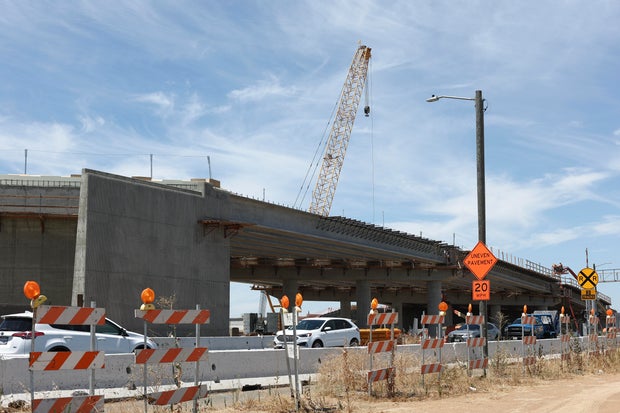
California’s High-Speed Rail Authority has missed critical deadlines in acquiring trains for the project, leading to a loss of $4 billion in federal funding. More than a year and a half after the initial deadline, the authority cannot specify when they will award the train contract, leaving the date as “TBD.” Approved by voters in 2008, this rail system is meant to connect San Francisco and Los Angeles in under three hours with speeds up to 220 mph. Currently, the journey can take 10.5 to 12 hours.
Project Timeline and Changes
The high-speed rail’s current scope includes the middle section of the route, a 171-mile stretch from Merced to Bakersfield, chosen for easier construction. Initially set to begin service by 2033, the project has been subject to repeated delays. In July 2025, citing the state’s failure to lay tracks after spending $15 billion over 16 years, the Trump administration revoked $4 billion in funding.
Legal and Administrative Issues
Governor Gavin Newsom labeled the federal funding withdrawal a political maneuver, leading state Attorney General Rob Bonta to sue the administration. Despite this, California later dropped the lawsuit without explanation. Investigation revealed that the authority had failed to meet internal deadlines for purchasing trains, a key federal grant condition.
Grant documents from the Biden administration required a trainset contract by December 31, 2024. California missed this and subsequent revised deadlines, undermining its credibility. Without laying any high-speed rail track, the state built a railhead, a logistics depot needed for staging materials.
Laying the Tracks
Six months after the governor’s claim of progress, the state had still not started laying track. The commitment to begin by the end of the year was reiterated in June. However, the 2026 business plan doesn’t disclose the status of trainset procurement.
The repeated failure to meet key milestones raises accountability concerns for the High-Speed Rail Authority, particularly concerning train set manufacturing, which is crucial for necessary testing.
A train contract signed in 2026 would align initial train delivery for 2030, cutting into the scheduled testing timeline required before the projected start of service in 2033.
Internal Revisions
Multiple sources attribute project delays to CEO Ian Choudri’s decision to change train specifications. A legal counsel interrupted board discussions, instructing members to meet privately with the CEO. A failure to execute a contract by December 1, 2025, further compressed the timeline.
Federal and State Reactions
The Federal Railroad Administration highlighted unrealistic assumptions in the rail schedule, including train procurement and testing, in a 2025 compliance review. This and broader accusations of mismanagement led to criticism by federal officials.
CBS California Investigates questioned the authority on missed deadlines, receiving a statement defending the project rather than direct answers. They referenced a 2024 federal review as supporting evidence, despite it predating the missed deadlines.
Senators Adam Schiff and Alex Padilla criticized the Trump administration’s funding cut, advocating for responsible spending with transparent oversight, while calling for partnership to fulfill transportation needs.
 Teen Arrested in Penn State Student’s Murder; Second Suspect at Large
  Carnival Panorama Passenger Jumped Overboard During Final Leg of Cruise
  Nikole Hannah-Jones Reflects on Educational Choices for Her Daughter
  Life and Challenges at Chennai’s Kasimedu Fishing Harbour
  Chicago Bears Eye Potential Move to Indiana: A Look at the Developments
  Amazon Offers Discounts to Employees at Whole Foods