
Amidst current tensions between the United States and Iran, some suggest the situation is without equal. Yet, the scenario mirrors a pivotal moment in December 1941. Back then, post-Pearl Harbor America relied on its industrial might to ensure victory. It transformed automakers into tank manufacturers and electronics companies into radar system builders. This mobilization not only secured victory in World War II but also powered a wave of prosperity.
Today, rebuilding the industrial foundation is crucial for more than security. It revitalizes the economy, fosters high-tech manufacturing jobs, and promotes innovation. The U.S. faces security challenges from missiles and drones launched by Iran. These threats highlight a significant vulnerability: a fragmented control over America’s arsenal.
The U.S. lacks not only finished weapons but also essential components and raw materials. This deficiency could halt the country in a prolonged conflict. While political debates often focus on escalation, a crucial discussion is missed. A high-intensity conflict demands robust industrial infrastructure.
A shift is needed in how defense production is managed. Instead of relying on just-in-time logistics and numerous suppliers, the U.S. must focus on industrial resilience. Each successful missile intercept signifies not only a technological achievement but also a testing supply chain.
Many see the technology but not the vulnerabilities behind it. Critical components, including guidance software, propellant chemicals, and composite airframes, highlight dependence on limited sources and foreign imports. The issue is not strategic or tactical genius but rather a lack of physical capacity. Current facilities cannot meet present threat demands.
Nowhere is this more evident than in maritime defenses. A mature U.S. fleet of autonomous naval vessels could secure crucial zones with limited risk. Yet, reliance remains on expensive, hard-to-replace platforms vulnerable in hostile environments. This gap necessitates forming an Autonomous Warfare Group, bridging software and hardware production efficiently.
Traditional funding is insufficient. Success hinges on collaboration between the state and private sector, aligned by strategic efforts. The Economic Defense Unit should set industrial health doctrine. The Office of Strategic Capital can drive this by supporting critical suppliers and enabling operational scaling.
Government involvement must include accountability in acquisitions. Contracts need swift cancellation for missed deadlines, reallocating funds to effective partners. If national priorities are to be met, capital must thrive, supported by:
- Fiscal and Security Protections: Tax incentives for domestic manufacturing and protection against predatory foreign practices.
- Political Stability: Recognizing industry needs consistency, fostering collaboration over conflict with private sectors.
- Capital Certainty: Multi-year procurement guarantees encourage private investment in production capacity.
Economic sovereignty involves safeguarding manufacturing capabilities. Securing defense through domestic munitions production is crucial. Immediate action, rather than reactive measures, ensures readiness. Streamlined procurement, strict performance standards, and supportive environments for investment are key. Rebuilding defense infrastructure integrates American economic strength into national security.
 Experts Warn Against Alarmism in AI Governance
  AI and the Changing Nature of Google Searches
  Data Centers Stir Controversy in Texas Amid Growth Boom
 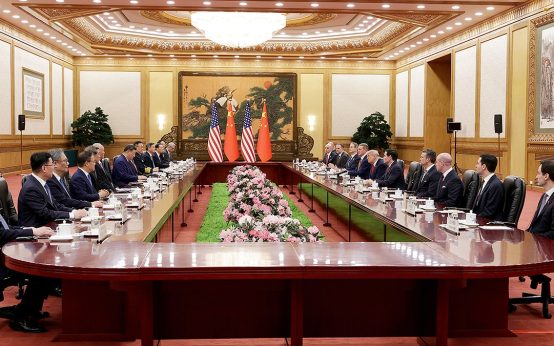 The Technology Rivalry: Trump’s Meeting with Xi and the AI Ecosystem Clash
  Ways to Protect Your Finances from Cyber Threats
  Interview with Nvidia CEO Jensen Huang: AI Outlook and Business Strategy