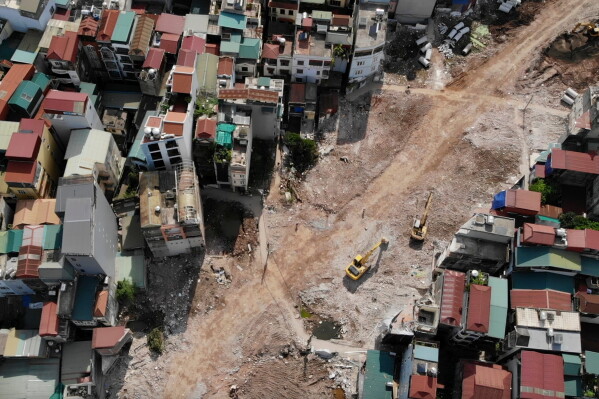
The city of Hanoi is experiencing a period of intensive construction. Hydraulic breakers clash, excavators rumble, and buildings crumble as the capital of Vietnam aims for extensive economic growth. During the first half of 2026 alone, Hanoi invested $2.4 billion to clear land for nearly 1,500 new projects. The transformation envisions an ultramodern city, prepared for the next century.
Adapting to Climate Challenges
Hanoi’s redevelopment plans include essential flood-control measures and steps to reduce air pollution. Given Vietnam’s vulnerability to extreme weather due to climate change, these adaptations are crucial. The nation faces frequent typhoons, intense floods, and severe heat. The capital often ranks among the world’s most polluted cities.
However, progress often comes at a significant cost. Many homes, livelihoods, and familiar city elements are vanishing. Nguyen Thi Nhan, who sold fruit from her street-front home, is one example. Her former home was demolished for road construction. Now, she waits for compensation while renting living space for her family.
Risks and Opportunities of the Building Boom
In Hanoi, large billboards advertise new business districts and elaborate infrastructure. Yet, the expansion comes with risks. The demolitions affect colonial villas and old shophouses, and could raise property prices. A $28 billion project along the Red River is a highlight. Spanning over 11,400 hectares, it promises new parks, roads, and flood controls.
Nguyen Khac Giang, a fellow at the ISEAS–Yusof Ishak Institute, mentions that while the projects invite economic opportunities, they also pose risks. Capital may shift away from developing high-tech industries. Rising property prices can lead to bank exposure if the market slows. Real estate is significant in Vietnam’s economy, making up 3.5% of the GDP.
Community Concerns and the Pace of Change
Residents of Hanoi face the uncertainty of redevelopment. Small changes, like removing street vendors or clearing sidewalks, cause disruptions. For instance, Thuy, a noodle vendor, lost a means to serve extra customers due to new regulations.
In certain areas, residents display banners pleading with authorities to preserve their communities. Increased fears of displacement surface as these changes unfold.
Challenges in Execution and Preserving History
Authorities have established rules for compensation and resettlement. Yet, some residents have not received the agreed compensation. Nguyen Khac Giang suggests easing modernization should include consulting residents and experts. Historical preservation and street culture are irreplaceable parts of Hanoi.
Linh Nguyen, an analyst at Control Risks, observes government agencies must navigate the complexities of land acquisition, relocation, and execution efficiently. Unlike previous expansions, today’s focus is reshaping the existing city rather than outward expansion.
The approach looks to rebuild a better Hanoi, preserving its history and community fabric while adopting modern advancements.
 EPA Dismantles Greenhouse Gas Rules, Causing Concern
  How Battery Innovations Transform Renewable Energy
  Data Centers Stir Controversy in Texas Amid Growth Boom
  Urgent Archaeological Efforts in Quinhagak Stay Ahead of Erosion
  Concerns Rise Over NIPSCO Permit In Jasper County
  Reader Reactions on Grizzlies and Data Centers