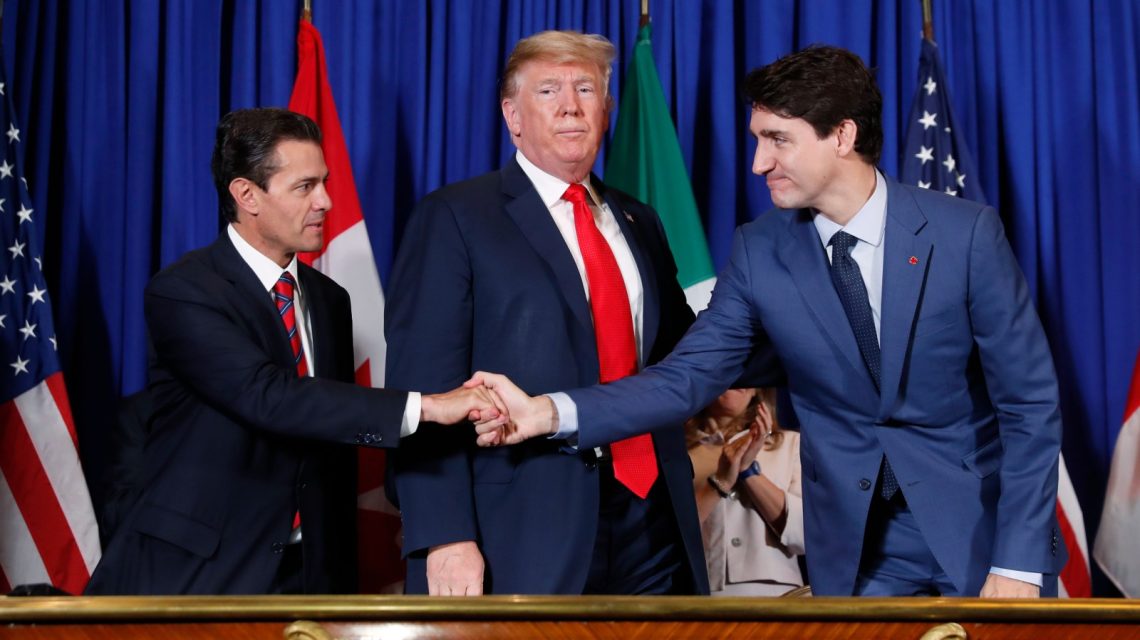
As negotiations between the U.S., Canadian, and Mexican officials continue regarding the United States-Mexico-Canada Agreement (USMCA), discussions heavily focus on tariffs, rules of origin, and bargaining strength. However, the key issue might not be about securing concessions or better tariffs. The central point could be whether the United States is neglecting a vital economic and strategic asset.
For over thirty years, North America has been a significant economic force. Canada, the U.S., and Mexico have integrated supply chains, boosted cross-border investments, and fostered economic collaboration few regions match. This success wasn’t merely due to tariff reductions. It arose because governments established institutions providing businesses, investors, and workers the confidence in stable governing rules over time.
The decision by Washington doesn’t terminate the USMCA. While negotiations persist, the agreement continues but introduces uncertainty in the institutional framework that has supported North America’s integration for a generation.
As a lawyer, I often prioritize institutions over outcomes. Trade agreements are sometimes seen merely as tariff schedules and rules. Yet, they are also legal commitments. They create predictability, more valuable than just lowering trade barriers. Markets can adjust to new rules or even higher tariffs. What is challenging is uncertainty. Companies hesitate to invest substantially in factories or infrastructure if they can’t reliably predict the governing legal framework over the coming years.
Throughout North America, predictability has been a major, though underappreciated, competitive advantage. During my career in law, both in the U.S. and Canada, I’ve witnessed how North America’s triumph relies more on institutional stability than political agreements. Governments shift, elections bring new priorities, and trade conflicts arise, yet businesses continue investing, assuming an enduring framework beyond political cycles.
On a broader scale, American industries rely on Canadian energy and Mexican production. Canadian businesses depend on U.S. markets, and Mexican manufacturing is now entrenched in North American supply chains. These relationships developed over decades due to investor belief that North America was a reliable place for business.
The recent opening of the Gordie Howe International Bridge exemplifies this. It wasn’t solely an infrastructure project but an investment in a more unified North American economy. The bridge will carry a significant share of commercial traffic through the Windsor-Detroit corridor, one of the region’s busiest trade gateways. Yet, what should have been a celebration of economic collaboration became caught up in tariff and toll revenue disputes. The bridge will enhance goods movement efficiently. But its broader success hinges on confidence in a stable legal and political environment.
Predictability takes on greater importance as Washington aims to lessen reliance on China, bolster domestic manufacturing, and build resilient supply chains. These goals have broad bipartisan backing, which leads to a pressing question. If North America is expected to be the preferred platform for economic resilience, should its supporting legal framework become less predictable?
Every U.S. administration has the right and responsibility to negotiate assertively in the national interest. Canada and Mexico have interests of their own, so tough negotiations aren’t the issue. The concern arises if uncertainty itself becomes a negotiating tool.
If uncertainty becomes sewn into negotiations, the impacts may not be immediate. Companies may not withdraw investments overnight; they might delay decisions, look for alternate options, or diversify risks. Governments might take similar steps, preparing contingencies and becoming less confident in the stability of the framework.
These changes aren’t evident in trade statistics immediately. They appear gradually in investment decisions and strategic planning. Over time, they affect how allies perceive American institutional reliability.
This negotiation over USMCA stands as crucial. Historically, America has thrived not solely through economic or military might but through institution-building that other countries trusted for planning their futures. NATO, the Bretton Woods system, and North American economic integration demonstrated that stable rules foster long-term collaboration. Such collaboration leads to strategic advantages that are difficult to achieve alone.
China can grow industries, expand manufacturing, and invest in infrastructure. Yet, replicating a continent unified by democratic neighbors, integrated markets, and enduring legal cooperation isn’t easy. Geography gave the U.S. neighbors in Canada and Mexico. Institutions turned geography into a strong competitive edge.
The ongoing USMCA talks will shape not only a trade agreement’s future but also test whether the U.S. still values predictability as a strategic asset beyond economic size or negotiating leverage.
Faisal Kutty is a professor of law at Southwestern Law School, affiliate faculty at the Rutgers Center for Security, Race and Rights, and a contributing editor for the Washington Report on Middle East Affairs. The views expressed in this article are the writer’s own.
 The Impact of Arts and Closure on Democracy
 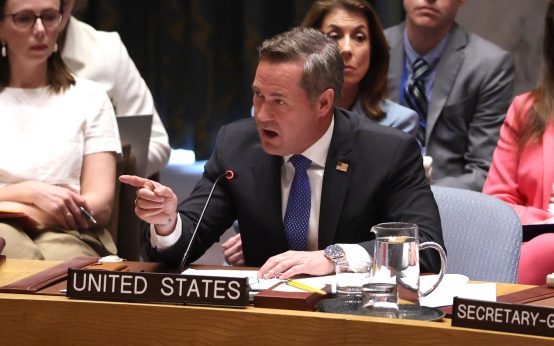 U.S. Ambassador Comments on Iran War Duration Amid Political Concerns
 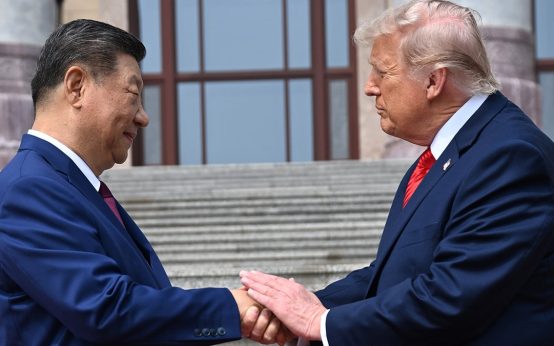 US-China Relations Under Scrutiny: Expert Warns of Escalating Tensions
  No Timeline for End of Iran Conflict
  German Chancellor Merz Vows to Pursue Reforms Despite Election Setbacks
 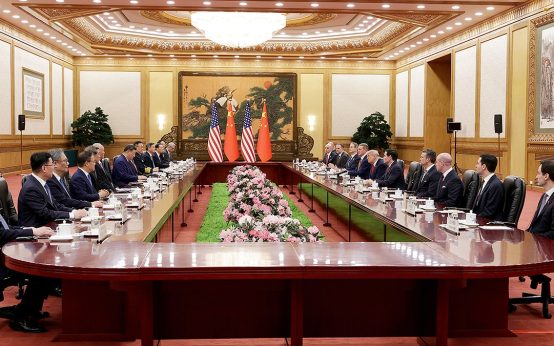 The Technology Rivalry: Trump’s Meeting with Xi and the AI Ecosystem Clash