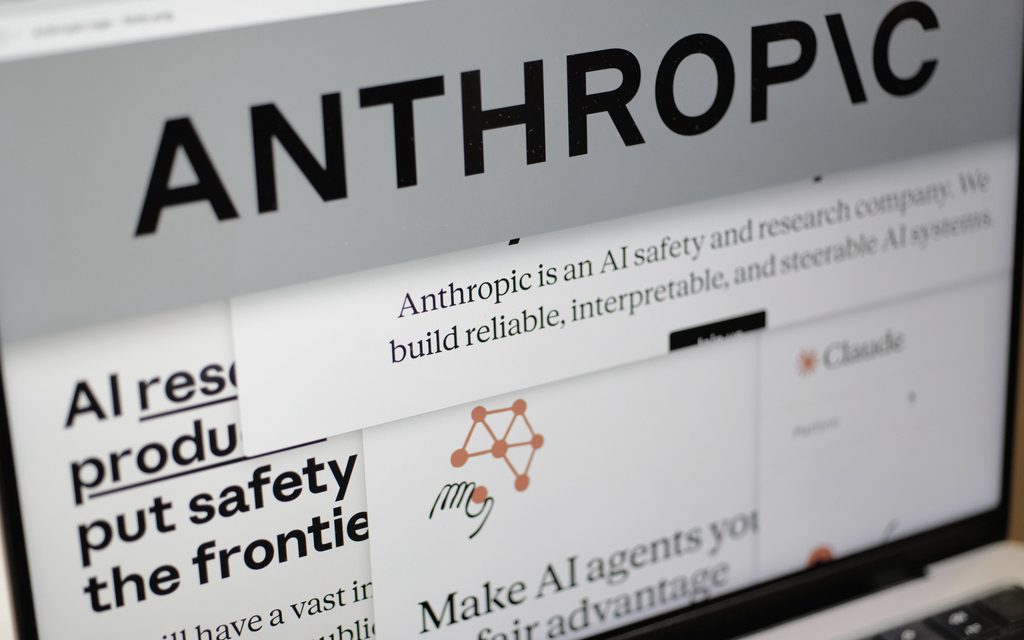
Pages from the Anthropic website and the company’s logo appeared on a computer screen in New York on February 26, 2026. Vice President JD Vance recently expressed significant concerns about artificial intelligence. On Joe Rogan’s show, he stated that AI will generate substantial wealth. However, he warned that if this wealth only benefits a small group, it could lead to communism.
One potential solution to prevent the concentration of AI-generated wealth is to broaden private ownership. Alternatively, the government could own AI companies. This idea aligns with the core economic principles of communism, making recent proposals for federal stakes in AI firms a complex issue.
President Trump is considering ways to provide public financial stakes in leading AI companies. Meanwhile, Senator Bernie Sanders has suggested that the government should own half of the largest AI firms and have board representation. However, government ownership could change the priorities of AI companies. They might cater more to political interests than to users.
Government stakes in AI would not just distribute financial gains. They would alter incentives, determining which companies thrive based on bureaucratic preferences. This represents a marked shift from Washington’s previous crisis-driven ownership tactics seen in the auto industry bailouts of 2008 and 2009.
The federal government already influences AI through standards, procurement regulations, and export controls. Becoming a shareholder adds a direct financial interest, complicating neutrality. Competitors might question if regulations favor the government’s interests over fairness.
Past experiences, like the auto bailout, exposed how political lobbying affected business decisions. Unlike during the crisis, today’s AI prospects involve cutting-edge technology. Making Washington a consistent stakeholder risks freezing the market, stifling innovation.
The stakes in AI extend beyond economics. As a powerful information tool, any government involvement could affect how companies deliver information or develop models, fearing the loss of favored status. Political decisions have shown their potential to disrupt AI users. For instance, when the Trump administration imposed export controls on Anthropic’s models, access was suspended, highlighting the broader vulnerability due to sudden government actions.
To avoid these risks, Congress should rule out federal ownership of AI companies. It should also clarify existing laws to prevent executive agencies from using various pressures to dictate market outcomes. Instead, industries and agencies could work on transparent, voluntary frameworks addressing safety without making Washington a market player.
The core question is straightforward: Should AI’s success be determined by user choice or government intervention? The answer leans heavily towards user-driven success, aligning with democratic principles over centralized control.
Jennifer Huddleston is a senior fellow in technology policy at the Cato Institute. Tad DeHaven is a policy analyst on general economics for the Cato Institute.
Copyright 2026 Nexstar Media Inc. All rights reserved. This material may not be published, broadcast, rewritten, or redistributed.
 AI and the Changing Nature of Google Searches
  Data Centers Stir Controversy in Texas Amid Growth Boom
  The Technology Rivalry: Trump’s Meeting with Xi and the AI Ecosystem Clash
  Ways to Protect Your Finances from Cyber Threats
  Interview with Nvidia CEO Jensen Huang: AI Outlook and Business Strategy
  Concerns Rise Over Addictive Design of Sports Betting Apps