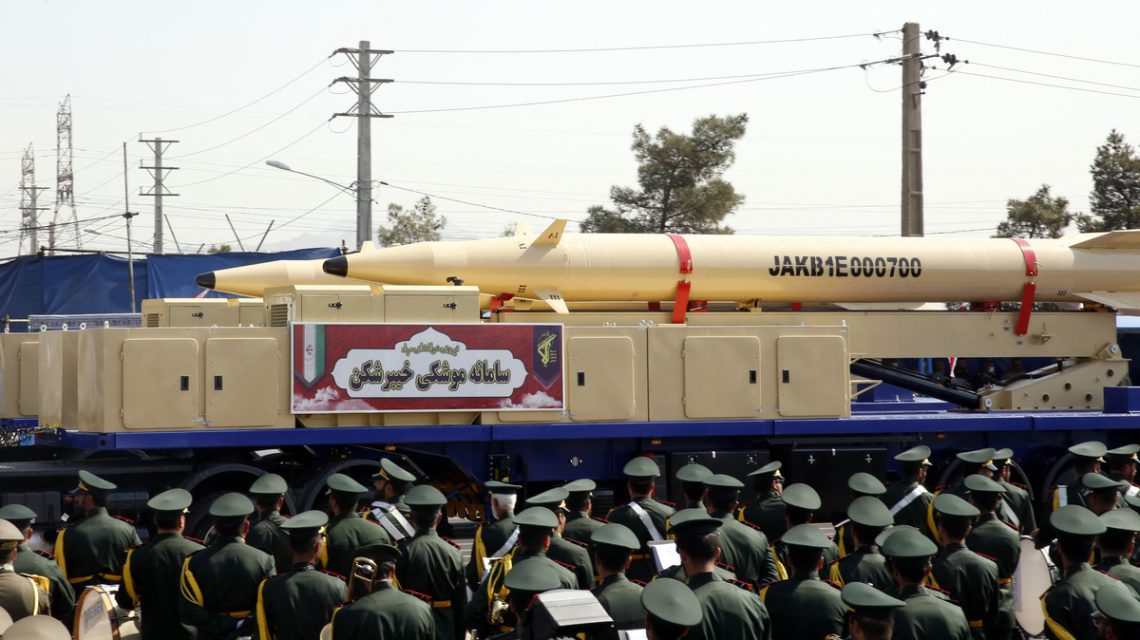
Iran has changed its military approach by employing Kheibar Shekan ballistic missiles to target U.S. bases across the Middle East. These missiles have taken new flight paths, speeds, and mid-air maneuvers to overcome American air defenses. This information comes from unnamed U.S. officials as reported by The Wall Street Journal.
Since early July, Iran has launched several missile attacks on American facilities in at least five Middle Eastern countries. These attacks have put pressure on a ceasefire arranged in June. This led to multiple nights of consecutive attacks until a temporary calm was achieved. On Friday, former President Donald Trump stated that the U.S. remains engaged in negotiations with Iran but is still considering military action. The U.S. halted its attacks on Iran for the second day on Sunday, concurrently with Iran pausing its attacks, as confirmed by Iran’s army via state TV.
Recent Escalation
The recent escalation from Iran followed a strike on the Muwaffaq Salti Air Base in Jordan, which resulted in the deaths of three U.S. service members: 1st Lieutenant Tyler James Feehan, Private Isabella Gonzales, and Sergeant Angel Rampersad. An additional U.S. soldier, Sergeant Michael Emmanuel Swinton, lost his life in a drone blast at Erbil Air Base in Iraq, bringing the total number of U.S. casualties in this conflict to 18. In recent weeks, Iranian forces have also aimed at U.S. facilities in Kuwait, Bahrain, and Qatar.
Understanding the Kheibar Shekan
The Kheibar Shekan, introduced by Iran in 2022, is an intermediate-range ballistic missile with an estimated range of 900 miles. This range includes the entire Middle East and parts of Russia, India, and NATO member Turkey. Fired from mobile ground launchers, the missile uses solid fuel, reducing preparation and launch times compared to liquid-fueled systems, thus limiting the opportunities for adversaries to target launch sites.
Named after the Battle of Khaybar, where the Prophet Muhammad’s forces conquered a fortified oasis, the Kheibar Shekan weighs less than previous models for better range. It joins other Iranian solid-fueled systems like the Zolfaghar and Fattah-1, which is claimed by state media to exceed five times the speed of sound.
Integration with Other Technologies
U.S. officials have noted that Iran has combined Kheibar Shekan missiles with jet-powered drones as part of an evolving tactical strategy. Although Tehran hasn’t published official cost figures, these missiles are believed to be far cheaper than the interceptors used by the U.S. and allies, which range from several million up to $15 million each.
Nicole Grajewski, an expert on Iranian strategy at Sciences Po in Paris, told the Journal that the low production cost, flexibility with launch systems, and effectiveness make the Kheibar Shekan a valuable asset for Iran.
Concerns over Russian Intelligence Sharing
Ukrainian President Volodymyr Zelensky claimed that Russia has used satellites for reconnaissance on U.S. bases in the Gulf and shared this intelligence with Iran. He noted a correlation between the satellite images and Iranian strikes, asserting that Russian satellites observed airbases in Bahrain, Jordan, and Kuwait from July 19 to July 20.
Interception Challenges
U.S. and allied forces have intercepted most of the Kheibar Shekan missiles since the conflict began on February 28. However, some have surpassed defense systems. Fabian Hinz, an independent missile expert, explained that Iran is learning from each combat use, enhancing its ability to penetrate defenses.
Ballistic missiles like the Kheibar Shekan pose interception challenges because of their unpredictable trajectory, high altitude, and speed. Experts say that the missile’s reentry vehicle can maneuver to elude air defenses. Success often involves saturating defenses with numerous projectiles.
Qasid Mahmoud, a retired lieutenant general, stated that Iran uses simple missiles to confuse radar before deploying higher-quality ones that adjust their targets before impact, complicating interception efforts.
 Court Rules Against Third-Country Deportation Policy
  Claims to Nazi-Looted Art Spark Legal Battle in California
 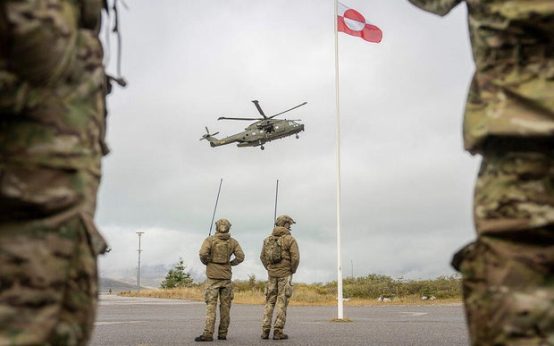 U.S. Secures Strategic Control Over Greenland
  U.S. and Denmark Move Towards Security Agreement Over Greenland
  Rising Concern Over Gender-Based Violence in South Africa
 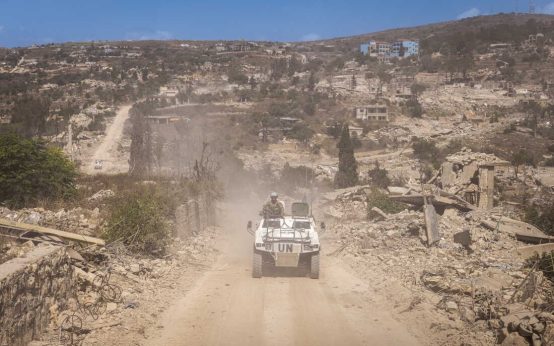 UNIFIL’s Final Patrol in Southern Lebanon Amid Changing Borders