BEIRUT — President Trump has consistently criticized prolonged military conflicts, dubbing them ‘forever wars.’ His disdain for such entanglements was evident in his campaigns and presidency. He labeled engagements like Afghanistan a ‘complete waste of time,’ Iraq ‘the worst single mistake ever,’ and interventions in Ukraine as ‘stupid.’
Despite these assertions, Trump’s current actions suggest he may be entering a similar prolonged conflict. From the onset of the U.S.-Israeli offensive against Iran, there was a repeated insistence from Trump and his officials that the endeavor would rapidly conclude within weeks. However, 4½ months later, the conflict continues without any clear resolution.
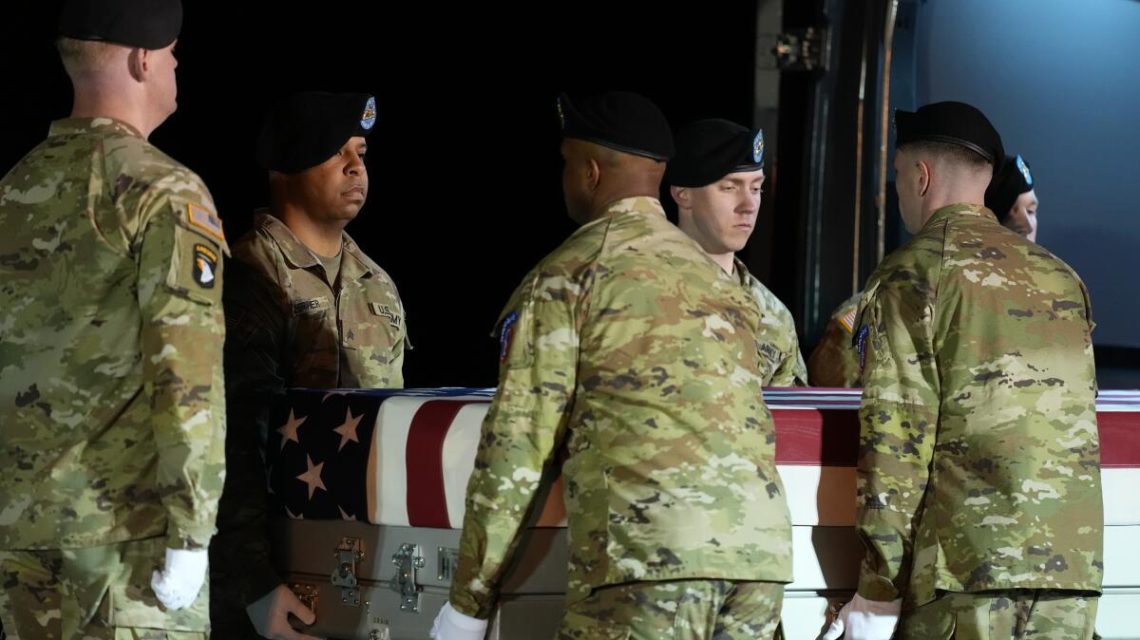
Recent developments have seen a ceasefire collapse, resulting in daily exchanges of strikes between the U.S. and Iran. These have resulted in casualties, including the deaths of two American servicemen due to Iranian missile strikes at Muwaffaq Salti Air Base in Jordan. Additionally, a U.S. service member was killed during ordnance disposal in Iraq, bringing the U.S. military casualties to 17 deaths and over 430 injuries since the conflict began, according to the Pentagon.
Conversely, Iran has suffered significant losses, with at least 57 fatalities and over 517 injuries from recent U.S. attacks. The cumulative toll from the beginning of hostilities exceeds 3,500 deaths and 27,000 injuries. Despite military pressure and Trump’s claims that Iran is eager for negotiations, Tehran has maintained its nuclear aspirations and support for regional militias.
Iran has also escalated tensions by blockading the Strait of Hormuz, a critical artery for global oil and gas transportation. The U.S. administration has indicated it may extend military actions to civilian targets in Iran to compel negotiations. These moves resemble previous assumptions by Trump that Middle Eastern conflicts would be brief like the intervention in Venezuela, but realities have diverged widely from those expectations.
Trump’s approach includes substantial military deployments, with Centcom reporting 50,000 troops, supported by naval and air assets, strengthening the U.S. presence in the region. Observers have critiqued these actions, arguing that tactical victories do not translate into strategic gains. Middle East specialists suggest Trump is trapped in an escalation cycle, prompting reciprocal actions from Iran.
The potential for further conflict looms, as Iran could exploit vulnerabilities by targeting strategic infrastructure or additional maritime choke points, like Bab al Mandab. This escalation would reverberate throughout global markets.
Trump’s vision of rapid interventions contrasts with historical precedents, where conflicts like Vietnam, Afghanistan, and Iraq evolved into prolonged struggles. Iran’s expansive geography, twice the size of Afghanistan and significantly larger than Iraq and Vietnam, complicates any potential military occupation.
For a president who campaigned on ending wars, the mounting casualties and infrastructure challenges posed by Iran have strained support among his followers. Notable conservative figures, previously aligned with Trump, have begun to criticize his actions.
Should negotiations restart, questions arise surrounding the capability of Trump’s team to effectively manage the diplomacy needed for an agreement akin to the 2015 nuclear deal, requiring extensive expertise and resources.
Iran remains skeptical of negotiations, particularly after Trump’s previous decisions to cancel the nuclear deal and authorize military actions against Iranian officials. This history complicates prospects for peace, as current strategies have frequently disrupted recent diplomatic initiatives.
Experts warn of an extended conflict, questioning Trump’s negotiating reliability. Failed diplomacy leaves limited alternatives beyond a cycle of continued violence, posing further challenges for resolution in a fraught geopolitical environment.
 American Public Opinion on Press Freedom
  Media Lawsuit Against Trump Administration for White House Ban
  The Cost of Challenging Beijing
  Analyzing Midterm Elections and Party Dynamics
  Allan Lichtman’s Framework for Assessing Presidential Greatness
  Tensions Escalate in Iran Conflict as Global Leaders Weigh Options