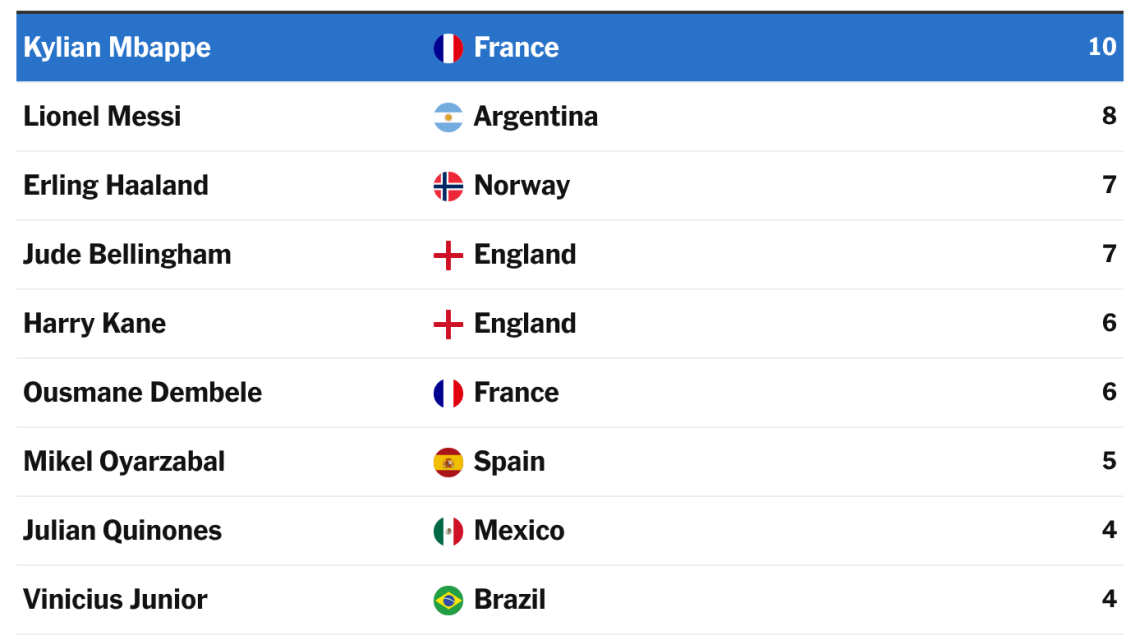
Following a tense extra-time match, Spain defeated Argentina 1-0 in the 2026 World Cup final. This result confirmed France’s Kylian Mbappe as the Golden Boot winner. At 27, Mbappe has now claimed the award twice, first achieving it during the 2022 World Cup in Qatar. With a career total of 22 World Cup goals, he surpassed Lionel Messi on the all-time leaderboard.
The race for the Golden Boot was intense. Five players competed closely: Mbappe, Messi, Norway’s Erling Haaland, England’s Jude Bellingham, and Harry Kane. Mbappe surged ahead by scoring twice against England in the third-place play-off, securing his leading position over Messi. His ten-goal tally in this tournament marked a record not seen since Gerd Muller in 1970. Just Fontaine’s 1958 record of 13 goals still stands.
Mbappe’s Path to Success
Mbappe’s impressive performance relied on exceptional finishing and rapid runs. He scored twice from outside the penalty area but was particularly effective with his left-sided advances into the box. Under manager Didier Deschamps, Mbappe thrived with the tactical freedom granted, notably linking with Michael Olise, who assisted five times. Their coordination was evident in Mbappe’s second goal against Sweden, demonstrating their precise teamwork.
While Messi opened the tournament with five goals, his scoring slowed, though his playmaking remained crucial. Messi assisted twice against England in the semi-finals, guiding Argentina to the final. Yet against Spain, he was unable to influence the game, with Argentina failing to register a shot until late in extra time. It was an unsatisfying end to a storied World Cup career.
Securing the Golden Boot
Mbappe’s performance in the third-place play-off against England was decisive. He scored with precision after passes from Olise, showcasing his finishing accuracy. Other Golden Boot winners, such as Eusebio in 1966 and Thomas Muller in 2010, also excelled in this fixture, historically rich with goals.
Records show that players like Just Fontaine have further used this play-off to enhance their goal tallies, as Fontaine achieved in 1958.
Post-World Cup Performances
Golden Boot winners often see a change in goal-scoring form after the World Cup. Analysis shows players maintain higher league goal rates before the World Cup than after, attributed to the physical demands of the tournament. Notable examples include Kane (2018) and Muller (2010). The table below demonstrates league performances of previous winners in their subsequent seasons, excluding Mbappe’s unusual winter-season victory in 2022.
Player Club Goals Games Year Harry Kane Tottenham Hotspur 17 28 2018-19 James Rodriguez Real Madrid 13 29 2014-15 Thomas Muller Bayern Munich 12 34 2010-11
While the pattern generally holds, there are exceptions like James Rodriguez in 2014 and Ronaldo in 2002, who both excelled at Real Madrid after their World Cup success. Transfers following successful tournaments also occurred, such as Rodriguez’s move to Madrid and Lineker’s transfer to Barcelona.
Winning the Golden Boot has been a turning point for many, as Gary Lineker noted on his podcast, “The Rest Is Football.” He commented on the impact of his own World Cup success, which led to a significant career move.
Mbappe’s latest Golden Boot achievement further cements his position as an elite goalscorer in football history.
 Chicago Cubs Bolster Roster with Strategic Trades
  Significant Wins at DC Open Amid Weather Challenges
 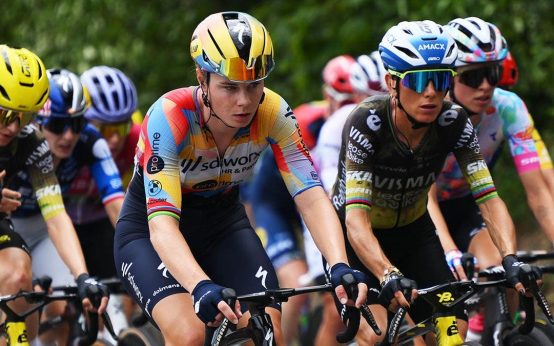 Padded Bra Controversy in Cycling: Aerodynamic Advantage?
 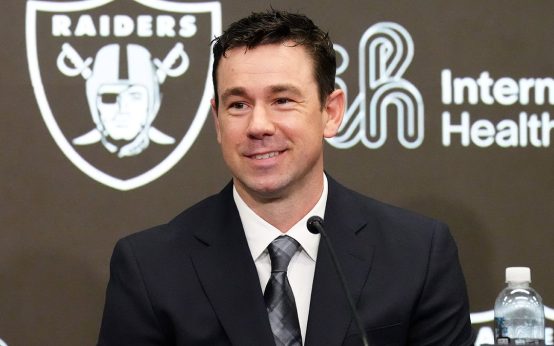 Las Vegas Raiders Enter a New Era with Leadership and Character Reforms
  New Orleans Saints Extend Chris Olave’s Contract
  Brawl Erupts in Mexican Baseball League Between Toros de Tijuana and Acereros de Monclova