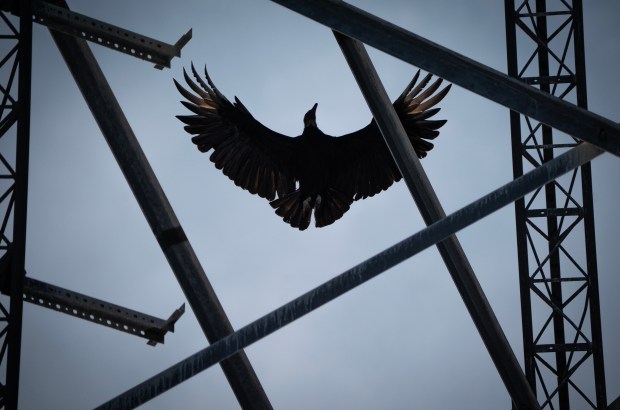
In the countryside of rural southern Illinois, black vultures have begun a new migration pattern. These birds circle lazily above country roads and cattle farms, searching for prey. They glide rather than fly, and their targets often include roadkill, newborn cows, or other easy meals, much to the frustration of local farmers.
Patty Zettle, 62, a farmer in the region, has firsthand experience with these vultures. She recalls a gut-wrenching event when one of her calves was killed, possibly by these birds. She discovered the mutilated calf too late, its eyes gone, tongue torn, and flesh missing. This loss, both emotional and financial, hit her small-time cattle operation hard. A calf represents up to $2,000, an amount significant enough to be a burden.
In response to the black vultures, Zettle crafted an effigy, a likeness of a vulture, from wire and cloth, and hung it from a tree to deter them. “That’s my effigy,” she stated, believing it has helped keep the vultures at bay, although knowing effigies have limitations.
Zettle remarked on how black vultures avoid effigies.
Zettle’s farm, covering 70 acres of northeastern Williamson County, started with just two cows. Her love for raising cattle saw this number grow to 19, alongside chickens, goats, an old horse, and a rooster known as Cowboy. She watches over her livestock keenly, aware of the new threat the vultures represent.
Black vultures can be distinguished from the native turkey vultures by their stockier, more aggressive demeanor. Their wings bear white tips, a marker for farmers like Zettle, who sometimes reach for their shotguns at the sight. The federal protection laws made it initially difficult to control their numbers without a permit. However, since reports from farmers of attacks increased, the Illinois Farm Bureau began issuing depredation permits.
Zettle, armed with a permit to deal with the vultures, takes serious measures to protect her cattle. She’s attentive, especially around birthing times, elevating her vigilance with gun in hand.
“I grabbed my gun and headed back there,” she said, ready to fend off vultures threatening her pregnant cows.
The vulture population has been growing due to favorable conditions and climate changes. Wildlife biologist Michel Kohl, with studies focused on migration patterns, suggests these vultures might find the Midwest more suitable now than ever before due to changing weather. Kohl notes the paradox of how some species like vultures might benefit from climate change.
Kohl emphasized the vital ecological role of vultures in cleaning up carrion without spreading diseases.
On Zettle’s mail route, she spots black vultures frequently, noting a rise in their numbers. She shares observations with neighbors and fellow farmers, keeping everyone informed about the growing risk.
Fortuitously, Zettle found a dead black vulture on her route, a serendipitous discovery allowing her to hang a real deterrent at her farm. Her fiancé, Robert Willmore, helped by wiring the bird to hang from a tree, offering a direct warning to live vultures circling above.
Patty Zettle continues her vigilance, hoping the presence of the real carcass intimidates the black vultures enough to spare her cattle.
 St. Laurence High School’s Transformative Journey
  Significant Events in Chicago History on September 21
  Presley Gerber Passes Away at 27 in Rehab Facility
  Shooting of DoorDash Delivery Driver by ICE Agent Raises Questions
  Growing Concerns Over Food Safety and National Security
  Teen Arrested in Penn State Student’s Murder; Second Suspect at Large