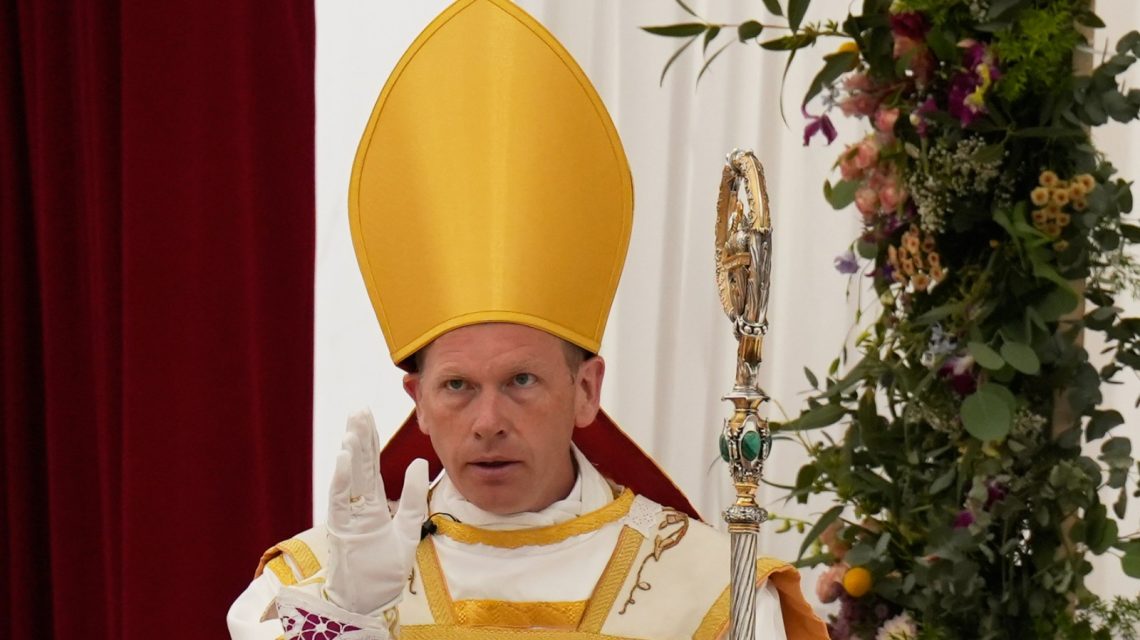
A priest from the Society of St. Pius X (SSPX), an ultra-conservative group, expressed hope on Sunday that a future pope may reintegrate the group into full communion with the Roman Catholic Church. His comments followed a Vatican declaration of excommunication for the sect. During a Mass in Wil, Switzerland, Reverend Georg Kopf mentioned that a reconciliation akin to the one under Pope Benedict XVI might occur, referencing a previous resolution between the group and the Vatican.
The Vatican had declared the excommunication after the SSPX ordained four bishops without Pope Leo XIV’s approval on July 1. Church authorities stated that this unauthorized action led to automatic excommunication under canon law. It was deemed a serious challenge to papal authority, taken despite multiple warnings and proposed dialogues from Rome.
This growing divide underscores the profound and ongoing tensions between Rome and traditionalist Catholics opposed to the modernization efforts from the Second Vatican Council in the 1960s. The SSPX, with a significant presence across Europe, North America, and other regions, represents a considerable ecclesiastic challenge. In the United States alone, this impacts about 30,000 SSPX members and 124 priests managing 115 chapels, according to 2024 organizational data.
The Society of St. Pius X was established in 1970 by French Archbishop Marcel Lefebvre, contesting that post-Vatican II reforms deviated from true Catholic doctrine. Based in Switzerland, the SSPX is known for staunchly preserving pre-reform Catholic traditions, like the Latin Mass, while opposing ecumenical dialogue with other faiths.
The current crisis mirrors an earlier conflict from the late 1980s. In 1988, Archbishop Lefebvre appointed four bishops without the consent of Pope John Paul II, resulting in immediate excommunications. These sanctions were later removed by Pope Benedict XVI in 2009 to mend the breach, a precedent Reverend Kopf noted during his sermon.
Reasons for Excommunication
The recent conflict erupted on Wednesday during an ordination ceremony at the SSPX’s seminary in Switzerland. Catholic canon law stipulates that only the pope can authorize bishop consecrations to protect the Church’s unity and apostolic lineage. Bishop Alfonso de Galarreta officiated as the consecrating bishop, with Bishop Bernard Fellay acting as co-consecrator. Both bishops were originally part of those excommunicated in 1988.
In the ceremony, American Michael Goldade, one of the first priests, pledged obedience to the Church, the pope, and the Vatican, swearing on the Gospels. Following him were Pascal Schreiber of Switzerland, and Michel Poinsinet de Sivry and Marc Hanappier from France. After these ordinations, the Vatican declared the SSPX in formal schism. This excommunication affected the bishops involved, SSPX priests, and any Catholics formally adhering to the group.
The SSPX denied intending to separate from Rome. Reverend Kopf, addressing his congregation, stated the ordinations occurred “out of love for the Church and the pope” to sustain the spiritual needs of traditionalist Catholics, not to establish a separate church.
Vatican’s Reaction
The Vatican maintained a firm stance, emphasizing that they contacted the SSPX prior to the ceremony, but their efforts were rebuffed. Cardinal Pietro Parolin, Vatican’s Secretary of State, expressed “deep sorrow” over this defiance.
Parolin said, “We talk about church unity, yet actions like these seriously harm that unity,” as reported by Crux Now. He noted such unauthorized consecrations are inherently schismatic and incur definite sanctions.
With the Vatican indicating that sanctions will endure, the SSPX dispute marks a significant structural challenge for Pope Leo’s papacy. Whether this separation will become permanent or eventually find resolution, as in 1988, remains crucial for the future direction of the Catholic Church.
 Israeli Leader’s Upcoming U.N. Assembly Speech Marked by Controversy
  United States Secures Arctic Defense Pact
 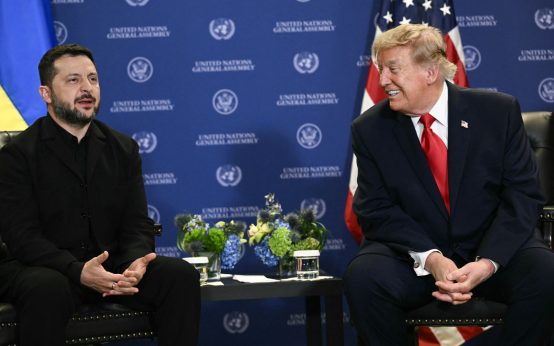 Trump’s Engagements at the UN: Focus on Ukraine and White House Developments
  Trump Administration to Admit 17,500 Afrikaner Refugees from South Africa
  Trump’s Vision for Global Security: Iran, AI, and the Role of the U.S.
  Concerns Raised Over Canadian Assisted-Dying Program