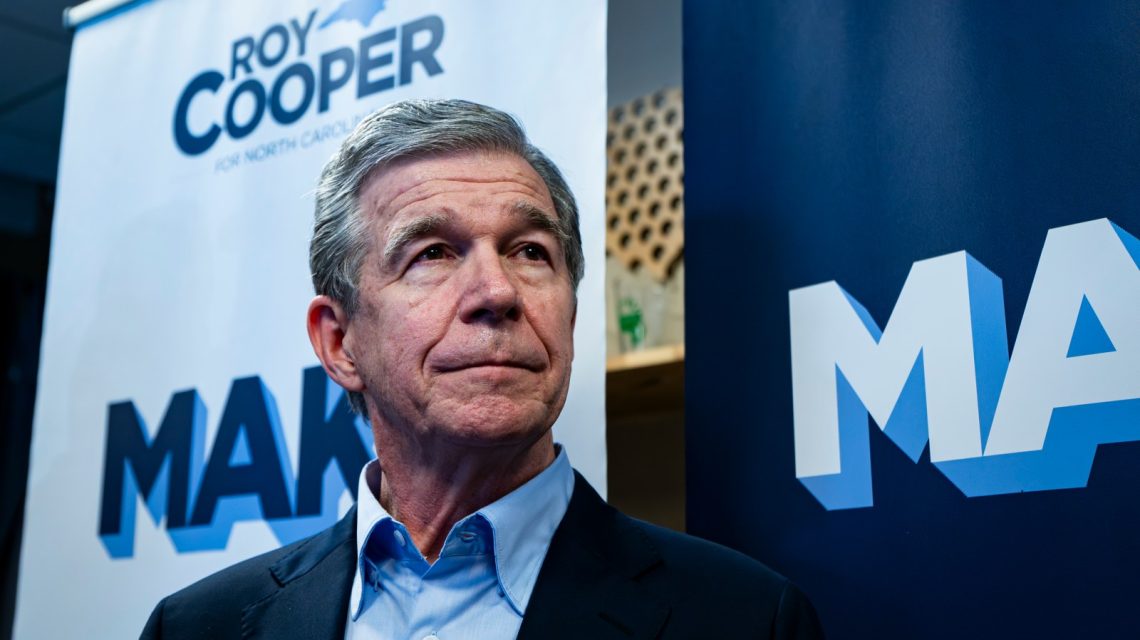
Cooper’s Lead Over Whatley
Former Governor Roy Cooper, representing the Democratic Party, has taken a significant lead in North Carolina’s U.S. Senate race. In the latest poll released on Tuesday, Cooper is ahead of Michael Whatley, an ex-Republican National Committee Chair, by double digits. The poll suggests Democrats view the seat, currently held by retiring Republican Senator Thom Tillis, as a prime opportunity to gain a Senate seat in the upcoming 2026 midterm elections.
North Carolina is considered a battleground state. Although it narrowly supported President Donald Trump in 2024, it remains largely split between Democrats and Republicans. Notably, Democrats have not secured a Senate seat in North Carolina since 2008. However, with a favorable national atmosphere and Cooper’s popularity, they believe they are well-positioned to succeed.
Polling Data
A recent Catawba College poll indicates Cooper maintains a 14-point lead over Whatley, supported by 48% of the respondents compared to Whatley’s 34%. Still, 15% of those surveyed remain undecided. This data aligns with a similar poll conducted by the same institution in March.
Michael Bitzer from Catawba College noted that independent voters strongly support Cooper, contributing significantly to his lead. He mentioned that the current political environment resembles a traditional mid-term climate where dissatisfaction with the president could play a crucial role in determining voter alignment.
The survey included 1,000 voters from June 1 to June 10 with a margin of error of 3.83 percentage points.
Other Poll Findings
Additional polls support Cooper’s early advantage. The Harper Polling/Carolina Journal poll presented Cooper ahead by over 11 points, with 49.8% of participants favoring him over Whatley, who garnered 38.7%. This poll surveyed 600 likely voters on May 10 and 11, maintaining a 4 percentage point margin of error.
A High Point University/YouGov poll reported Cooper leading by 8 points, gaining the preference of 50% of respondents. Whatley held support from 42%. This poll surveyed from March 26 to April 6 across 703 people, with a 4.3 percentage point margin of error.
Meanwhile, a closer race appeared in a Quantus Insights poll with Cooper receiving 49% support to Whatley’s 44%. Conducted on March 31 and April 1, this poll surveyed 987 likely voters with a margin of error of 3.5 percentage points.
Prediction Markets Favor Cooper
Prediction markets indicate a strong preference for Cooper, with an 85% chance of victory on Kalshi and 86% on Polymarket as of Tuesday. These markets aggregate real-money bets into probability forecasts. They reflect current trader sentiment but do not guarantee future outcomes.
Democrats’ Challenges in North Carolina
Despite successes in gubernatorial elections, Democrats face challenges in federal races in North Carolina. The late Senator Kay Hagan was the last Democrat to win a Senate race here in 2008. More recently, candidates like Cheri Beasley lost narrowly in 2022, indicating competitive races.
While Democrats maintain control of the governor’s office, evident by Josh Stein’s 15-point victory in the recent gubernatorial election, they struggle in rural parts where Republicans maintain strength. Trump’s narrow victories in his three national runs further emphasize the state’s divided political landscape.
The Importance for Democrats
The race holds significant importance for Democrats given their current Senate map challenges. Republicans currently control the Senate with a 53-47 majority. Democrats would need to flip four seats to regain a majority.
Besides North Carolina, Democrats eye seats such as Maine’s, held by Republican Susan Collins, as critical targets. They also face competitive races in Georgia and Michigan, which Trump previously won. Even turning all these races democratic could still give Republicans a slight edge, prompting Democrats to look at more conservative states like Alaska, Iowa, Ohio, and Texas for potential opportunities.
Upcoming Developments
Polls will play a significant role in gauging voter sentiment in North Carolina. Analysts from forecasters like Cook Political Report and Sabato’s Crystal Ball currently lean towards Democrats, describing the race as favoring them though still competitive.
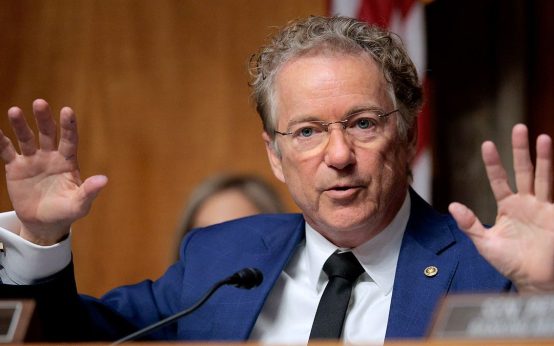 Sen. Rand Paul Criticizes Trump’s Proposed Financial Plan Amid Rising National Debt
  U.S. and China to Discuss AI Transparency
 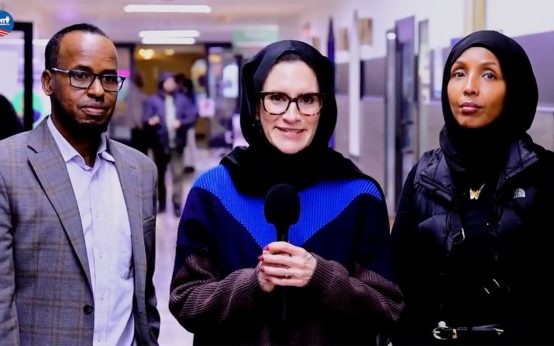 Fraud Investigation of Autism Center Raises Questions for Minnesota Senate Candidate
 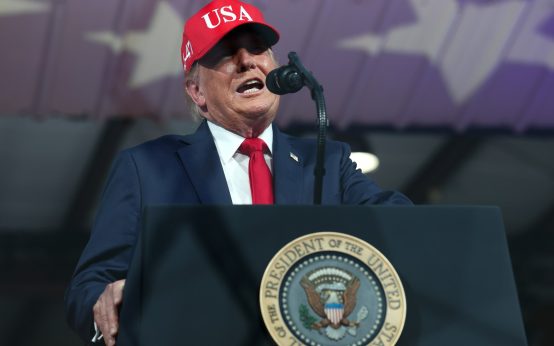 Gen Z Voters and Their Impact on the 2026 Midterm Elections
  Rep. Alexandria Ocasio-Cortez Defends Macklemore Amid Tour Controversy
  Influence Concerns Surround California Political Donors