Thousands of oil and gas wells, left abandoned, are scattered across southern Illinois. These remnants mark a period when Illinois was a leading oil producer. Today, these wells are found in farm fields, hidden in woods, and near waterways. The state refers to many as ‘orphans’ because their owners are either deceased or unknown, and their companies have gone bankrupt due to industry’s boom-bust cycles.
Unplugged wells pose significant hazards. They leak toxic chemicals deep underground, risking groundwater contamination. Methane gas, harmful to the climate, escapes from them. A saline fluid known as brine, considerably saltier than seawater, spills over farmland, damaging crops and soils which can take years to recover.
The Chicago Tribune is investigating why Illinois regulators have not halted the increase of these abandoned wells. The series sheds light on loopholes oil operators use to avoid plugging non-producing wells. This evasion shifts cleanup costs, running into millions, to taxpayers and exposes communities to environmental risks.
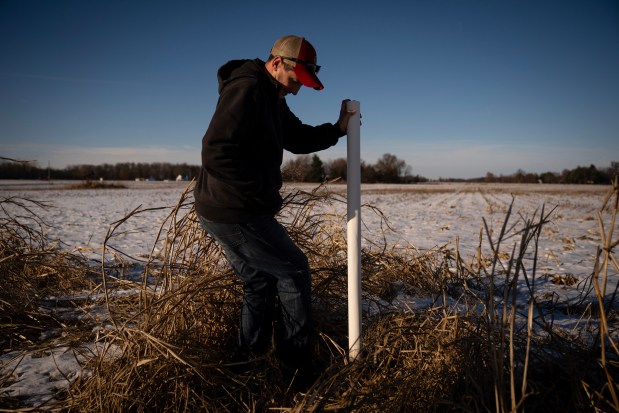
Image: Jon Rosborough examines an abandoned well on his family’s farmland in Crawford County, drilled in 1916. (E. Jason Wambsgans/Chicago Tribune)
From Oil Boom to Environmental Burden
Illinois was once among the top oil-producing states. Now, the legacy presents a $160 million challenge. Responsible oil companies must mitigate risks by plugging inactive wells. Yet, nearly 4,000 abandoned wells remain unplugged. The Illinois Department of Natural Resources is tasked with closing these holes. However, the state has struggled with this charge. After analyzing public records and interviewing stakeholders, the Tribune reports mismanagement of fees meant to prevent orphan wells and an inadequate tally of existing abandoned wells.
Image: An abandoned well near Casey, suspected to be a Fireball well. (E. Jason Wambsgans/Chicago Tribune)
Fireball Production Inc.’s Evasion
A four-month Chicago Tribune investigation unearthed how Fireball Production Inc. sidestepped its duty to plug nonproductive wells. This negligence left communities at risk and handed the state a cleanup tab of $24 million for 603 wells the company abandoned. Public records and interviews with past officials and industry members highlight the ease with which Fireball operated. The sudden entry and exit of the company from Illinois’ oil industry have had lasting repercussions.
Image: Abandoned oil equipment on a farm in Assumption. (E. Jason Wambsgans/Chicago Tribune)
Long-Drawn Legal Battles and Accountability
Duncan Oil Co. managed nearly 200 wells in central and southern Illinois, embroiled in a two-decade legal contest over its failure to manage leaking or inactive wells. The Illinois Department of Natural Resources and the attorney general sued Duncan Oil Co. A settlement prevented the transfer of wells to Dix Oil Co., a company with shared ties to Duncan. The legal case remains active, showcasing an effort to hold operators accountable and prevent wells from becoming a state burden.
 Communities Continuing Recovery from Hurricane Helene Explored through Graphic Novel
  Fat Bear Week 2026 Highlights: Meet the Competitors
  Annual Fat Bear Week Begins at Katmai National Park
  Understanding Hurricane Development
  California Prepares for El Niño-Fueled Storms with Emergency Declaration
  California’s Growing EV Adoption: Challenges and Benefits