Reflections on a Historic Battle
As the anniversary of the Battle of the Little Bighorn approaches, relatives of the two historical figures involved continue to deal with the implications of this controversial episode in U.S. history. The descendants of both General George Custer and Sitting Bull find themselves in a unique position, where personal lineage intersects with public history.
The Legacy from a Personal Standpoint
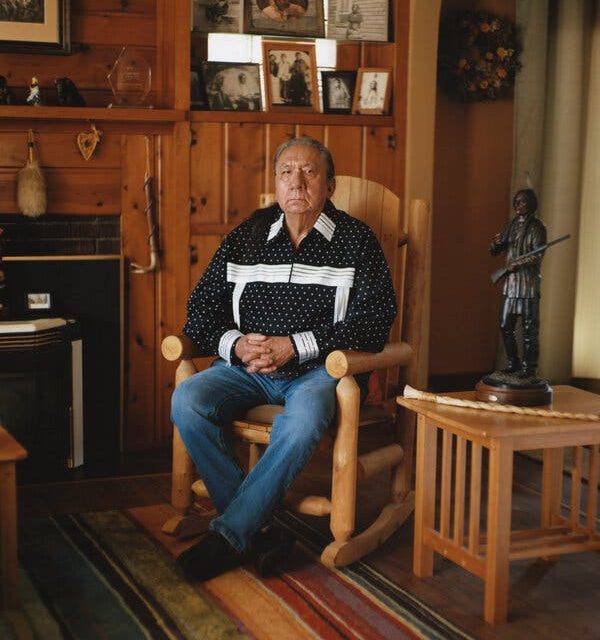
Ernie LaPointe, a direct descendant of Sitting Bull, faced a peculiar challenge growing up in South Dakota. His mother cautioned him not to reveal his famous ancestry, saying that such knowledge would disrupt his childhood. ‘There will be a time and place when you get the permission to do it,’ LaPointe recalls his mother advising him.
For years, LaPointe remained silent about his lineage until the early 1990s. At that point, an aunt encouraged him to step out of the shadows. LaPointe now actively works to protect and honor the legacy of his great-grandfather, who resisted the U.S. government’s encroachment on Native lands in the Great Plains.
For many, Sitting Bull’s legacy became even more prominent after his death. His role in leading Native American resistance has been widely recognized and respected over time.
Ernie LaPointe protects the legacy of Sitting Bull, a leader of Native resistance on the Great Plains, whose influence continued to grow posthumously.
The battle, which often symbolizes a tragic clash between Indigenous cultures and expansionist policies, remains a deeply personal subject for those tied to its history.
 Colin Kaepernick’s Press Tour Raises Unasked Questions
  Controversial Claims in Charles Spencer’s Book about Princess Diana’s Divorce
  The Curious Case of Mark Jackson’s NBA Hoops Card
  Communities Continuing Recovery from Hurricane Helene Explored through Graphic Novel
  Art Institute of Chicago Returns Nazi-Looted Painting to Heirs
  Chicago History Museum Responds to Protest with Aquí en Chicago Exhibit