Colombian presidential candidate Abelardo de la Espriella is pledging to take a tough stance against criminal organizations and reduce government spending. He plans to target ‘narco-terrorist’ camps with military action and expand the prison system if victorious in Sunday’s runoff election.
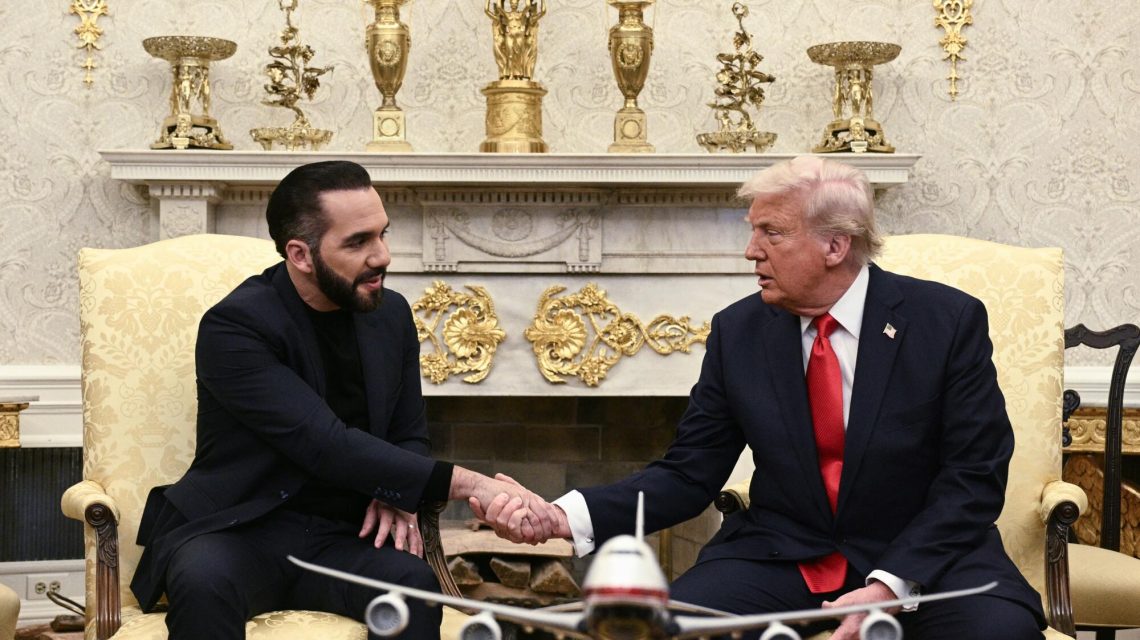
De la Espriella’s approach has garnered substantial support from President Trump, who has broken from U.S. tradition by endorsing foreign political figures, especially in Latin America. After receiving Trump’s ‘complete and total endorsement,’ De la Espriella shared an AI-generated image of a bald eagle and a tiger with U.S. and Colombian flags.
“You have paved the way for the people to defeat the entrenched powers that have long held sway,”
he wrote to Trump. Aligning with Trump, De la Espriella has campaigned as a right-wing outsider focusing on reducing government size, restricting immigration, and enhancing law enforcement capabilities. This strategy appears effective in a region where crime and inequality remain significant issues following the leftist ‘Pink Tide.’
More Latin Americans now express right-leaning political views, according to polling firm Latinobarómetro. Recent elections in the region have seen conservative victories, aligning with Trump’s agenda of extending U.S. influence, combating drug cartels, and countering China’s presence.
Trump has established relations with various Latin American leaders, such as Argentina’s Javier Milei and El Salvador’s Nayib Bukele, to further his regional objectives. In Ecuador, Daniel Noboa has cooperated with U.S. special forces, while Chile’s José Antonio Kast is promoting border security measures.
Political shifts in Latin America have seen conservative leaders rise, although leftist governments remain in Mexico, Colombia, and Brazil. The latter faces a close presidential race between Luiz Inácio Lula da Silva and Flávio Bolsonaro, son of Trump’s ally Jair Bolsonaro.
In Colombia, De la Espriella leads in the elections against Senator Iván Cepeda, an ally of leftist President Gustavo Petro, who opposes U.S. military actions in Latin America. Petro criticized Trump’s endorsement, urging Colombian voters to maintain independence in their electoral decisions.
In Mexico, President Claudia Sheinbaum accused Trump of attempting to influence her country’s election through drug trafficking charges against members of her party. Trump’s administration has emphasized a campaign to combat drug cartels in Mexico.
Trump’s endorsements in Latin America, including support for Nasry Asfura of Honduras and Argentina’s political parties, have caused concern among critics like Guillaume Long. Long argues that Trump’s involvement represents a new level of interventionism in Latin American politics.
Meanwhile, analysts like James Bosworth point out that regional leaders have independently adopted strong anti-crime policies. Skepticism remains, as political scientist Alex González Ormerod suggests Trump’s strategies are also influenced by Latin American governments.
Latin American politics continue to fluctuate between left and right as voters express dissatisfaction with current leadership, leading to frequent changes in government, a pattern referred to as ‘voto castigo’ or ‘the punishment vote.’
 Don McCullin’s Final Book: A Pioneering War Photographer’s Legacy
  Rep. Alexandria Ocasio-Cortez Defends Macklemore Amid Tour Controversy
  Google Fined for Breaching EU Privacy Rules
  South China Sea Tensions Rise after Collision between Chinese and Philippine Ships
  North Korea’s Hypersonic Weapon Test Amid Global Tensions
  Austin Tice: A Search for Answers