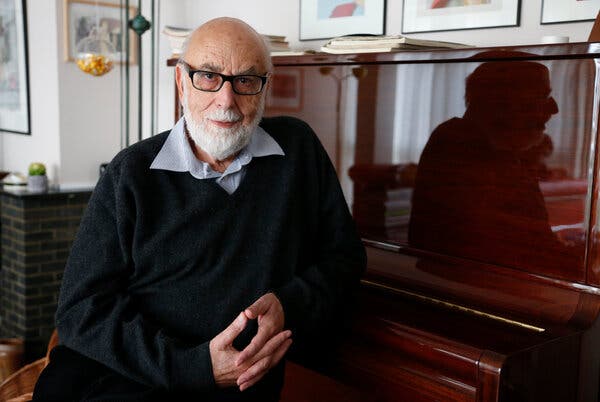
François Englert played a crucial role in the discovery of the Higgs boson, a fundamental breakthrough in particle physics. His work helped solve the mystery of how particles acquire mass.
On July 4, 2012, scientists gathered at CERN to announce the results of experiments designed to find the Higgs boson. This particle is pivotal in physics, often called ‘the God particle.’ Its detection confirmed the existence of a field granting mass to other particles, like electrons and quarks.
Rolf-Dieter Heuer, CERN’s director general at the time, expressed certainty about the discovery, greeted by enthusiastic applause. Peter Higgs, after whom the particle is named, attended the event along with François Englert. Both physicists developed the theory of the Higgs field, crucial to the Standard Model of particle physics. The model, established in the 1970s, classifies all known fundamental particles and forces, regarded as a significant scientific accomplishment.
In 2013, Dr. Higgs and Dr. Englert received the Nobel Prize in Physics for their theoretical discovery explaining the origin of the mass of subatomic particles.
Dr. Englert passed away on Thursday in Uccle, Belgium at the age of 93. CERN announced his death on its official website.
In the 1950s, Dr. Englert worked at Cornell University as a research associate for Robert Brout. Together, they explored the work of physicist Yoichiro Nambu, who addressed symmetry breaking issues in certain subatomic reactions.
 The Endangered American Red Wolf: A Conservation Story
  SpaceX Starship Completes Orbital Test Flight and Satellite Deployment
  Studying Black Bears’ Hibernation at Virginia Tech
  Tackling Plastic Pollution: A Shift Toward Flax-Based Alternatives
  Understanding the Impact of a ‘Super’ El Niño
  Largest Viking Age Silver Hoard Found in Finland