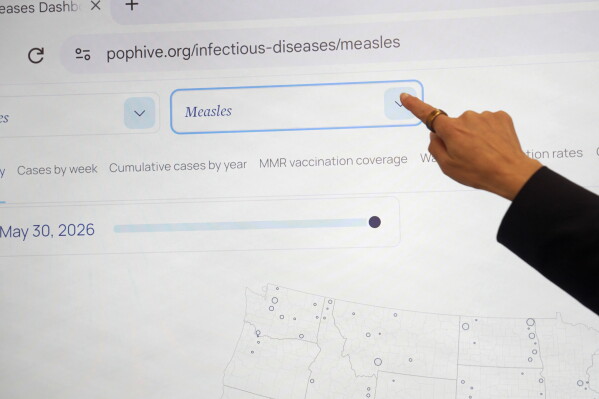
Over the past year, Utah has faced significant challenges with measles outbreaks, jeopardizing the United States’ standing as measles-free. Since June 20, 2025, more than 680 individuals in Utah have contracted measles. Unlike outbreaks in Texas, South Carolina, and Arizona, Utah’s outbreaks have spread across nearly every county, affecting undervaccinated communities.
The virus has appeared in healthcare facilities, big-box stores, restaurants, and youth sports events. In February, a high school wrestling championship led to 46 cases among attendees.
Contagion and Risks
Measles ranks among the most contagious diseases. Symptoms include rash, fever, cough, ear infections, and diarrhea. Although most recover, young children, pregnant women, and individuals with compromised immune systems face severe complications, such as pneumonia, brain swelling, blindness, or death. Even healthy people risk degenerative brain disease later in life.
The measles vaccine, effective and safe, offers 97% protection with two doses.
Ongoing Concerns
Despite a slowdown, state epidemiologist Leisha Nolen remains cautious. She warns that the school year and colder weather might trigger new outbreaks.
“We just need those few cases to hit the wrong community and it could flare up really big again.”
The most affected area is the southwest, where 265 cases have emerged since last summer. Overall, cases span 22 of Utah’s 29 counties.
Vaccine Hesitancy and Regional Impact
In northeastern Utah, the tricounty health region, including Daggett, Duchesne, and Uintah, grapples with low vaccination rates. Nearly 16% of the region’s kindergarteners lacked the measles vaccine, compared to the statewide average of 12.8%, falling short of the 95% required to prevent outbreaks.
The TriCounty Health Department logged 74 cases linked to the youth wrestling event as the virus spread via schools and homes.
Increasing vaccine hesitancy has been noted in the frontier region, said Sydnee Lyons, the health department’s public information officer. Health officials focused on minimizing spread by excluding unvaccinated students and urging infected individuals to isolate.
The department’s outreach efforts improved community sentiment. Cyndie Mattinson, infectious disease specialist, highlighted a positive interaction with a skeptical parent.
“The perceptions were changed that we weren’t out there to police, we were there to be a help and a resource to the community,”
Mattinson said.
National and International Ramifications
Utah’s measles battle might influence the U.S.’s measles-free status. Public health officials aim to eliminate measles when transmission stops locally for a year. As of June 18, the U.S. recorded 2,104 measles cases, nearing last year’s total.
Whether Utah’s initial clusters relate to the major Utah-Arizona outbreak detected in August remains uncertain. Most cases in Utah stem from local transmission.
Global health experts will assess the U.S. and Mexico’s elimination status in November. Canada lost its status last year due to ongoing outbreaks.
In Utah, medical professionals work to alleviate fear and champion public health improvements. Dr. Ellie Brownstein, president-elect of the state chapter of the American Academy of Pediatrics, opposed legislation to ease school vaccine waivers. Although the bill was defeated, she notes a lack of comprehensive cultural reflection on the outbreak’s resurgence.
“I don’t know that we get it to end,”
Brownstein said. “I don’t know that we’re going to get this genie back in the box because there’s enough people out there to spread it.”
The AP’s Health and Science Department is supported by the Howard Hughes Medical Institute and the Robert Wood Johnson Foundation.
 Northern Ireland Woman’s Journey Through Painful Spinal Condition
  Reducing Ultra-Processed Foods Can Enhance Mental Health
  Ultra-Processed Foods Linked to Higher Risk of Chronic Diseases
  Understanding Memory Lapses and Hormonal Changes in Women
  Concerns About Kratom and Its Potential Health Risks
  Lawsuit Filed Over Preeclampsia Death in Texas Amid Abortion Ban Controversy