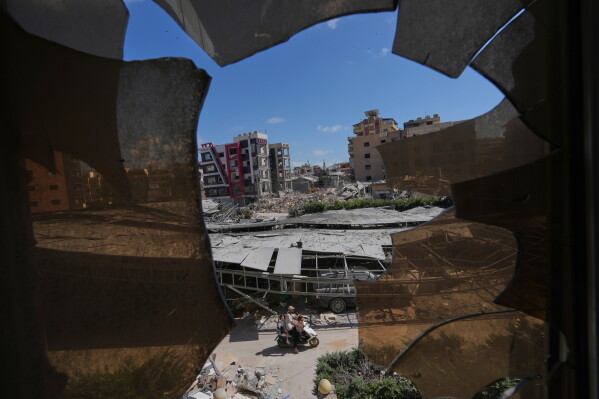
Israeli airstrikes on southern Lebanon on Saturday resulted in the deaths of at least seven people, including two children, following reports of a ceasefire agreement. This ongoing conflict endangers an interim agreement between the United States and Iran aimed at ending the war in the Middle East.
The strikes targeted Nabatiyeh and nearby villages, as reported by Lebanon’s National News Agency. Rescue efforts are underway, but at least seven individuals remain trapped under debris. Mediators are working to stop the hostilities between Israel and Hezbollah after previous exchanges left 47 dead in Lebanon and four Israeli soldiers dead.
An Israeli military official stated that Hezbollah launched over 50 projectiles at Israeli forces, prompting Israeli retaliation. Discussions regarding a ceasefire continue, yet no solid agreement has been confirmed. Efforts are being led by Qatar, the U.S., and Iran.
The conflict erupted shortly after the U.S. and Israel initiated strikes on Iran on February 28. Hezbollah’s response involved attacks on northern Israeli communities, while Israel occupied parts of southern Lebanon.
This interim U.S.-Iran agreement, which reopened the Strait of Hormuz, aims to resume talks on Iran’s nuclear program. The ongoing fighting jeopardizes the agreement and delays scheduled U.S.-Iran talks in Switzerland.
Israeli Prime Minister Benjamin Netanyahu has declared that Israeli forces will stay in southern Lebanon until threats are eradicated. Hezbollah demands Israeli withdrawal from Lebanon as part of Iran’s conditions for any deal progression.
The violence near the Israel-Lebanon border has resulted in significant destruction, as Israeli air raids targeted multiple areas, including Tyre, Barish, Arab Salim, Doueir, and Kfar Rumman. Netanyahu’s office has not commented on ceasefire discussions, while the Israeli military asserts the continuation of their defensive operations.
Iranian and U.S. officials have paused travel plans to Switzerland due to the ongoing conflict. Talks regarding Iran’s nuclear program are expected to face challenges, as past negotiations have required extensive time and effort.
The interim agreement provides negotiators with 60 days to finalize a nuclear pact, extendable if necessary. Proposed benefits include lifting international sanctions and establishing a $300 billion fund for Iran’s reconstruction. As part of this agreement, some sanctions on Iran have already been lifted.
 Byron Donalds Adjusts Campaign Strategy as Florida Governor Race Intensifies
  Trump’s Engagements at the UN: Focus on Ukraine and White House Developments
  Collins Faces Scrutiny in Tight Maine Senate Race Amid Donor Allegations
  Trump Administration to Admit 17,500 Afrikaner Refugees from South Africa
  Trump’s Vision for Global Security: Iran, AI, and the Role of the U.S.
  Nevada Attorney General Faces Questions Over Clemency Bid