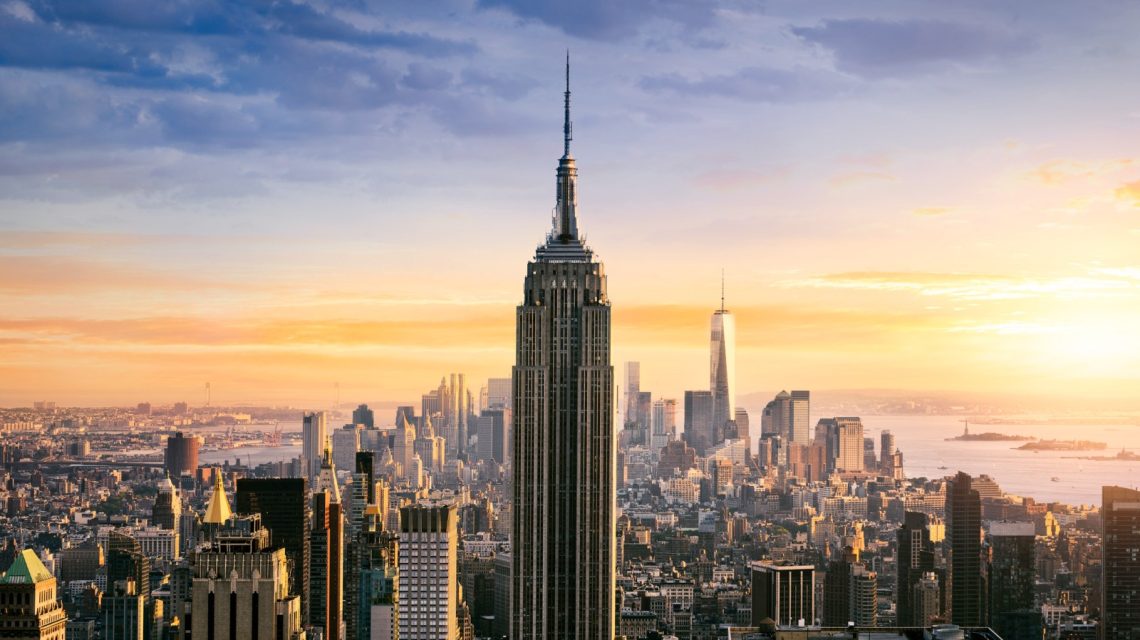
Today, the Empire State Building stands as one of New York City’s most iconic landmarks. However, when it was first designed almost a century ago, its most unique feature had an unexpected purpose: serving as a docking station for airships. The skyscraper’s distinctive spire was initially planned as a mooring mast for dirigibles, allowing passengers to directly enter the building from the sky.
This ambitious concept emerged during the late 1920s and early 1930s. At that time, many engineers and planners envisioned airships becoming the future of long-distance travel. Although this idea was never realized, it remains a captivating ‘what if’ in the history of American architecture.
Currently, there is a renewed interest in historic landmarks across New York City. Structures like the Flatiron Building are being repurposed as private residences, while Penn Station undergoes a significant renovation. These changes highlight a shift in expectations for transportation and urban development over the last century.
Why the Empire State Building Was Designed for Airships
The spire’s design was bold. The architectural firm Shreve, Lamb and Harmon crafted it as a sleek, modern structure to facilitate direct passenger transfer from airships into the building. According to The Skyscraper Museum, the mooring mast was envisioned as “a 200-foot tall, modernistic metal tower, flanked by stylized wings clamped tight to the ribbed shaft and topped with a small octagonal room that was to serve as the embarkation point to transfer onto a trans-Atlantic airship.”
The concept was that travelers would arrive by airship and disembark high above Midtown Manhattan, stepping directly into the city’s heart.
Why the Plan Failed
The vision proved impractical when tried. Engineers learned that the swirling winds around the skyscraper’s top made docking an airship extremely difficult and unsafe. A privately owned dirigible reportedly managed to attach to the mast for only a few minutes in 1931, amid winds of about 40 miles per hour. No other airship ever used the structure as a passenger terminal, effectively concluding the experiment as it began.
The Spire Still Changed History
While its original purpose was never fulfilled, the spire still played a key role in the Empire State Building’s historical significance. By adding to the height, it helped the building surpass the Chrysler Building by around 200 feet, achieving the status of the world’s tallest skyscraper in 1931. This title remained until the construction of the World Trade Center.
Subsequently, the summit found a practical use as an observation area offering panoramic views of New York City. As The Skyscraper Museum observes, “The views from the rooftop outdoor observation deck and from the 102nd floor room—after the plan for mooring dirigibles was quickly abandoned—were unparalleled.” The summit became not only a vantage point but a defining symbol “at once high above the city, but also at its very center.”
Have a story about architecture or design to share? Email [email protected] to have your story featured by Newsweek.
 Disappearing Meals: How Modern Life is Changing How We Eat
  Colin Kaepernick’s Press Tour Raises Unasked Questions
  Controversial Claims in Charles Spencer’s Book about Princess Diana’s Divorce
  The Curious Case of Mark Jackson’s NBA Hoops Card
  Communities Continuing Recovery from Hurricane Helene Explored through Graphic Novel
  Art Institute of Chicago Returns Nazi-Looted Painting to Heirs