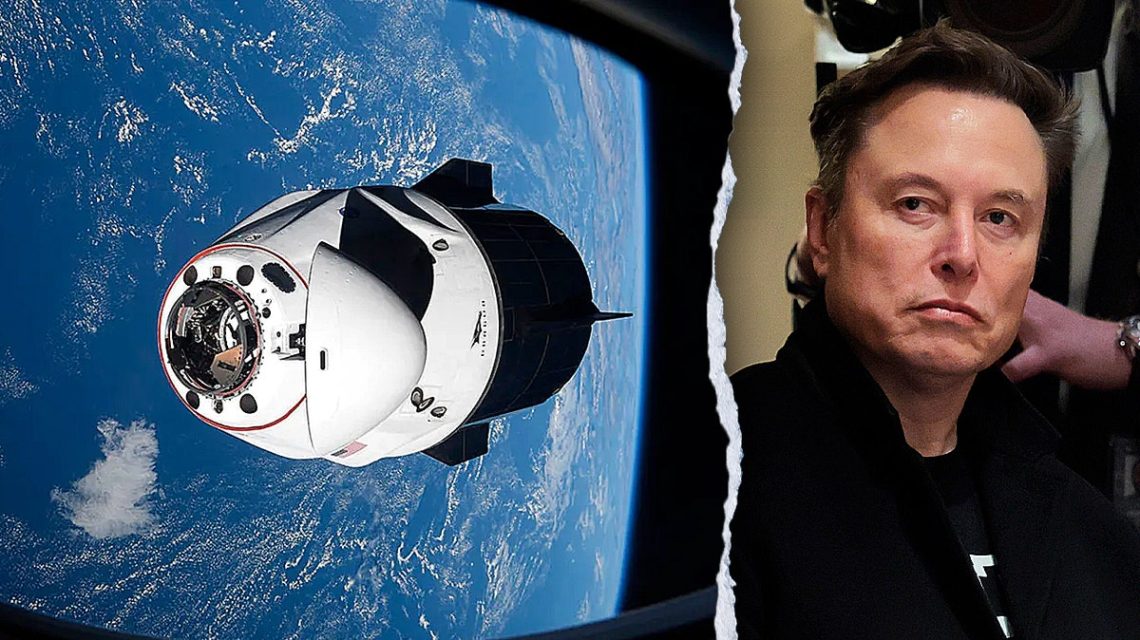
SpaceX’s public debut on June 12 marked Elon Musk becoming the first person to achieve a trillion-dollar net worth. This development sparked varied reactions, with some seeing it as a critique of modern capitalism, while others lauded it as a testament to entrepreneurial triumph. Yet, a broader perspective reveals a more significant insight.
Innovation and Opportunity in America
Elon Musk’s journey to a trillionaire status highlights the unique environment of the United States, where innovation, risk-taking, and pursuing visionary ideas are encouraged. Musk arrived in the U.S. as an immigrant in 1992, seeking educational and business prospects. Fast forward thirty years, he has built a portfolio of companies that redefined sectors from payments to aerospace.
Laura Ingraham commented on the SpaceX IPO, lauding American ingenuity for changing the world.
Musk’s path is distinct not primarily because of his wealth but due to the magnitude of his achievements. Many entrepreneurs spend their lives building one successful enterprise, whereas Musk played a critical role in creating PayPal, revolutionizing digital payments. With a substantial portion of his fortune, he embarked on ventures deemed risky by many investors.
Tesla transformed the automotive industry, accelerating electric vehicle adoption. SpaceX reduced space launch costs, achieving feats once thought possible only for governments. Starlink extends internet access to remote locations globally. Neuralink and AI initiatives continue to challenge the boundaries of possibility.
Pushing Boundaries and Overcoming Barriers
Critics may debate Musk’s political views, but the remarkable aspect is his ability to seize opportunities where others perceive obstacles.
The opportunity-rich environment in the United States allows entrepreneurs with vision to acquire capital, recruit talent, and challenge incumbents. This system, though imperfect, offers economic freedom hard to replicate elsewhere.
Warren and Sanders have critiqued Musk’s trillionaire status, focusing on the implications of such wealth.
Instead of scrutinizing the sheer amount of wealth, a more constructive question is the means of its creation. Musk did not inherit wealth or benefit from monopolistic protection. His fortune results from companies valued for their transformative impact.
Among those benefiting from Musk’s ventures are numerous employees and the broader economy through payroll taxes.
SpaceX, for instance, revolutionized commercial spaceflight and bolstered U.S. space exploration leadership. Starlink introduced communication networks to regions lacking traditional infrastructure. Despite facing potential failures, Musk persevered, a quality that may be his most significant lesson.
The Essence of the American Dream
The essence of the American Dream is found in Musk’s journey—a reminder of the freedom to pursue ambitious goals, the chance to take calculated risks, and the scope to create significant innovations. This story aligns with America’s legacy of embracing novel ideas and nurturing talent, no matter the starting point.
The attention surrounding Musk’s financial milestone might dominate headlines, but the lasting narrative celebrates the ethos of a nation that enables individuals to realize unconventional visions.
Elon Musk’s story is not solely about personal achievement. It reflects the broader narrative of America’s innovative and nurturing spirit.
 Trump Suggests Renaming AI to ‘Super Intelligence’
  The Rise of Data Centers and AI Development
  How China Uses AI to Challenge U.S. Dominance
  Controversy Surrounding Automated License Plate Readers (ALPRs)
  U.K. Test-Fires U.S. Torpedo from XV Excalibur
  The Rise and Controversy of Automated License Plate Readers