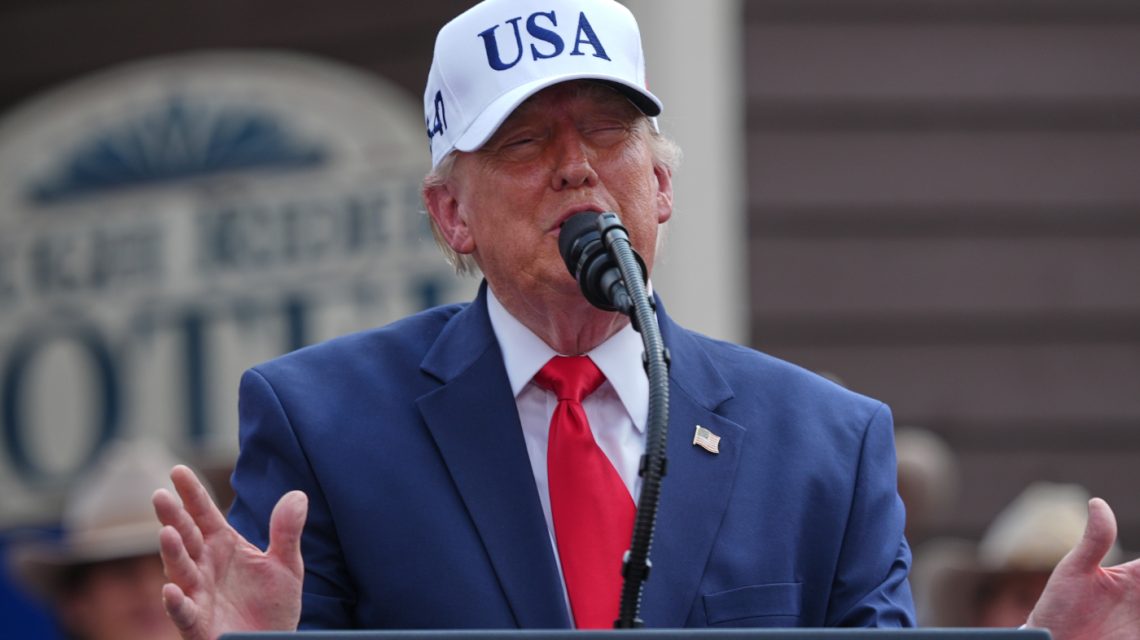
President Donald Trump addressed a crowd at the Burning Hills Amphitheatre to celebrate the opening of the Theodore Roosevelt Presidential Library on July 1, 2026, in Medora, North Dakota. At the same time, Secretary of State Marco Rubio was making his first post-war visit to the Gulf, where he underscored the importance of considering the views of ally nations. However, this sentiment seemed overdue as the Gulf states had already suffered extensively from Iranian missile attacks during the recent conflict.
These attacks targeted key sites that were essential to energy, transportation, and tourism. The Gulf economies faced immense disruption from the closure of the Strait of Hormuz by Iran. Surprisingly, the Trump administration had not sent senior officials to stand with these nations during the crisis, despite these countries being central to the fallout from a war the U.S. started against their advisement.
The recent attention to alliance interests signifies advancement in diplomacy. Yet, it also reflects an earlier failure to engage allies effectively both before and after initiating the war. This oversight in American statecraft adversely impacted U.S. war efforts and was evident in the memorandum that concluded the war, largely benefiting Iran.
The conflict highlighted the lack of American diplomacy as a strategic tool. Trump held an opportunity to rally allied nations, which together represent a significant force in global military and economic spheres. Instead, American actions exhibited disregard, resulting in a unilateral decision to go to war in Washington. The consequential economic aftershocks were felt most acutely in Europe and Asia as missiles struck the Gulf.
When difficulties escalated, such as the closure of Hormuz and spiking oil prices, America realized its isolation. NATO partners were unwilling to support reopening the strait following continuous grievances like tariff wars and inappropriate conduct from the U.S. administration. These factors underscore the critical lesson that alliances are built over time and through ongoing mutual respect. Disregarding this principle can leave a nation needing support.
To ameliorate the fallout from Trump’s war, effective diplomacy is essential in two areas. First, securing the long-term governance of Hormuz is critical as the memorandum leaves its status unclear. Most global nations favor the prior status of the strait, with no Iranian control. U.S. diplomacy should leverage this consensus, potentially through a UN resolution to restore the pre-war circumstances.
Both China and Russia previously obstructed such motions, but they also have vested interests in an unregulated Hormuz. A peaceful approach may provide diplomatic strength that exceeds military force.
Second, the upcoming negotiations over Iran’s nuclear program demand careful diplomacy. The memorandum conceded leverage too early, necessitating coalition-building around an agreed resolution that curtails Iran’s nuclear capabilities and support of proxies. This shared goal requires a united front across global partners.
In his recent joint statement with Gulf counterparts, Marco Rubio emphasized these key issues, suggesting a needed diplomatic reset. As the U.S. celebrated a milestone anniversary, there is merit in revisiting foundational principles of respectful diplomacy.
John Hannah is a senior fellow at the Jewish Institute for National Security of America and previously advised Vice President Dick Cheney on national security. © 2026 Nexstar Media Inc. All rights reserved. Unauthorized distribution of this material is prohibited.
 Iowa Senate Election: Turek Leads in Polls Amid Economic Concerns
  Kamala Harris Joins Abdul El-Sayed in Michigan Senate Campaign
  U.S. Military Expansion in Greenland
  Public Confidence in the Supreme Court at Record Lows
  Federal Authorities Arrest California Lawmaker’s Aide for Visa Overstay
  Hasan Piker Addresses Controversial Comments and Political Involvement