In 1943, nine Norwegian commandos undertook a daring mission. They skied across tough, wooded terrain, heading towards the Vemork hydroelectric power plant in Rjukan, Norway. This structure was perched high above a waterfall, and was a key location of that era. Vemork housed the world’s only plant for large-scale production of ‘heavy water,’ a crucial element for the Nazis’ ambition to create atomic weapons during World War II.
After Norway fell to German invasion in April 1940, Nazi research teams realized that controlling Vemork was vital. Werner Heisenberg, a physicist leading the Nazi nuclear program, promised the leadership a city-destroying bomb ‘the size of a pineapple.’
Heavy water from Vemork was critical to this plan, so the Nazis fortified the plant as Allies aimed to destroy it. This intense competition forms the subject of Neal Bascomb’s bestselling book “The Winter Fortress: The Epic Mission to Sabotage Hitler’s Atomic Bomb.” Although filmmaker Michael Bay acquired rights to adapt this gripping tale into a film, the project remains unmade.
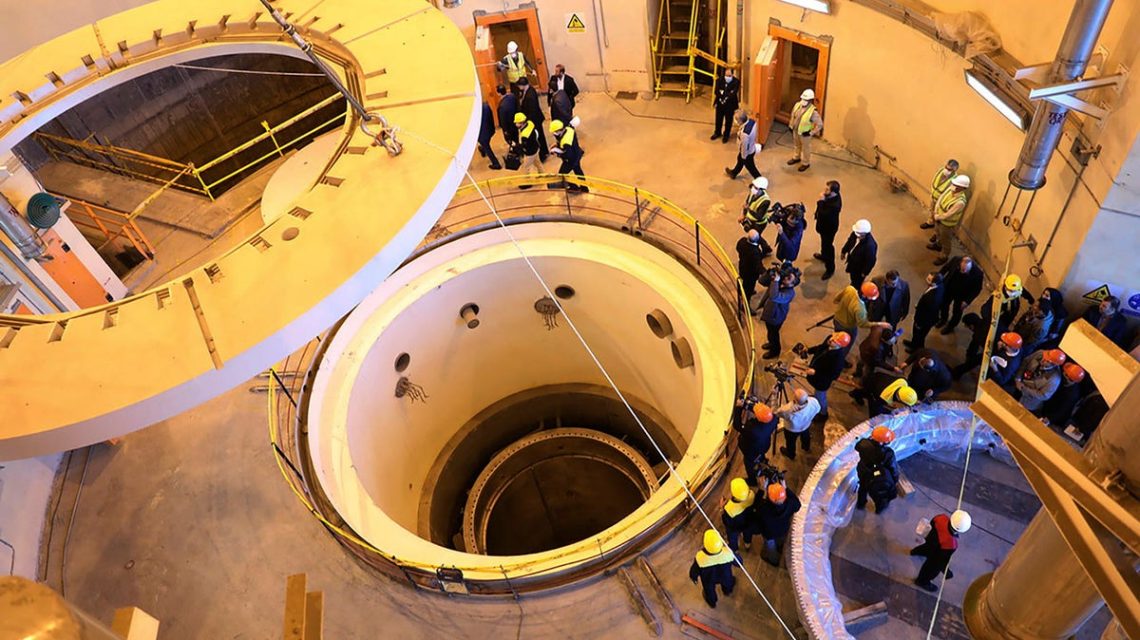
The delay in making such a film deprives audiences of understanding President Donald Trump’s focus on preventing Iran from acquiring nuclear weapons.
Trump shares the dedication of British Prime Minister Winston Churchill and U.S. President Franklin Roosevelt, who worked relentlessly on the Manhattan Project and other efforts to thwart Hitler’s nuclear ambitions. They understood the danger if Hitler gained nuclear capability. Similarly, Trump and Israeli Prime Minister Benjamin Netanyahu recognize the threat posed by the Iranian regime’s extremists, who are intent on acquiring such weapons.
The “Twelver” beliefs forming the foundation of Iran’s regime, established after Ayatollah Khomeini’s 1979 revolution, surprise many in the secular West. The religious principles driving Iran’s leadership are often dismissed by Western progressives, but they remain a critical focus for current leaders.
Efforts by Trump and Netanyahu have targeted Iran’s nuclear facilities, though new threats are developing. The religious fanatics of Iran are determined to achieve nuclear capability, motivated by extreme convictions.
Even today, a parallel struggle mirrors the past at Vemork. The Allied success there delayed, but did not stop, the Nazi pursuit of nuclear weapons, requiring ongoing vigilance and action. In similar fashion, Trump’s actions against Iran’s nuclear program aim to destabilize the regime while acknowledging the lasting threat.
The Iranian regime, led by uncompromising figures since 1979, remains focused on its theological goal of obtaining nuclear weapons. Diplomatic deals may occur, but the regime’s intent stays unchanged. The ideology entrenched in Iran does not permit moderation.
Understanding the magnitude of today’s nuclear threat, reflected in Iran’s ambitions, requires acknowledging history. The success at Vemork demonstrated the persistence needed to stave off Nazi advances. Leaders like FDR and Churchill provided lessons in handling current nuclear threats. Their example remains relevant as modern leaders grapple with similar challenges.
 Lithuanian President Urges U.S. to Maintain Military Presence Amid NATO Challenges
  Italian PM Giorgia Meloni Skips UN General Assembly Amid U.S. Tensions
  Ireland Faces Calls to Boycott Matches Against Israel
  Social Media Influencer Faces Serious Charges
  U.S. Military Expansion in Greenland
  The Autocratic Age: A Closer Look