
The provisional agreement to end the conflict in Iran and reopen the Strait of Hormuz signals potential relief for the global economy. Despite oil prices dropping on Monday, questions remain about the timeline and procedures for restoring the flow through the world’s most vital energy channel.
Prior to the conflict, the strait handled a fifth of global crude oil. The blocked Persian Gulf now requires time for the trapped vessels to exit and for oil-producing countries to resume operations. Analysts highlight the cautious approach needed by ship captains to determine the safety and decreased threat level from Iran.
“Operationally, the sector isn’t rushing back,” stated Richard Meade, editor-in-chief at Lloyd’s List. He emphasized the necessity of mine clearance and adherence to internationally recognized transit routes for safe navigation.
Ships have been navigating cautiously through a verification channel managed by Iran in the north of the strait, while some have opted for covert passage with US guidance along Oman’s coast. Iran had threatened attacks on vessels using the central international lanes, which separate inbound and outbound traffic. Around 500 commercial vessels remain in the Persian Gulf, according to maritime intelligence firm Kpler, unable to simultaneously exit the narrow passage.
Amena Bakr, Kpler’s head of energy analysis for the Middle East and OPEC+, estimates six months for mine clearance. She suggests two-to-three months for vessels to load and return, and another three months for certain countries to restart production to pre-conflict levels.
Defining an “Open” Strait
The United States and Iran’s definitions of “open” are unclear. Iran demands payment from vessels using the channel, conflicting with former President Trump’s remarks on Truth Social about a “toll-free opening.” Iran has yet to confirm this assertion.
The gap between announcing the agreement and its finalization allows both parties to issue conflicting statements regarding Iran’s traffic management and fee requirements. Torbjorn Soltvedt, a leading analyst for the Middle East at risk intelligence firm Verisk Maplecroft, pointed out that paying tolls puts shipping companies in a dilemma. Banks and ship owners risk sanctions from the U.S. and E.U., as they have listed Iran’s Revolutionary Guard as a terrorist organization.
Legal experts argue that allowing Iran to control the passage infringes on international maritime law, as per the United Nations Convention on the Law of the Sea. This law mandates countries to allow peaceful passage through territorial waters. The strait’s waters are shared between Iran to the north and Oman to the south.
Oil Production Challenges
Middle Eastern producers halted oil extraction due to storage limitations. Resuming operations is expected to be slow. Countries like Saudi Arabia and the United Arab Emirates may be quick to restart production due to alternative export routes. Alan Gelder, Wood Mackenzie VP for refining, predicted this outcome.
In contrast, Iraq faces extended challenges due to disrupted oil flow, significantly complex fields, and the extended halt. Claudio Galimberti from Rystad Energy commented that sentiment around the agreement has improved, but this does not equate to increased supply.
“It will take time to boost production, normalize logistics, and reduce the risk premium in crude prices,” Galimberti noted in an email.
Daniel Sternoff of Columbia University’s Center on Global Energy Policy highlighted that production will not resume until the strait is reliably open and a ceasefire sustains beyond 30 to 60 days. Economists from Capital Economics foresee energy flows reaching 80% of pre-war levels by September.
Inflation Concerns
Immediate reopening will not instantly lower inflation, economists affirm. Inflation is projected to exceed desired targets in major economies this year and into early next year, according to Neil Shearing from Capital Economics.
Joachim Nagel, Bundesbank’s president, warned that inflation could rise once temporary government measures designed to mitigate energy shocks expire. Germany’s temporary gasoline tax reduction of 17 euro cents per liter remains in effect until June 30.
“It will take months for oil supply to stabilize,” Nagel stated.
This report, initially in English, was edited and translated into Spanish by AP’s team with generative AI assistance.
 Court Rules Against Third-Country Deportation Policy
  Claims to Nazi-Looted Art Spark Legal Battle in California
 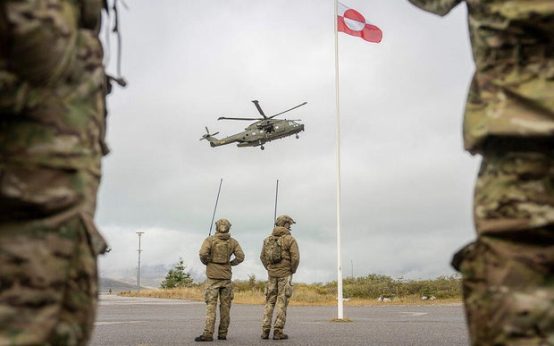 U.S. Secures Strategic Control Over Greenland
  U.S. and Denmark Move Towards Security Agreement Over Greenland
 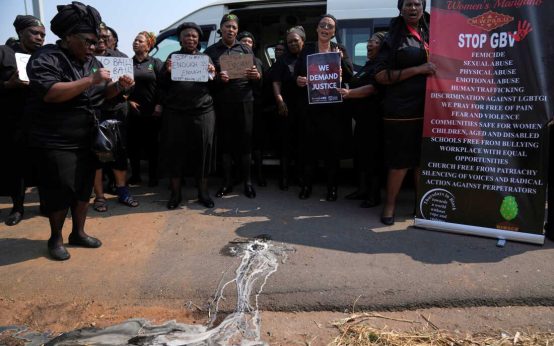 Rising Concern Over Gender-Based Violence in South Africa
 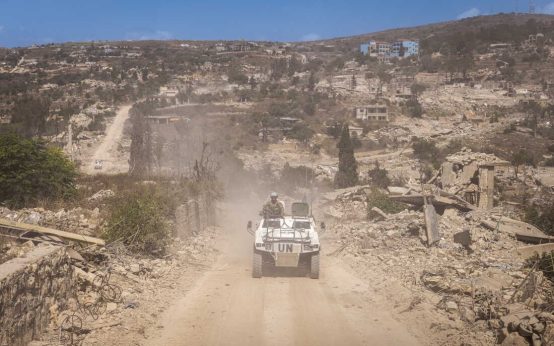 UNIFIL’s Final Patrol in Southern Lebanon Amid Changing Borders