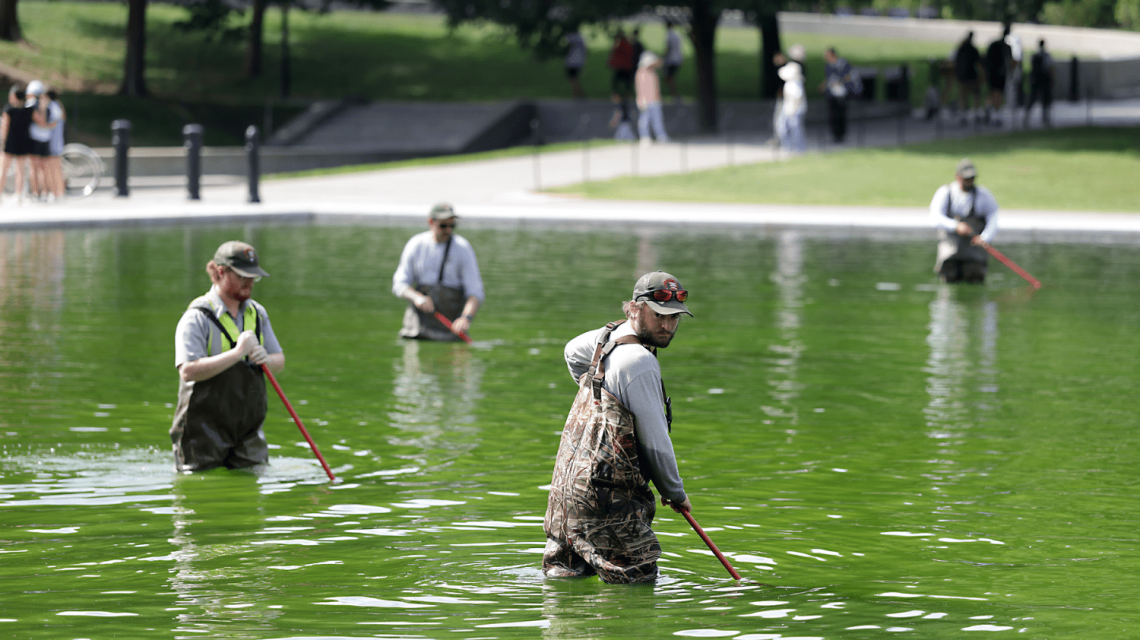
The Lincoln Memorial Reflecting Pool underwent a multimillion-dollar renovation to enhance its iconic presence with a deeper “American flag blue” finish. However, the refurbishment led to unexpected algae growth, turning the water green shortly after the pool was refilled. This has raised questions about whether the redesign has created conditions conducive to rapid algae blooms.
The project, initiated by President Donald Trump to prepare the National Mall for the U.S. 250th anniversary, involved resurfacing the nearly 100-year-old pool with a dark blue coating. This was intended to improve its visual appeal and seal existing leaks. Trump estimated the project would cost between $1.5 million and $2 million, but federal records show the final contracts reached approximately $14 million. The no-bid nature of the contract led to scrutiny and a lawsuit from The Cultural Landscape Foundation, arguing that required historic reviews were bypassed.
A Long-Standing Algae Issue
Running over 2,000 feet between the Lincoln Memorial and the Washington Monument, the reflecting pool has been a vital feature of Washington, D.C. since 1923. Algae blooms are a recurring problem, largely because the pool is shallow and experiences slow water movement, making it prone to appearing green—especially in summer due to the combination of heat, sunlight, and stagnant water.
Even after significant renovations in 2012 costing $34 million, algae appeared within weeks of the pool’s reopening. Crews then had to drain and clean it again, demonstrating the persistent nature of algae and the challenges in controlling it in such a shallow outdoor system.
Possible Reasons for Rapid Algae Growth
- Residual Algae from Renovation
An Interior Department representative mentioned that the algae could result from supply lines lying dormant during the eight-week construction. This suggests part of the bloom might be a routine effect post-renovation. - The ‘American Flag Blue’ Coating
The darker surface could contribute to algae growth. Dark surfaces absorb more sunlight and heat, which may raise water temperatures, providing energy for algae proliferation. - Weather and Environmental Conditions
Factors like warm temperatures, sunlight, and still conditions encourage algae growth in shallow water. Such conditions enhance the metabolic and growth rates of algae. - Water Flow and Infrastructure
Reports also highlight existing infrastructure issues, like poor water circulation. Reduced flow makes conditions stagnant, facilitating algae accumulation.
Why the Water Looks Green
Algae use chlorophyll for photosynthesis, leading the water’s appearance to shift from blue to green as algae grow. Under suitable conditions, algae populations can double quickly, making blooms visible in a matter of days.
Various Theories and Unverified Claims
The combination of residual algae, heat absorption, favorable weather, and water flow potentially formed a “perfect storm” for algae growth rather than a solitary cause. Despite these explanations, some social media accounts suggest sabotage without providing proof. Claims hinting at interference by political opponents remain unbacked by evidence, and officials have not reported any foul play.
 Tensions Persist Between Different Wings of the Democratic Party
  Trump Officials Revoke Frank Kendall’s Security Clearance
  Senators Question Trump Administration over Smithsonian Museum Exhibit Changes
  America’s Aging and Political Divide: Reproductive Trends Shape Future
  Senate Wraps Up Session Without Passing Voting Bill Amid Trump Pressure
  Community Fights Back After Warehouse Fire