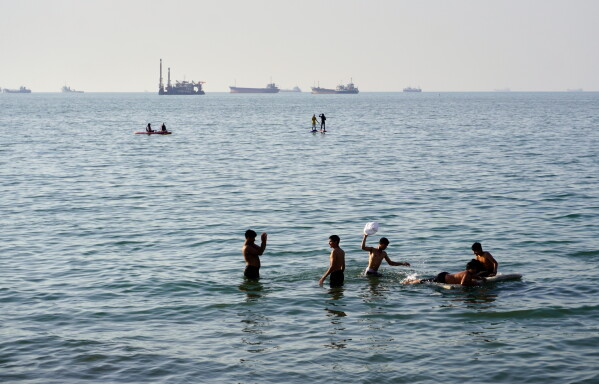
Negotiations between the United States and Iran are close to reaching an agreement aimed at ending the ongoing conflict in the Middle East and reopening the Strait of Hormuz. Pakistani Prime Minister Shehbaz Sharif announced the deal is expected to be finalized soon, with preparations underway for electronic signing and subsequent technical discussions.
The White House has not disclosed the status of the negotiations or a specific timeline for the agreement’s signing. Iran’s foreign ministry spokesperson indicated there would be no signing on Sunday but left open the possibility for the near future.
Recent tensions in the region escalated when Iran exchanged fire with the U.S. and Israel, posing a threat of full-scale war. U.S. Central Command confirmed the interception of Iranian attack drones targeting commercial vessels in the Strait. The conflict, initiated by the U.S. and Israel, has greatly impacted oil and natural gas shipments from the Persian Gulf. A ceasefire has been in place since early April.
Iran’s Nuclear Program and 60-Day Negotiation Period
Iranian Foreign Minister Abbas Araghchi stated that the 60-day negotiation period following the initial agreement will address Iran’s nuclear program. The U.S. and Israel have expressed concerns over the potential development of nuclear weapons by Iran. Tehran, however, maintains that its nuclear efforts are intended for peaceful purposes.
A senior U.S. official indicated that the agreement would initiate steps to eliminate or remove Tehran’s enriched uranium, with technical details to be resolved during the 60-day period. The responsibility for removing the uranium, currently believed to be located at three nuclear sites damaged by U.S. strikes, has yet to be determined.
Reopening the Strait of Hormuz
The agreement includes provisions for reopening the crucial shipping lane, the Strait of Hormuz. Araghchi stated Iran seeks a deal allowing toll charges on ships transiting the strait. The wartime toll system imposed by Iran has disrupted international energy supplies and increased global fuel prices.
Iranian Sanctions Relief
Three officials from the region revealed that the deal is anticipated to gradually lift sanctions on Iran and release frozen assets. The signing ceremony is expected soon after approval from Washington and Tehran.
Uncertain Future for Lebanon
Iran has demanded the deal includes a ceasefire in Lebanon, where Israel continues combat against Hezbollah, a group supported by Iran. Israeli Defense Minister Israel Katz announced Israel’s refusal to withdraw from occupied areas in Lebanon, Syria, Gaza, and refugee camps in the West Bank.
Associated Press writers contributed additional information from various locations, including Washington and Tel Aviv.
 Conservative Activists Aim to Shape Judicial Perspectives on Birthright Citizenship
  Impact of Deregulation on Air Travel
  Jorge Messi, Father of Soccer Star Lionel Messi, Passes Away at 68
 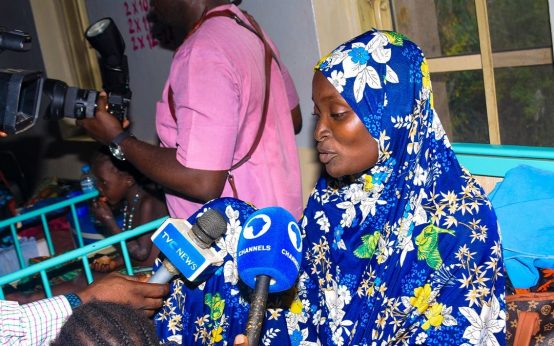 Nigerian Hostage Rescue Unveils Harsh Reality of Captivity Under Jihadists
  Jorge Messi, Father of Lionel Messi, Passes Away at 68
  Russian Attacks on Kiev and Surrounding Area Result in Casualties