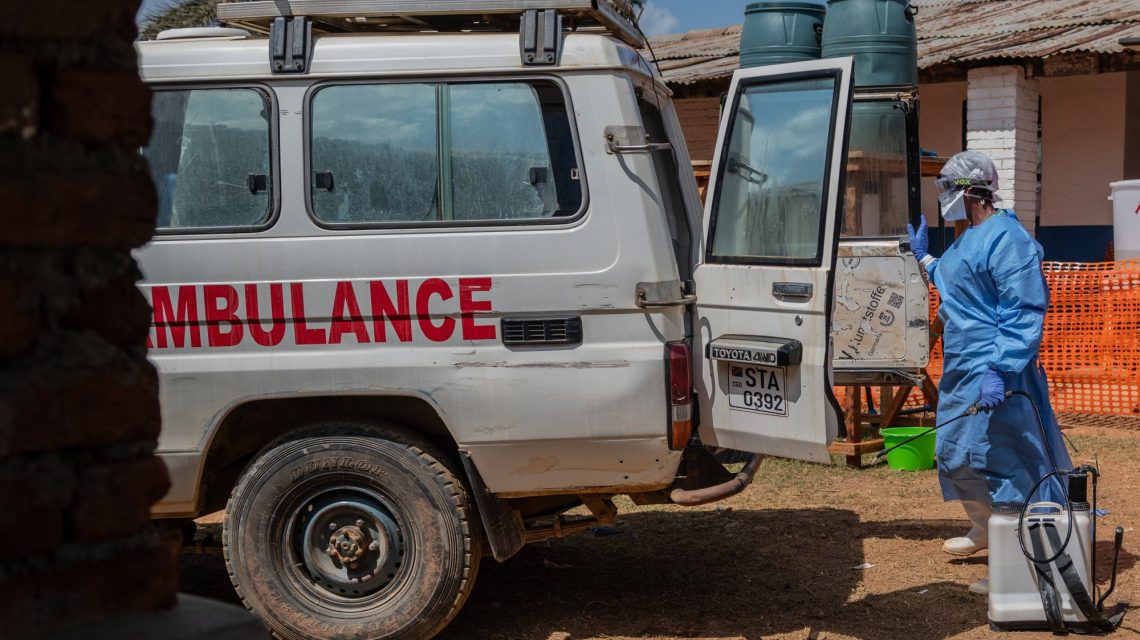
The Democratic Republic of the Congo and Uganda have identified 617 confirmed cases of Ebola, resulting in 117 deaths. This outbreak is linked to the Bundibugyo virus. Discussions have emerged regarding the Trump administration’s proposal to set up a quarantine and treatment facility at a U.S. military base in Kenya for potentially exposed Americans. This suggestion faces backlash due to clinical, ethical, operational, and legal concerns voiced by U.S. health officials with Ebola expertise.
Ebola outbreaks are not new. A similar incident occurred in Western Africa between 2014 and 2016, resulting in over 28,000 cases and 11,000 deaths, a 39% fatality rate. Despite past experiences, inadequate actions are proposed today. Previously, the U.S. established effective airport screening methods to prevent the virus from entering the country, responding with world-class medical facilities designed to manage such situations.
In the past, a global coalition led by the U.S. provided a robust aid infrastructure. Today, significant changes have occurred. Over the past 17 months, the U.S. public health infrastructure has weakened. The U.S. Agency for International Development no longer offers ground support in the Congo. Budget cuts and increased political oversight have strained the Centers for Disease Control and Prevention’s capabilities.
Ebola spreading outside its current region poses a global risk. Air travel allows for potential transmission from Africa to Europe, Asia, the Middle East, and the Americas. The upcoming FIFA World Cup in North America adds to this risk. Infected individuals, especially U.S. residents, may seek treatment in the U.S., where superior facilities are available.
Containing Ebola at its source is vital. Though transmission is largely non-airborne, involving contact with bodily fluids, it remains a threat. Airport screenings offer limited advantages. Instead, stopping the virus at its source is crucial, akin to halting a fire before it spreads. Lessons from aviation security highlight the importance of risk-based strategies, focusing resources where necessary instead of uniformly across all areas.
Risk-based approaches should guide the response to the Ebola outbreak. Mitigating risks requires addressing their sources and employing resources to minimize impact. Containment of the Ebola virus in the Congo is essential and should be prioritized for effective global protection.
Sheldon H. Jacobson, Ph.D., a professor at the University of Illinois Urbana-Champaign, has researched risk-based aviation security extensively. Janet A. Jokela, MD, MPH, a specialist in infectious diseases and public health at Carle Illinois College of Medicine, serves on the Illinois Immunization Advisory Committee.
 Artist Speaks Out on Rare Condition Impacting Her Career
  Durham’s HEART Program: A New Approach to Public Safety
  Mindfulness: Manage Stress by Embracing the Present
  Missouri’s Abortion Policy: Conflicting Amendments and Voter Decisions
  The Impact of Extended Job Searches on Mental Health
  Philanthropic Shift Towards Supporting Women in Midlife