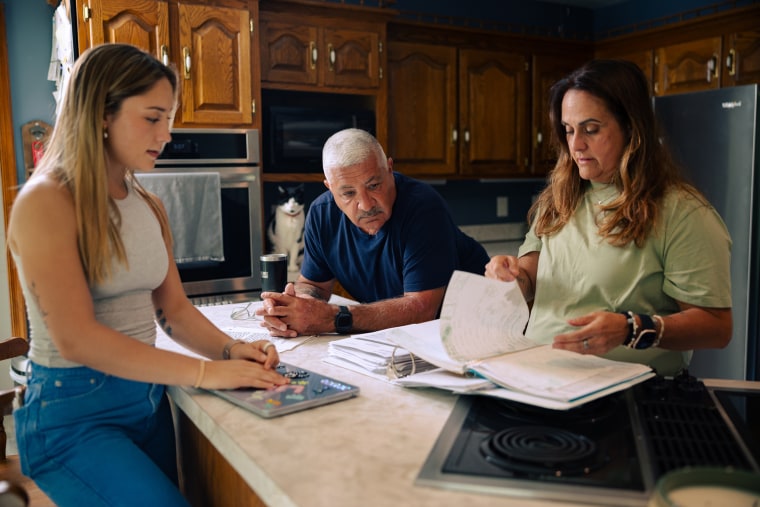
Rachel Levasseur spent seven years searching for an effective treatment for a complex form of obsessive-compulsive disorder (OCD), marked by the constant belief that she could harm others. During this time, she attempted suicide several times. Her situation began to improve last year after her parents connected with a therapist at Sheppard Pratt, a psychiatric hospital in Maryland. The hospital offers a self-pay, residential program called The Retreat, which provides patients with a personalized care team, comprising psychiatrists and therapists, among others.
After a year in The Retreat, Levasseur, 24, showed noticeable progress. She had not attempted suicide while participating in the program. Her parents observed a significant change from her previous reserved demeanor to being more social. Levasseur was now open to social activities, such as dining out or attending concerts with friends. However, her insurance provider, CareFirst BlueCross BlueShield, covered only a small portion of her treatment costs, resulting in her stay being cut short in March due to the nearly $3,000 per day expense.
“It’s confusing how insurance can’t recognize that I’m getting better finally,” Levasseur said. “They’re just focused on the money instead of my life.”
Ellie Levasseur, Rachel’s sister, collaborates with their parents to address the insurance claim issues. The family owes about $1.3 million to the hospital, even after exhausting financial resources like a second mortgage and Larry’s retirement savings. Sheppard Pratt and CareFirst declined to comment on the details, citing privacy concerns.
Levasseur’s case highlights the challenges of finding exceptional mental health care providers that are covered by insurance, particularly for complicated cases. A survey by the American Psychological Association last year revealed that over one-third of psychologists don’t accept insurance due to issues like inadequate reimbursements and coverage denials.
Outside of The Retreat, Levasseur’s condition has worsened, prompting her current stay at the hospital’s inpatient unit covered by her insurance plan. The hospital won’t readmit her to The Retreat until the outstanding balance is resolved. Her OCD is exacerbated by autism spectrum disorder, leading to an intense fear of germs and severe suicidal thoughts. Before joining The Retreat, Rachel required constant monitoring at home.
Larry Levasseur stated, “We took shifts to watch her. I’m a heavier sleeper, so Kandy took the night shift, and we checked on her every few minutes to ensure she was safe.”
Previous treatments targeted specific medical issues, but Sheppard Pratt’s program addressed them collectively, according to her parents. Kandy Levasseur said, “I believe Rachel wouldn’t be alive today without The Retreat.”
Though aware the program wasn’t in-network, the Levasseurs were advised by CareFirst representatives that an exception might be possible due to the lack of improvement with other treatments over seven years. CareFirst sometimes makes single case agreements to apply in-network benefits to out-of-network providers under certain circumstances. Despite this, in early 2025, CareFirst only paid $521 of the daily $3,300 cost.
Unable to increase the coverage amount, the Levasseurs appealed to the Maryland Insurance Administration and then to the Maryland Department of Budget and Management’s Employee Benefits Division. In April, the division informed them they’d exhausted options, as the hospital hadn’t agreed to a single case agreement. Bryan Mroz, Sheppard Pratt’s vice president, expressed willingness to make such an agreement in a May email.
Although the Employee Benefits Division mentioned an alternative in-network facility, the Levasseurs stated they hadn’t been contacted by any such option. They requested CareFirst to suggest comparable in-network facilities but received no recommendations.
Rachel Levasseur said, “When I got to The Retreat, it was different because no one was giving up on me. I felt focused support towards my recovery.”
The program’s written treatment plan indicated Levasseur was in the right environment to make sustainable progress. Her parents believe the program could save CareFirst money in the long run, as other in-network providers have delayed her progress. Levasseur concluded, “Covering The Retreat long enough for me to heal might cost less ultimately, as it would stop my need for further treatment.”
If you or someone you know is in crisis, call or text 988, visit 988lifeline.org, or go to SpeakingOfSuicide.com/resources.
 Concerns and Legal Actions Arise Over GLP-1 Drugs and Vision Loss
  Partner’s GLP-1 Use Spurs Financial and Dietary Concerns
  Starbucks Faces Lawsuit Over ‘Sugar-Free’ Protein Drinks
  Rising Antibiotic Resistance in Shigella Infections
  Parent’s Journey Through Their Child’s Congenital Cataract Diagnosis
  Vicky Titcomb’s Cancer Journey and Treatment Advances